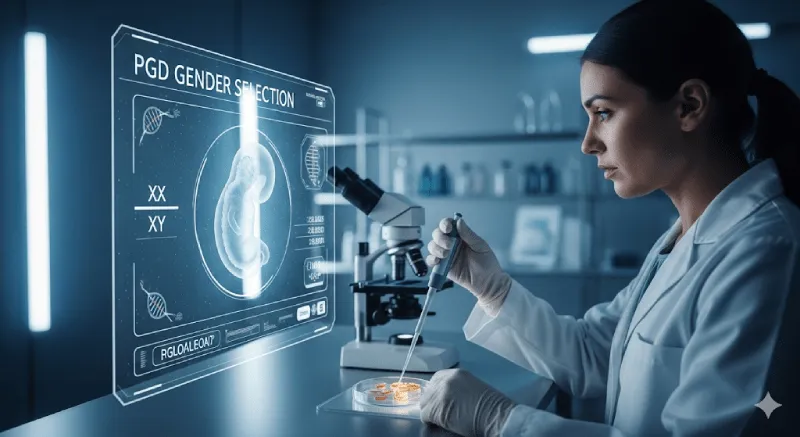
What is Microinjection?
Microinjection, medically known as Intracytoplasmic Sperm Injection (ICSI), is a revolutionary development among assisted reproductive techniques. This method is based on the principle of injecting a single healthy sperm cell directly into a mature egg in a laboratory environment using a special microscope and micropipettes. The fundamental difference from the traditional in vitro fertilization (IVF) method is that instead of waiting for fertilization to occur through the sperm’s own effort, it is performed manually by an expert embryologist. This technique has increased the chances of fatherhood in male infertility cases by up to 90%, providing a definitive solution for many couples who previously had no hope.
How was the ICSI method developed?
The microinjection method was discovered by chance at the Free University of Brussels in Belgium in the early 1990s and entered the medical literature. The first successful application took place in 1992, and since then, it has enabled millions of couples worldwide to have children. Although it was initially intended only for very severe male infertility cases where the sperm could not penetrate the egg, its area of use has expanded over time due to its high success rates. Along with technological progress, the magnification capacity of the microscopes used and the sensitivity of micromanipulators have increased, which has modernized the reliability and precision of the entire procedure.
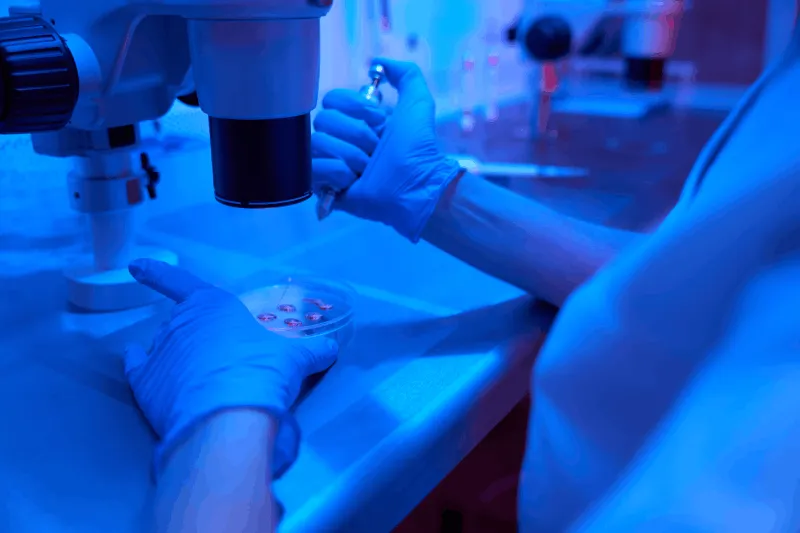
What is the difference between IVF and Microinjection?
In the classic in vitro fertilization (IVF) method, eggs retrieved from the mother and sperm from the father are placed in the same dish, and the sperm are expected to fertilize the egg naturally. However, in microinjection (ICSI), a single sperm is selected for each egg and this sperm is personally placed into the cytoplasm of the egg by an embryologist. While sperm motility and the ability to penetrate the egg membrane are of critical importance in classic IVF, these obstacles are overcome in the laboratory environment in ICSI. Therefore, for couples with very low sperm parameters, ICSI is a method that offers much higher fertilization rates compared to classic IVF.
In which cases is Microinjection preferred?
Microinjection is primarily preferred in cases of severe male infertility, meaning cases where the sperm count is below 5 million per milliliter, motility is very low, or structural defects (morphology) are intense. Additionally, if fertilization did not occur or the fertilization rate remained very low in previous classic IVF attempts, ICSI is definitely applied in the next attempt. Situations such as advanced maternal age, low egg count, or cases where sperm is obtained through surgical methods (TESE/TESA) are also among the scenarios where microinjection is the primary choice of treatment for clinical success.
What is the role of Microinjection in male infertility?
Male infertility accounts for approximately half of infertility cases worldwide. Before the discovery of microinjection, men with no sperm in their semen or very low sperm quality had almost no chance of becoming biological fathers. Thanks to ICSI, even a single living sperm cell has become sufficient for pregnancy. This method has cleared the path to fatherhood by overcoming many problems, from obstructions in the sperm ducts to hormonal disorders or infertility due to genetic factors. With the cooperation of modern urology and embryology, gratifying results can be obtained even in the most hopeless cases today.
Is it a solution for those with low sperm count?
Absolutely, yes. Low sperm count (oligospermia) is one of the biggest obstacles that make it difficult to get pregnant through natural ways. While millions of sperm need to reach the egg in natural intercourse, only as many sperm cells as the number of collected eggs are needed in microinjection. For example, if 10 high-quality eggs were collected, 10 healthy sperm cells are sufficient for fertilization. This allows even men with very limited sperm counts to have children. Technological possibilities allow for finding and sorting the highest quality cells even in samples containing only a few thousand sperm per milliliter.
Can Azoospermia patients benefit from this method?
Azoospermia is the condition where no living sperm cells are found in the semen, and in the past, this condition was considered definitive infertility. However, today, thanks to microinjection and surgical sperm retrieval techniques (TESE, Micro-TESE), azoospermia patients can also become biological fathers. A very small number of sperm obtained from the testicular tissue by surgical methods can be transferred to the egg via microinjection to ensure successful fertilization. In this process, the tissue taken from the testes is examined under a microscope, and the healthiest sperm cells found are used in the procedure either fresh or after being frozen.
How does female age affect success rates?
Female age is one of the most decisive factors in microinjection, as it is in all reproductive treatments. As a woman ages, not only does the egg reserve decrease, but also the genetic quality of the eggs declines. After the age of 35, the rate of decline increases, and after 40, even if fertilization occurs, the chance of the embryo attaching to the uterus decreases and the risk of miscarriage increases. Although the microinjection method guarantees the entry of the sperm into the egg, the egg’s own internal energy and genetic structure are critical for healthy embryo development. Therefore, experts emphasize that the earlier the treatment is started, the higher the success will be.
Why is egg quality important for Microinjection?
The egg provides all the genetic material and energy sources (mitochondria) that the embryo will need in its early stages. The microinjection process is a physical intervention where the sperm is injected into the egg, and the egg must have a flexible and healthy membrane enough to tolerate this intervention. In low-quality eggs, division may stop after fertilization or chromosomal abnormalities may occur. To increase egg quality, the most optimal result is aimed for by applying appropriate vitamin supplements, balanced nutrition, and personalized medication protocols to the mother candidate before the treatment begins.
How does the preparation process begin?
The microinjection process starts with a detailed evaluation of the couple. For the woman, hormone tests (AMH, FSH, LH, E2) and an ultrasound check of the ovarian reserve are performed. For the man, a detailed sperm analysis (spermiogram) is requested. At this stage, it is recommended to quit bad habits such as smoking and alcohol, switch to healthy nutrition, and use folic acid or sperm quality-enhancing supplements if deemed necessary. The preparation phase gains official status with the checks performed on the second or third day of the menstrual period when the treatment will start, and the medication-induced egg growth process begins.
How is the egg retrieval process performed?
The egg retrieval process (OPU – Oocyte Pick-Up) is performed after the egg-developing injection treatment when the follicles reach the desired size. The procedure is generally performed under light sedation or general anesthesia, accompanied by vaginal ultrasound. With the help of a thin needle, the follicles in the ovaries are entered, and the fluid inside is collected by a connected vacuum system. This fluid is examined by embryologists in the laboratory to isolate the egg cells within. The procedure takes about 15-20 minutes, and the patient is discharged on the same day. It is a painless and comfortable procedure for the patient.
How is the sperm sample collected and selected?
The sperm sample is usually collected from the father candidate through masturbation on the day of egg retrieval. If there is no living sperm output in the male, sperm can be retrieved from the testes using surgical methods. The collected sample is washed with special solutions, and the most motile and structurally most regular sperm cells are isolated. During the selection phase, embryologists examine the head, neck, and tail structure of the sperm using high-magnification microscopes. In some advanced cases, the most flawless sperm cell is selected using microscopes that magnify the sperm up to 6000 times (IMSI), which maximizes fertilization success.
How does the Microinjection process occur in the lab?
In the laboratory phase, the collected eggs are first cleared of the surrounding cells by a process called “denudation” and their maturity levels are checked. Microinjection is performed only on mature eggs (at the MII stage). The embryologist draws a single selected sperm into a very thin glass pipette (micropipette). He stabilizes the egg with another pipette and gently leaves the sperm inside the egg. All this process is carried out with great care using micromanipulator systems on special tables that absorb vibration. This procedure is repeated individually for each egg collected from the patient.
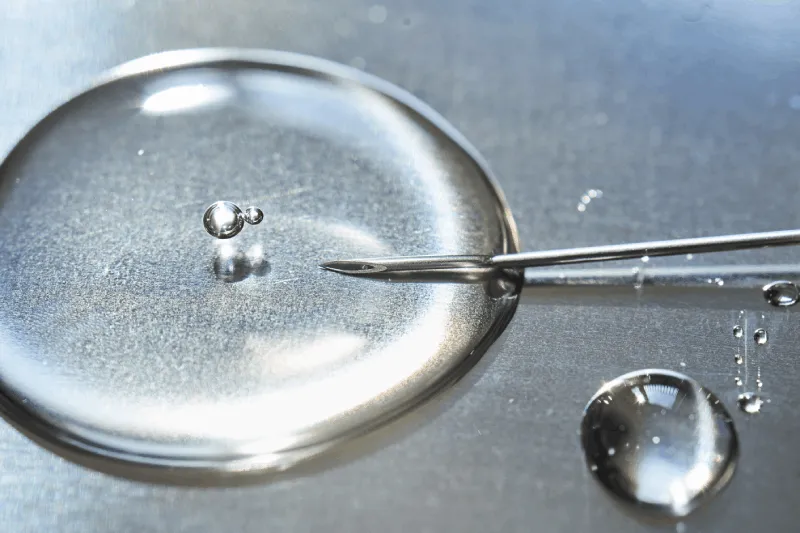
Is a single sperm cell sufficient?
Theoretically, a single sperm cell is sufficient to fertilize each egg. However, in practical application, the sperm must be alive and its genetic structure must be healthy. This is the greatest miracle of microinjection; it simulates the natural process where millions of sperm compete and only one wins, by directly delivering the best candidate sperm to the egg in the laboratory. Even if only one healthy sperm can be found in the male’s sample, a chance of pregnancy arises with one egg collected that day. This situation explains why the method is the gold standard in cases of severe infertility.
How is embryo development monitored?
About 16-18 hours after the fertilization process, the eggs are checked to see if fertilization has occurred. The fertilized cells are now called “embryos.” Embryos are kept in special incubators that mimic the maternal uterine environment. Nowadays, thanks to camera systems called “embryoscope,” embryos can be observed 24/7 without being taken out of the incubator. With this system, the division rate, cell structure, and developmental abnormalities of the embryo are monitored instantly. The embryos showing the healthiest development are selected to be transferred to the mother’s womb.
How is quality embryo selection made?
During embryo selection, factors such as how many cells the embryo has divided into, the symmetry of the cells, the connections between cells, and the presence of waste materials called “fragmentation” are examined. The development process is generally evaluated on the 3rd day (cleavage stage) or 5th day (blastocyst stage). Embryos that reach the blastocyst stage have a much higher potential for attaching to the uterus. Embryologists determine the highest quality embryo using grading systems accepted worldwide. If there is more than one high-quality embryo, the best one is transferred while the others can be frozen and stored for future use.
When does embryo transfer take place?
Embryo transfer can be performed at any time between the 2nd and 6th days after fertilization; however, the most common is the 3rd or 5th-day transfer. The transfer time is determined by the doctor according to the patient’s age, number of embryos, and their quality. Since embryos reaching the 5th day are more durable and selected, high success is generally aimed for by performing a single embryo transfer. The transfer process is performed in the examination room with a simple procedure that does not require anesthesia. With the help of a thin catheter, embryos are left at the most suitable point in the uterus under ultrasound guidance.
What is the waiting period after transfer like?
The post-transfer period is generally the most exciting and stressful process for couples. Resting at the hospital for about 30 minutes after the procedure is sufficient; there is no medical evidence that long-term bed rest increases success. In the first few days, heavy physical activities, lifting heavy weights, and excessive stress should be avoided. Progesterone-supported medications (suppository, injection, or gel) prescribed by the doctor should be used regularly. About 10-12 days after the transfer day, the pregnancy status becomes clear with a Beta-HCG test done in the blood. Thinking positively and continuing normal life is recommended during this process.
What are the success rates of Microinjection?
The success rate of microinjection varies according to female age, egg quality, sperm quality, and the uterus’s capacity to accept the embryo. In the young age group (under 35), the chance of pregnancy per attempt can go up to 50-60%, while this rate may decrease to 20-30% as age advances. However, the cumulative success rate, meaning the total chance at the end of 3 consecutive attempts, reaches 80-90%. What matters is that the treatment is planned specifically for the individual and the data obtained from each attempt is optimized for the next attempt to ensure the best possible outcome.
Can genetic screening (PGT) be added to this method?
Yes, Preimplantation Genetic Testing (PGT) can be applied to embryos obtained by the microinjection method. In this process, a few cells are taken by biopsy from embryos that reach the 5th-day blastocyst stage and sent to the genetic laboratory. In this way, numerical chromosome disorders such as Down syndrome or hereditary diseases known in the family can be detected before transfer. PGT is a vital tool to select the healthy embryo and increase the live birth rate, especially in couples with advanced maternal age, recurrent miscarriages, or failed IVF attempts.
Can frozen embryo transfer be performed?
Today, frozen embryo transfer (FET) can sometimes offer higher success rates compared to fresh transfer. With the rapid freezing technique called “vitrification,” embryos can be stored for years without any damage. Medications used during the egg retrieval process can sometimes affect the uterine lining more than they should. In such cases, all embryos are frozen, the uterus is rested for one or two months, and the transfer is performed when it returns to its natural state. This method both reduces the hormone load on the patient and optimizes the uterus’s chance of accepting the embryo.
What are the risks and side effects of the procedure?
Microinjection is generally a safe method, but like every medical procedure, it carries some risks. “Ovarian Hyperstimulation Syndrome” (OHSS) may develop due to egg-growing medications; in this case, the ovaries grow excessively and fluid may accumulate in the abdomen. However, with modern protocols, this risk has been reduced to below 1%. Very rarely, infection or bleeding may be seen during egg retrieval. Additionally, psychological stress and financial burden can be counted among the side effects of the treatment. Management of the process by an expert team minimizes these risks for the couple.
Is there a risk of multiple pregnancy?
In the past, many embryos were transferred into the uterus to increase the success rate, which led to multiple pregnancies such as twins or triplets. Multiple pregnancies are risky both for maternal health and for the babies’ risk of premature birth. Today, medical authorities and legal regulations encourage “single embryo transfer,” especially in young patients. Thanks to the development of quality embryo selection and freezing techniques, high success can be achieved even with a single embryo. Thus, multiple pregnancy risk is controlled, aiming for a healthy singleton pregnancy.
Does the risk of genetic disorders increase in babies?
The frequency of genetic disorders in babies born with microinjection may be slightly higher (about 1-2% more) than in babies born naturally. However, it is debatable whether this increase is directly caused by the microinjection process or by the couples’ already existing causes of infertility (for example, genetic problems in the father). Large-scale research shows that the vast majority of ICSI babies are completely healthy physically and mentally. In cases where there is doubt, these risks can be completely eliminated by the PGT method, ensuring the health of the future child.
Why is psychological preparation important?
IVF and microinjection treatment is not just a physical but also an intense emotional process. Expectation, uncertainty, and the effect of hormone medications can affect the mood of the patients. Before starting the treatment, it is one of the keys to success for couples to support each other, have realistic expectations, and receive professional psychological counseling if necessary. A low stress level positively affects the immune system and hormonal balance, indirectly contributing to the embryo’s chance of attachment. It should not be forgotten that this is a process and requires patience.
Do dietary habits affect the process?
Yes, dietary habits directly affect both egg and sperm quality. During and before the treatment process, a Mediterranean-type diet (plenty of vegetables, fruit, olive oil, fish, and legumes) is recommended. Processed foods, excessively sugary drinks, and trans fats should be avoided. Foods rich in antioxidants (walnuts, almonds, blueberries, spinach) help prevent cell damage, leading to the formation of healthier gametes. Additionally, adequate water consumption and having an ideal body mass index (BMI) increase treatment success by ensuring more regular functioning of hormones.
Does smoking and alcohol use reduce success?
Smoking and alcohol use are the environmental factors that most undermine reproductive success. Smoking leads to rapid depletion of egg reserve in women and deterioration of egg quality, while it increases sperm DNA damage in men. Alcohol, on the other hand, reduces fertilization rates by disrupting hormonal balance. It is necessary to quit these habits at least 3 months before starting microinjection treatment. Because the renewal process of cells is about 90 days. A body purified from these harmful substances offers a much more favorable environment for the embryo to attach to the uterus.
What are TESE and TESA methods?
These are surgical methods used for men who have no sperm in their semen. TESA (Testicular Sperm Aspiration) is the search for sperm by drawing fluid from the testicular tissue with a thin needle. TESE (Testicular Sperm Extraction) is the process of taking a small piece of tissue from the testis. Nowadays, “Micro-TESE” is preferred more; in this method, channels with high sperm production potential are selected under a microscope and tissue is taken. Thanks to these methods, even men who do not have sperm in their semen have a biological fatherhood chance and these obtained sperm are used for microinjection.
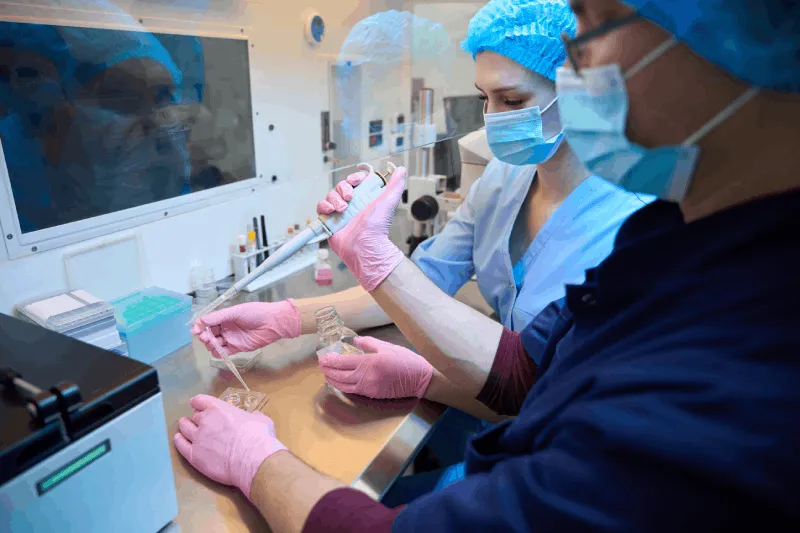
What do IMSI and PICSI techniques do?
IMSI (Intracytoplasmic Morphologically Selected Sperm Injection) enables the detection of defects (vacuoles) in the head part of the sperm using high-magnification lenses. In this way, the sperm with the best morphology is selected. PICSI (Physiological ICSI), on the other hand, uses “hyaluronan” acid to test the maturity of the sperm. Only mature sperm with high fertilization ability stick to this acid. These advanced selection methods are used to increase the chance of success, especially in cases with previous failed IVF attempts, advanced age, or severe sperm damage.
How many times can Microinjection be tried?
There is no medical limit on how many times the microinjection method can be tried. However, experts generally state that the first 3 or 4 attempts are the period with the highest chance of success. After each failed attempt, the couple’s situation is analyzed again, protocols are changed, or additional tests (genetic screening, uterine film, etc.) are requested. As long as financial and moral strength allows, treatment can be continued. Many couples can reach a happy ending only in their 3rd or 4th attempts. It is important not to give up and establish a trust-based communication with the doctor.
What should be done after failed attempts?
The first thing to do after a failed attempt is to analyze the reasons calmly. Was the embryo quality low? Was there a problem with the uterine lining? Or was there a genetic obstacle? You should have an “evaluation meeting” with your doctor for the answer to these questions. Advanced diagnostic methods such as the ERA test (the test that determines the transfer time of the uterine lining), PGT (genetic screening), or hysteroscopy (looking inside the uterus with a camera) can be activated. Sometimes just a lifestyle change or a different medication protocol can change the result to positive.
How is stress management provided during treatment?
To cope with stress during the treatment process, yoga, meditation, light walks, or engaging in hobbies can be beneficial. Couples should accept that this is a biological process without blaming each other. Setting boundaries against overwhelming questions from the social environment like “When is the baby?” is also relaxing. Some clinics have psychologists or support groups within their structure; communicating with other people experiencing similar processes there reduces the feeling of loneliness. Remember, your psychological well-being is an important part of the success of your treatment.
What do treatment costs cover?
Microinjection cost covers clinic fees, medications, anesthesia, egg retrieval, laboratory procedures, and transfer stages. Additionally, the cost may increase when additional techniques such as freezing, PGT (genetic screening), IMSI, or Micro-TESE are applied. Medications usually constitute a significant part of the cost and vary from person to person as doses change according to the patient’s weight and egg reserve. Asking in detail what the package offered by the center covers and possible extra expenses before starting the treatment is critical for financial planning.
What are the latest developments in modern medicine?
In recent years, the use of artificial intelligence (AI) has been making a big splash in assisted reproductive techniques. AI algorithms can analyze thousands of embryo images and predict which embryo has the highest chance of attaching to the uterus more accurately than embryologists. Additionally, sperm selection is being done with more natural methods (microfluidic chips) with “lab-on-a-chip” technologies. Stem cell studies give hope for producing gametes from their own cells for people who have no eggs or sperm in the future. Science continues to turn the impossible into reality every day.
What awaits us in the future of Microinjection?
In the future, microinjection is expected to become more autonomous and human error is expected to be reduced to zero. Studies on robotic microinjection systems continue. Additionally, gene editing technologies (such as CRISPR) may enable the repair of hereditary diseases at the embryo stage in the future (this subject is currently under ethical discussions). Thanks to more personalized medicine, “smart drugs” suitable for the genetic structure of each woman will be produced, and success rates will approach 100% while side effects decrease. Reproductive medicine will continue to be the most exciting field for the continuation of the human race.
What should be considered when choosing a specialist?
The most important step for a successful microinjection treatment is choosing an experienced team and a well-equipped center. The laboratory technology of the clinic you choose, the experience of the embryologists, and the live birth rates of the center should be researched. The communication your doctor establishes with you, the answers they give to your questions, and the time they allocate to you are essential for a sense of trust. Not only success rates but also additional services offered (psychological support, genetic laboratory, etc.) should be looked at. A team that sees you as a human being, not a number, and informs you at every stage will increase your chance of success and your comfort.
Free Consultation
Fill out the form below to get your free medical travel plan and price quote.
Sources and how to verify this yourself
- HFEA (UK regulator), Fertility treatment 2024: trends and figures — average birth rate 30% per embryo transferred with the patient’s own eggs; 38% at ages 18–34 and 8% at 43–44. source
- Ministry of Health, Regulation on Assisted Reproductive Treatment Practices and Centres (ÜYTE), Official Gazette 30 September 2014 — treatment is limited to married couples using their own gametes; donor eggs, donor sperm, donor embryos and surrogacy are not permitted in Türkiye. source
- Ministry of Health, Regulation on International Health Tourism and Tourist Health, Official Gazette 26 April 2025, No. 32882 — authorisation requirement for facilities and intermediaries, TÜSKA accreditation, compulsory complication insurance (deadline 31 December 2025 for insurance, 31 December 2026 for accreditation). source
- Ministry of Health, Regulation on Promotion and Information Activities in Health Services, Official Gazette 12 November 2025, No. 33075 — treatment promises and guarantees are prohibited; price and campaign announcements are permitted only within international health tourism. source