What Is Tummy Tuck Surgery?
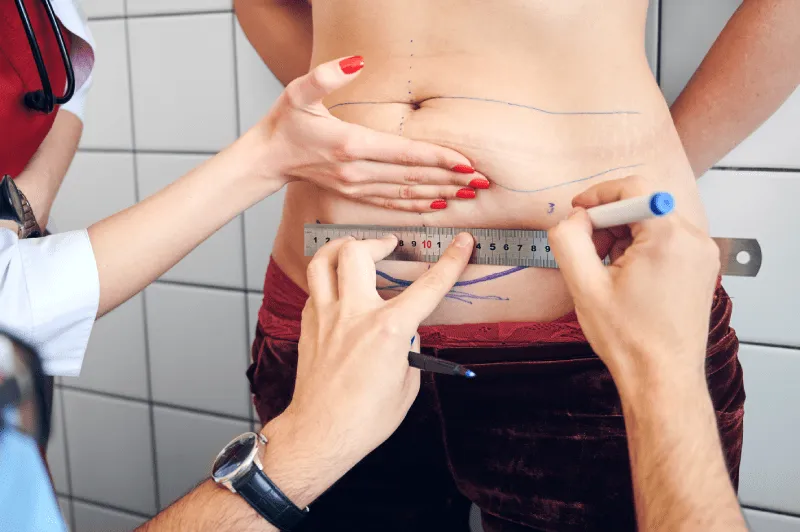
Tummy tuck surgery, medically known as abdominoplasty, is a surgical procedure performed to remove excess skin and fat tissue from the abdominal region. This procedure not only provides a more aesthetic appearance but also ensures the tightening of weakened or separated abdominal muscles (diastasis recti). It is generally preferred to recover sagging abdominal tissue resulting from factors such as pregnancy, excessive weight fluctuations, or aging. As a result of the surgery, a flatter, tighter, and aesthetically balanced abdominal profile is achieved.
Who Is A Suitable Candidate For A Full Tummy Tuck?
A full tummy tuck is generally ideal for individuals with significant sagging, skin excess, and muscle laxity in both the upper and lower parts of the abdominal region. In particular, women who have had multiple pregnancies or people who have lost a significant amount of weight after gastric sleeve surgery are the strongest candidates for this operation. If you have skin folds both above and below your belly button and a permanent protrusion in your abdominal wall, a full abdominoplasty will provide you with the most holistic and permanent solution.
What Is A Mini Tummy Tuck?
A mini tummy tuck is a less invasive surgical method compared to the full tummy tuck procedure. In this process, only slight sagging and stubborn fat deposits in the area below the belly button are targeted. It is preferred if the relaxation in the abdominal muscles is very limited or if there is skin excess only in the lower abdominal region. In a mini tummy tuck, the location of the belly button is not changed, and the incision line is much shorter than in a full tummy tuck. Thanks to this feature, it is a popular option for patients looking for a faster recovery process.
What Are The Fundamental Differences Between The Two Procedures?
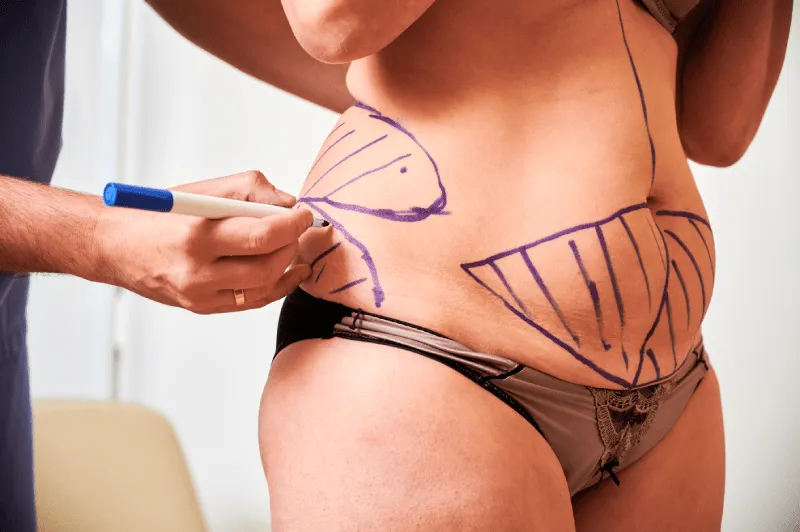
The biggest difference between a full tummy tuck and a mini tummy tuck is the width of the treated area and the procedure performed on the belly button. In a full tummy tuck, an incision is made around the belly button to release it from its place, and the entire abdominal tissue is stretched and adapted to its new position. In a mini tummy tuck, the belly button is not touched, and the focus is only on the lower abdominal region. Additionally, while muscle repair is performed along the entire abdominal wall in a full tummy tuck, this repair is limited to the lower region or not performed at all in a mini tummy tuck.
How Does The Belly Button Position Change?
In a full tummy tuck surgery, the belly button’s current position must change because the upper abdominal skin is pulled downwards. After stretching the skin, the surgeon creates a new and aesthetic socket for the belly button. This process ensures that the abdominal region looks natural and youthful. In mini tummy tuck surgery, such a process is not necessary; because skin tension is provided only from the bottom, the upper tissues are not pulled down enough to move the belly button. This difference is the most important element determining the scope of the operation.
In Which Surgery Is Muscle Repair Performed?
Muscle repair, namely the correction of rectus diastasis, can be performed in both surgeries, but its scope varies. In a full tummy tuck surgery, the surgeon tightens all abdominal muscles from the rib cage down to the groin area by bringing them closer to each other with sutures. This process is the main element that slims the waist and gives the “hourglass” appearance. In a mini tummy tuck, muscle repair is performed only in a small area below the belly button. If there is a separation in your upper abdominal muscles as well, a full tummy tuck is the only effective option.
Where Do The Scars Remain After Surgery?
In both operations, the surgical scars are generally planned to remain within the underwear or bikini line. In a full tummy tuck surgery, the incision is a longer line extending from hip to hip, and additionally, a circular scar forms around the belly button. In a mini tummy tuck, the incision line is much shorter, usually slightly wider than a cesarean section scar, and no scar occurs around the belly button. An experienced surgeon maximizes the aesthetic result by hiding these scars in the natural folds of the body.
How Different Are The Recovery Times?
The scope of the operation directly affects the recovery time. Patients who have a mini tummy tuck can usually return to their daily activities within a few days and start work within 1-2 weeks. Since a full tummy tuck is a more comprehensive procedure, the recovery process is longer; it usually takes 2-3 weeks for patients to return to work life, and the transition to full physical activity can take 6 weeks. In both cases, it may take several months for the tissues to fully settle and the edema to subside, and a year for the scars to fade.
Which Surgery Provides More Permanent Results?
Actually, the results of both surgeries are permanent for a lifetime as long as the patient maintains their weight and leads a healthy lifestyle. However, a full tummy tuck offers more dramatic and satisfying results in terms of physical change because it removes more skin and tightens the abdominal muscles from top to bottom. Since a mini tummy tuck is only a regional correction, its effect on the general silhouette of the body is more limited. Maintaining balanced nutrition and regular exercise after surgery is of critical importance for the permanence of the results.
Which Method Should Be Preferred After Pregnancy?
In the postpartum period, the biggest complaint of women is usually sagging around the belly button and separation of the abdominal muscles. If a serious deformation has occurred in the abdominal wall and there are widespread stretch marks on the skin as a result of births, a full tummy tuck is the most appropriate method. A mini tummy tuck may be sufficient only for mothers who have a slight skin accumulation in the lower abdominal region and whose muscle structure is not damaged. However, most surgeons agree that a full tummy tuck provides a more comprehensive solution for postpartum restoration.
Which One Is Better After Extreme Weight Loss?
In people who lose large amounts of weight (for example, 30-40 kilos and more), skin elasticity is seriously lost and intense sagging occurs in the middle part of the body. For these patients, a mini tummy tuck is almost never sufficient. The elimination of sagging, called “apron belly,” which occurs after extreme weight loss, is only possible with a full tummy tuck or, in some cases, a “belt abdominoplasty” (360-degree tummy tuck). A full tummy tuck aesthetically crowns the success of the patient’s weight loss by reshaping the body contour.
Can Fat Removal Be Performed With A Mini Tummy Tuck?
Yes, mini tummy tuck surgery is frequently combined with a liposuction (fat removal) procedure. This procedure is called “lipo-mini abdominoplasty.” Just removing the excess skin is sometimes not enough to eliminate the bulge in the abdominal region. Fats are vacuumed through the incision line to ensure the area looks thinner and more contoured. This combination produces excellent results, especially for patients with stubborn fat in the lower abdomen and slightly loose skin. The fat removal process ensures that the result is smoother and more natural.
How Is The Combination Of Full Tummy Tuck And Liposuction?
In full tummy tuck surgery, the application of liposuction has become a standard approach in modern plastic surgery. Before stretching the abdominal skin, the surgeon defines the body lines by performing liposuction on the waist sides (love handles), back, and upper abdominal regions. Then, the skin-stretching process is performed. In this way, not only a flat stomach but also a slim waist curve is achieved. This combined approach completely changes the general body silhouette of the patient, providing a much more athletic and youthful appearance.
Who Is The Ideal Candidate For Surgery?
The ideal candidate for a tummy tuck is an individual who is in good general health, does not smoke, and is close to their ideal weight. This surgery is not a weight loss method but a body shaping procedure. Therefore, the patient’s weight is expected to have been stable for the last 6 months. Additionally, having realistic expectations after surgery and complying with the restrictions in the recovery process are elements that increase success. If a pregnancy is planned in the future or if a serious amount of weight loss is aimed for, it is a more correct decision to postpone the surgery.
What Should Be Considered Before Surgery?
The pre-operative preparation process is critical to reduce the risk of complications and speed up recovery. It is of vital importance to quit smoking at least 3-4 weeks in advance; because smoking impairs blood circulation, delaying wound healing and potentially leading to skin loss. The use of blood thinners, herbal teas, and some vitamins should be stopped under doctor supervision. Additionally, the patient should come with an empty stomach on the morning of the operation and an assistant should be arranged to help during the post-hospital process. Being mentally ready for this process also increases motivation.
Is Anesthesia Necessary During Surgery?
Yes, tummy tuck surgeries (both full and mini) are absolutely performed under anesthesia. While general anesthesia is generally preferred in full tummy tuck surgeries, general anesthesia or local anesthesia accompanied by deep sedation can be applied in mini tummy tuck cases depending on the surgeon’s preference and the patient’s condition. Thanks to anesthesia, the patient does not feel any pain or discomfort during the operation. An expert anesthesia team monitors the patient’s vital functions throughout the surgery, ensuring a safe surgical environment.
How Long Does The Surgery Take?
The duration of the operation varies depending on the scope of the method to be applied and the anatomical structure of the patient. Mini tummy tuck surgeries are generally completed within 1 to 1.5 hours. Full tummy tuck surgeries can take between 2.5 and 4 hours if comprehensive liposuction or muscle repair is to be performed as well. The meticulousness of the surgeon, the suturing technique, and the patient’s tissue quality are also factors affecting the duration. The important thing is not the shortness of the duration, but the completion of the process in a safe and aesthetically perfect manner.
Is Drain Usage Necessary In Both Surgeries?
Drains are small tubes used to evacuate blood and serous fluid that may accumulate in the surgery area. In full tummy tuck surgeries, since the space under the tissue is wider, drain usage is generally mandatory, and these tubes can stay for 2 to 5 days. In mini tummy tuck surgeries, since the trauma is more limited, some surgeons may perform drain-free applications using tissue adhesives or special suturing techniques. However, in general, drain usage is a common safety measure to avoid risking tissue healing.
How Is Pain Managed After Surgery?
Thanks to modern surgical techniques and anesthesia methods, post-operative pain is no longer at a frightening level. While painkillers are applied intravenously during the hospital stay, this process is controlled with oral medications after discharge. Especially after a full tummy tuck, a ache may be felt while moving due to the tension in the abdominal muscles during the first few days. Surgeons sometimes use long-acting local anesthetics during the surgery to ensure that the first 24 hours pass much more comfortably.
Why Is Compression Garment Use Important?
The use of a compression garment after surgery is indispensable for the success of the operation and the comfort of the patient. The garment applies compression to the abdominal tissues, reducing edema (swelling) formation and ensuring that the tissues adhere firmly to their new places. It also supports the abdominal wall in patients who have undergone muscle repair, reducing the load on the sutures and helping the patient feel more secure. These medical garments, which are generally recommended to be worn day and night for the first 4-6 weeks, contribute to the result being smooth and tight.
When Can One Return To Work?
The time to return to work depends entirely on the size of the procedure performed and the physical demands of the patient’s job. Those working in a desk job can return to their work in 5-7 days after a mini tummy tuck, and in 10-14 days after a full tummy tuck. However, in professions requiring physical strength or constant standing, this period can extend up to 3-4 weeks. It is of great importance for the recovery quality that the patient listens to their own body and does not enter a heavy work pace without their doctor’s approval.
When Can Exercise Be Started?
Immediately after the surgery, short walks inside the house are encouraged to speed up blood circulation. However, one should be patient for heavy exercises. Light walks can be started from the 2nd week. For activities such as cardio, light weightlifting, or pilates, usually the 6th week is waited for. Especially exercises that directly work the abdominal muscles (crunches, etc.) should be postponed for at least 3 months for the muscle repair to heal completely. Strenuous movements made in the early period can cause the sutures to open or a hernia to form.
Do Surgical Scars Fade Over Time?
It is not medically possible for surgical scars to disappear completely, but their prominence decreases significantly over time. For the first few months, the scars may be red and prominent; this is a normal healing phase. From the 6th month onwards, the scars begin to fade, turn pink, and eventually approach the skin color. The healing quality of the scars depends on genetic factors, the surgeon’s suturing technique, and the patient’s use of scar creams or silicone tapes. The biggest advantage is that these scars can be hidden under the underwear line and are not noticed in any way when viewed from the outside.
What Are The Risks Of Tummy Tuck Surgery?
As with every surgical procedure, abdominoplasty also has some risks. These include bleeding, infection, delayed wound healing, fluid accumulation under the skin (seroma), and anesthesia complications. The risk of wound site necrosis (tissue death) is higher in smokers. Additionally, although rare, blood clots (DVT) can be seen in the legs; early walking after surgery is of vital importance to reduce this risk. These risks are minimized in operations performed by an expert surgeon in appropriate hospital conditions.
How Should The Nutrition Process Be?
Eating protein-rich food during the recovery period speeds up tissue repair. Plenty of water consumption helps to eliminate the edema in the body faster. Since constipation can increase intra-abdominal pressure and force the sutures, it is strongly recommended to consume fibrous foods (vegetables, fruits, whole grains). Salt consumption should be restricted during the recovery period as it will increase edema. Alcohol and excessive caffeine consumption should also be avoided in the first weeks as they can trigger edema. Healthy nutrition also supports the permanence of the surgical result.
How Does Smoking Affect The Surgery?
Smoking is the biggest enemy of aesthetic surgery, especially tummy tuck surgery. The nicotine in it narrows the vessels, reducing the blood flow and oxygen to the surgery area. This situation can cause the sutures not to hold, the wound sites to open, and even the loss of large skin areas (necrosis). In an operation where a wide skin is lifted and stretched, such as a tummy tuck, blood circulation is of vital importance. Therefore, smoking must be completely stopped at least one month before the operation and should not be smoked until recovery is complete.
When Does Edema Subside After Surgery?
Most of the swelling (edema) after a tummy tuck decreases within the first 4-6 weeks. However, it takes longer for the tissues to soften completely and the real result to emerge. Patients usually notice that their stomachs are flatter in the morning, and a slight swelling occurs in the evening hours or after physical activity. These fluctuations are normal. It usually takes between 6 months and 1 year for the edema to pass completely and the skin sensitivity to return to normal. Patience is the most important part of this process.
Can Those Planning A Pregnancy Have This Surgery?
It is medically possible to get pregnant after a tummy tuck and this situation does not pose an obstacle to the development of the baby. However, since the abdominal skin and muscles will stretch again during pregnancy, the aesthetic results obtained with the surgery may be largely lost. In order not to waste the effort, time, and cost spent, surgeons recommend this surgery to women who have completely completed the process of having children. If you do not have a pregnancy plan in the near future, tummy tuck surgery can be a great option to increase your self-confidence.
Is Tummy Tuck Surgery Possible For Men?
Absolutely yes. A tummy tuck is not a procedure exclusive to women. Especially in men who lose extreme weight, skin excess and muscle laxity in the abdominal region is a common problem. The tummy tuck anatomy of men is slightly different from women; the suture line is planned straighter and muscle repair is performed to provide a more masculine appearance. Male patients usually aim to have fitter and more prominent abdominal lines by combining this operation with liposuction. The results allow men to feel freer in their choice of clothes and while doing sports.
Is There An Age Limit?
There is no specific upper age limit for tummy tuck surgery; what is decisive is the patient’s general health status. Anyone who has completed the age of 18 and completed their development can have this surgery. However, the presence of chronic diseases (diabetes, blood pressure, heart) in patients over 60-70 years of age should be meticulously evaluated. The important thing is that the patient can take anesthesia safely and that the tissue healing capacity is sufficient. While results may settle faster in young patients because skin elasticity is better, older patients can also increase their quality of life by getting rid of sagging.
When Are The Surgical Results Fully Seen?
Although the abdomen looks flat immediately after the surgery, the results are not fully clear due to swelling. In the first month, the lines begin to become prominent as the edema subsides. In the 3rd month, 80-90% of the body form emerges. However, 1 full year must pass for the scar tissue to mature, for the stiffness under the tissue to pass, and for the skin to settle fully in its place. At the end of this process, the abdomen becomes softer, the scars become fainter, and the general appearance takes a much more natural form. It should not be forgotten that aesthetic surgery is a matter of patience.
In Which Cases Is Surgery Not Recommended?
This surgery is not recommended for people who have serious systemic diseases, uncontrolled diabetes, or heavy heart-lung problems. Additionally, patients with a body mass index (BMI) over 35, i.e., at the obesity limit, are asked to lose weight first; because having surgery with high weight increases the risk of complications and shadows the aesthetic result. Those who cannot give up smoking addiction are also in the high-risk group due to wound healing problems. Finally, the operation is not suitable for individuals whose expectations after surgery are unrealistic or who are not psychologically ready.
Is A Tummy Tuck A Weight Loss Method?
This is one of the biggest misunderstandings about tummy tucks. A tummy tuck is not a weight loss surgery, but a body contour correction (shaping) surgery. The skin and fat tissue removed during surgery is generally between 1 and 3 kilos; therefore, the patient’s weight on the scale does not change much. However, thanks to the thinning of the waist area and the removal of sagging skin, the patient looks much thinner and fitter than they are. The best results are obtained in people who have reached their ideal weight or are close to this weight.
Will Stretch Marks Go Away After Surgery?
Tummy tuck surgery is very effective in removing stretch marks especially in the area below the belly button. Because the skin in this region is completely cut and thrown away. However, the stretch marks above the belly button may be moved to the lower region as the skin is pulled down and may not completely disappear. Still, these stretch marks will look less prominent as they will stand on a tighter skin. The complete cleaning of the stretch marks depends on the degree of sagging and the amount of skin to be removed. Surgery is the best way to increase the smooth appearance in the abdominal region.
How To Choose The Right Surgeon?
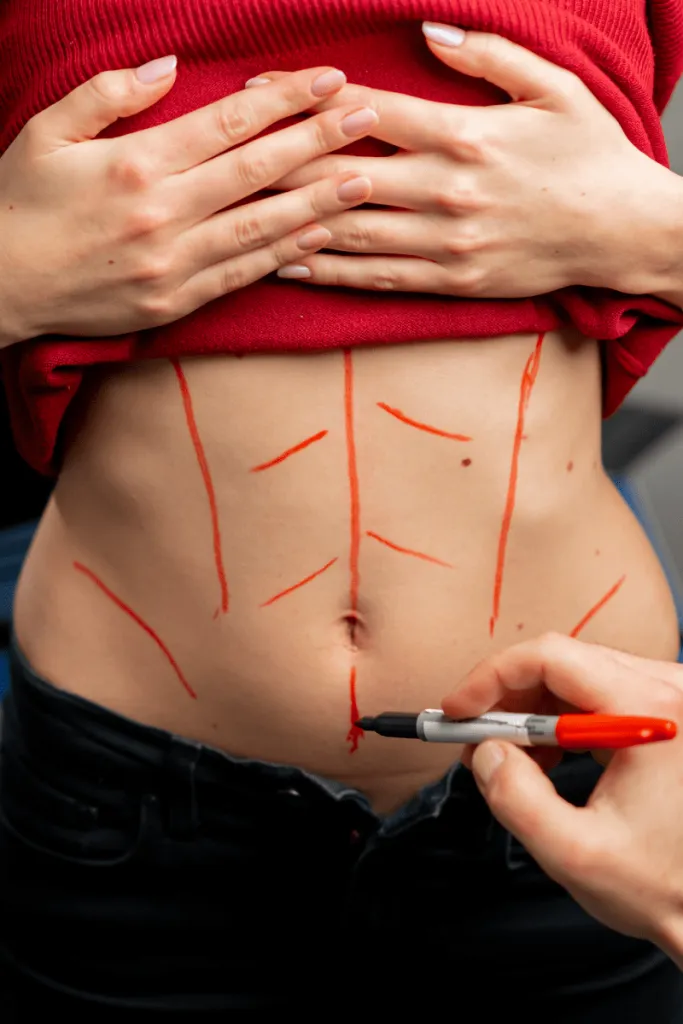
Tummy tuck surgery is a complex procedure that requires technical skill and an aesthetic eye. When choosing the right surgeon, one must make sure that they are a specialist in plastic, reconstructive, and aesthetic surgery. Examining “before-after” photos belonging to the surgeon’s previous operations, questioning the hospital conditions, and the communication established with the surgeon should be reassuring. Additionally, the surgeon providing realistic information about the risks and the recovery process of the operation, and transparently sharing not only the successes but also possible complications, is an indicator of professionalism.
What Are Tummy Tuck Prices Determined By?
Surgery prices vary depending on many different factors. Whether the method to be applied is full or mini, and whether liposuction (fat removal) will be performed together with it are the main elements affecting the price. Additionally, the surgeon’s experience, the equipment and location of the hospital where the surgery will be performed, the quality of the medical materials used, and the duration of the hospital stay also determine the cost. When health and aesthetics are concerned, price should not be the most important criterion; a safe surgical experience and successful results should be prioritized.
Free Consultation
Fill out the form below to get your free medical travel plan and price quote.
Sources and how to verify this yourself
- Eisenberg D, et al. 2022 ASMBS and IFSO Indications for Metabolic and Bariatric Surgery. — surgery is recommended at BMI ≥35 regardless of co-morbidity, and considered at BMI 30–34.9 with metabolic disease (lower thresholds for Asian populations). source
- Ministry of Health, Regulation on International Health Tourism and Tourist Health, Official Gazette 26 April 2025, No. 32882 — authorisation requirement for facilities and intermediaries, TÜSKA accreditation, compulsory complication insurance (deadline 31 December 2025 for insurance, 31 December 2026 for accreditation). source
- Ministry of Health, Regulation on Promotion and Information Activities in Health Services, Official Gazette 12 November 2025, No. 33075 — treatment promises and guarantees are prohibited; price and campaign announcements are permitted only within international health tourism. source