Why Does Hair Loss Occur?
Hair loss is a complex process with both biological and psychological dimensions that affects millions of people worldwide. It generally occurs due to a combination of genetic predisposition, hormonal imbalances, intense stress, poor nutritional habits, and environmental factors. When the hair cycle in our body is disrupted, new hair does not replace the fallen ones, or the emerging hair becomes much thinner and weaker. Over time, this situation leads to thinning on the scalp and permanent baldness, directly affecting individuals’ appearance and social lives. This biological decline is often progressive and requires a deep understanding of its root causes for effective management.
What Exactly Is The Norwood Scale?
The Norwood Scale is the globally recognized gold standard used to classify the stages of male pattern baldness (Androgenetic Alopecia) and determine the severity of loss. Established in the 1950s by James Hamilton and further developed in the 1970s by O’Tar Norwood, this system examines hair loss patterns in seven primary stages. Experts can estimate the progression rate of hair loss by determining which stage the patient is in and prepare the most appropriate treatment protocol accordingly. This scale is an indispensable diagnostic tool for hair transplant surgeons and dermatologists, providing a common language for medical professionals and patients alike.
Where Does The History Of This Scale Originate?
Efforts to place hair loss on a scientific foundation began in the mid-twentieth century. Dr. James Hamilton was one of the first researchers to realize that hair loss in men was not only related to age but also directly linked to androgens, which are male hormones. Later, in 1975, Dr. O’Tar Norwood expanded on Hamilton’s work to create a more detailed and visualized classification system. Today, modern medicine continues to accept this scale as the most reliable method for measuring the severity of hair loss and comparing treatment results, making it the cornerstone of clinical hair restoration studies.
How Does Male Pattern Baldness Begin?
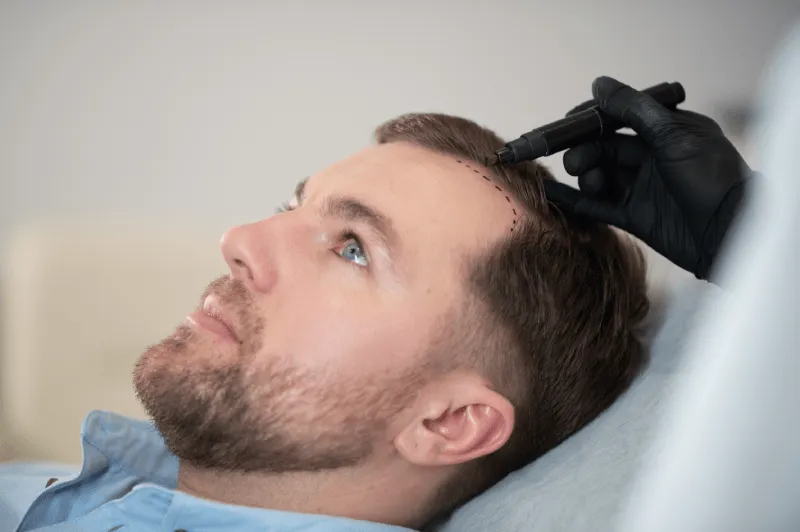
Male pattern baldness usually starts in a subtle way, with the thinning of hair strands and the gradual receding of the hairline. Often, a slight opening is noticed at the corners of the hairline in the forehead area; this situation can lead to an “M” shaped appearance. In the beginning stages, the shedding is so slow that a person only realizes the situation when looking at old photos or trying to comb their hair in a different direction. During this process, hair follicles enter a process called “miniaturization,” producing increasingly shorter and colorless hairs until the follicles eventually stop producing hair altogether.
What Does Norwood Stage One Mean?
The first stage of the Norwood Scale represents a situation where clinically significant hair loss has not yet begun. In this stage, there is no loss other than the natural maturation of the hairline seen during the transition from adolescence to adulthood. The hairline usually stands on a full and straight line on the forehead, and no thinning is observed in the crown area (vertex). Most young adults are in this stage, and this stage is generally used as a “control group”; however, for those with a genetic predisposition, this period can be a silent beginning where protective measures should be considered.
How Is Norwood Stage Two Hair Loss?
The second stage is the phase where the slight regression in the hairline begins to become apparent. A symmetrical opening occurs, especially in the temple areas, causing the forehead area to look a bit wider. While most men see this stage as a natural part of aging, it is actually the point where hair loss can first be clinically diagnosed. The hairline has now begun to take the “M” shape, but there is still no loss in the crown area. If intervention is made at this stage, the chance of preserving existing hair is quite high, often preventing the need for future surgical procedures.
How Is Norwood Stage Three Diagnosed?
The third stage is a critical threshold where hair loss begins to be called “baldness.” The openings at the temples deepen significantly, and there is almost no hair left in these areas. The forehead area has expanded noticeably, and the typical “M”, “U”, or “V” shape is fully established. In a sub-type of this stage called “vertex,” in addition to the regression at the front line, a small opening is also seen at the highest point of the head. This is the stage where most people decide to consult an expert and seriously research treatment options to halt further progression.
What Is Norwood Stage Four Hair Loss Like?
When reaching the fourth stage, the difference between the hair loss at the front and the thinning in the crown area decreases significantly. The gaps at the temples are much wider, and the thinned area in the crown continues to grow. However, these two regions (front and crown) are still separated by a band of hair. Although the side parts of the hair still maintain their density, baldness is no longer concealable when viewed from above. Hair transplant operations yield very successful results at this stage because there is still a sufficient amount of high-quality hair follicles in the donor area.
Why Is Norwood Stage Five Critical?
The fifth stage is a phase where the severity of hair loss increases and reversal becomes more difficult. The hairy band that separates the baldness at the front from the thinning in the crown becomes very thin and sparse in this stage. The hairless areas are very close to merging, and the general image at the top of the head begins to resemble a “horseshoe” shape. For patients in this stage, medication alone may not be sufficient; usually, a combination of an intensive hair transplant procedure and medical treatments is required. Hair follicles have largely become lifeless, and the scalp has become more prominent.
What Does Norwood Stage Six Look Like?
In the sixth stage, the last band of hair separating the front and crown areas completely disappears. Now, the front, top, and crown parts of the head merge to form a single large bald area. Hair loss continues to spread towards the sides and back. At this stage, the hair left in the person’s hand is only in the side parts above the ears and in the nape area. The appearance has fully transformed into the “horseshoe” model. Hair transplantation is still possible, but since the area to be transplanted is very wide, expectations should be kept realistic, and sometimes two-session operations may need to be planned.
Is Norwood Stage Seven The Final Stage?
The seventh stage is the most severe level of hair loss on the Norwood Scale. At this stage, no hair is left on the top part of the head; the skin has become smooth and shiny. Only a thin and sparse strip of hair remains, extending from above the ears to the nape. The remaining hairs are usually not as strong as they used to be, and their growth rate is slow. For individuals in the stage seven phase, classic hair transplant methods can be challenging because, compared to the size of the area to be transplanted, the amount of donor hair in the nape area is usually insufficient.
Is Genetics The Main Factor In Hair Loss?
Yes, genetics is the primary culprit responsible for male pattern hair loss. If there is a history of hair loss in your family tree, especially on the maternal or paternal side, the likelihood of you encountering this problem is quite high. However, genetics is only a predisposition; when these genes will activate and how fast the loss will progress depends on your lifestyle and hormonal status. Scientific studies show that the genes responsible for hair loss have a complex inheritance pattern and cannot be reduced to a single gene. Therefore, even if no one in your family is bald, this condition can still be seen in you.
How Does The DHT Hormone Affect Hair?
Dihydrotestosterone (DHT) is a derivative of the testosterone hormone and is known as the greatest enemy of hair follicles. In genetically predisposed individuals, hair follicles are hypersensitive to DHT. When this hormone binds to the hair follicles, it causes the follicles to shrink (miniaturization). Consequently, the growth cycle of the hair shortens, and the hair strands become thinner, weaker, and eventually fall out completely. Most treatments for male pattern hair loss focus on lowering DHT levels or preventing the hormone from binding to hair follicles to slow down or stop this process.
How Does The Age Factor Accelerate Loss?
Aging is a natural trigger for the hair loss process. As humans age, the rate of cell renewal slows down, and the efficiency of hair follicles decreases. Furthermore, as the years pass, blood circulation in the scalp may weaken, making it difficult for hair follicles to receive sufficient nutrients and oxygen. Hair loss starting at a young age usually tends to progress much more aggressively. As age advances, the rate of shedding can sometimes become stable, but the quality and density of existing hair show a general decline. Progression on the Norwood Scale generally becomes more pronounced with age.
Does Stress Trigger Hair Loss?
Intense and chronic stress poses a serious threat to hair health, just as it disrupts the general balance of the body. Under stress, the body secretes the hormone cortisol; this hormone can cause hair follicles to transition prematurely from the growth phase (anagen) to the resting phase (telogen). This situation leads to sudden and widespread hair loss called “Telogen Effluvium.” If a person already has a genetic tendency to shed, stress can catalyze this process, causing Norwood stages to be skipped much more quickly. Therefore, mental health is an integral part of hair loss management.
How Do Nutritional Habits Change Hair?
Hair consists of some of the fastest-dividing cells in the body, and this production process requires intense energy and nutrients. Deficiency in protein, biotin, zinc, iron, and vitamin D causes hair strands to weaken and accelerates shedding. In particular, crash diets or insufficient protein intake can trigger shedding by starving the hair follicles. A healthy and balanced diet does not completely stop hair loss, but it improves the quality of hair strands and extends the life of existing hair. For hair health, internal nutrition is much more effective than shampoos applied externally.
How Is The Norwood Scale Used In Treatment?
Doctors and hair transplant experts use the Norwood Scale as a roadmap. For example, a patient in stage two or three is usually primarily recommended medical treatments (drugs, serums, PRP), while it is determined that the most effective solution for a patient in stage five or six is a hair transplant. The scale also allows for predicting the shape the shedding might take in the future. If the expert predicts that the patient will reach stage seven in the future, they plan to use the hair in the donor area much more carefully and economically during the hair transplant. This strategic planning is the key to long-term aesthetic success.
How Is Hair Loss Diagnosed?
For an accurate diagnosis, looking at the Norwood Scale alone is not enough; a comprehensive dermatological examination is essential. The specialist doctor examines the scalp with a digital microscope (trichoscope) to evaluate the health of the follicles and the degree of miniaturization. In addition, blood tests may be requested to understand if there is another underlying cause for the shedding. The activity of the shedding is measured by methods such as the pull test. The patient’s medical history, family history, and nutritional habits are questioned to clarify the type of loss (male pattern, seasonal, disease-related, etc.) before proceeding with treatment.
How Effective Is Minoxidil Treatment?
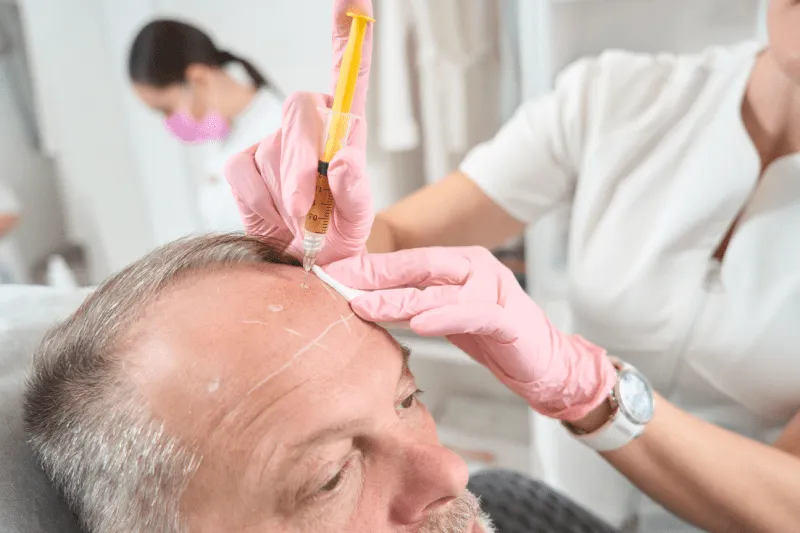
Minoxidil is one of the most popular FDA-approved topical medications for the treatment of hair loss. When applied to the scalp, it dilates the blood vessels, allowing more blood, oxygen, and nutrients to reach the follicles. This extends the growth phase of the hair and helps the hair strands to thicken. It gives very satisfying results, especially in the Norwood two and three stages where shedding has just started. However, minoxidil is a management tool, not a cure; that is, the effect of the drug continues only as long as it is used. When the drug is stopped, the gained hair may fall out again within a few months.
How Does Finasteride Use Protect Hair?
Finasteride is an oral medication that directly fights the DHT hormone, the primary cause of hair loss. It blocks the 5-alpha reductase enzyme in the body, preventing the conversion of testosterone into DHT. In this way, the pressure on the hair follicles decreases, and the shedding process largely stops; in some cases, the hair can even become thick again. It is one of the most powerful weapons used to stabilize hair loss in the early and middle stages of the Norwood Scale. Since it is a hormonal drug, it must be used under a doctor’s supervision and by evaluating potential side effects.
Does PRP Treatment Stop Hair Loss?
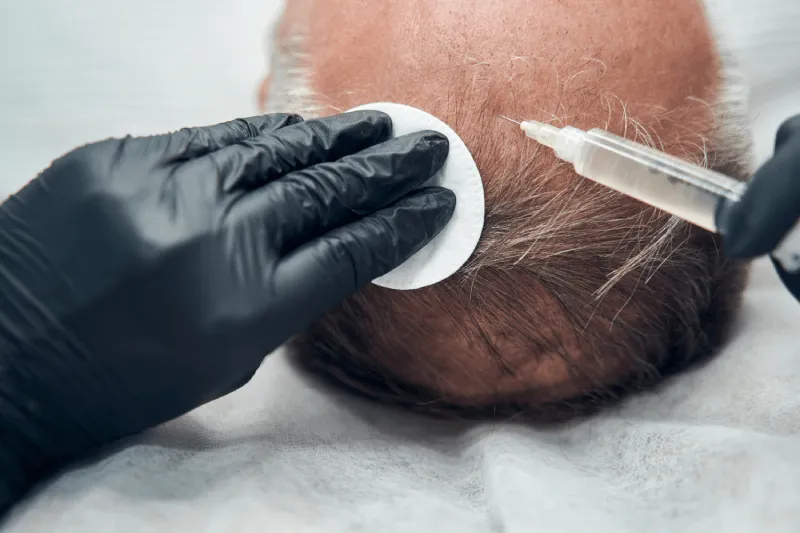
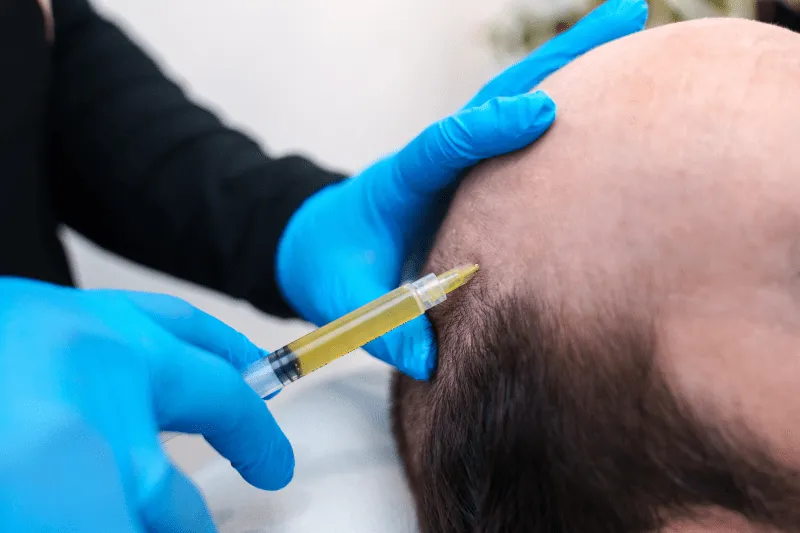
Platelet Rich Plasma (PRP) treatment is a method of injecting enriched plasma obtained from the patient’s own blood into the scalp. This plasma contains a high amount of growth factors that repair hair follicles and trigger growth. PRP is great for improving hair quality, especially in stages where the hair has thinned but the follicles have not yet completely died. It is frequently preferred to slow down progression on the Norwood Scale and to accelerate healing after a hair transplant. Being a completely natural method and not carrying an allergy risk is one of its greatest advantages.
What Is The Best Time For Hair Transplantation?
The “right time” for a hair transplant is when the shedding pattern has become clear and the patient is psychologically ready for this change. Usually, it is not recommended to immediately resort to surgery at very young ages when shedding is very active; because as shedding continues, new gaps may form behind the transplanted area. Stages three and beyond on the Norwood Scale generally represent the most suitable candidates for hair transplantation. However, if the rate of shedding has slowed down or has been controlled with medical treatments, intervention can also be made at earlier stages. The important thing is to make a design that takes future shedding into account.
How Is Hair Transplant Performed With FUE?
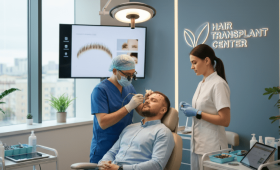
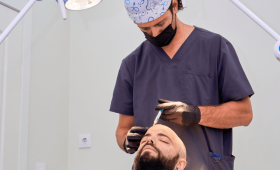
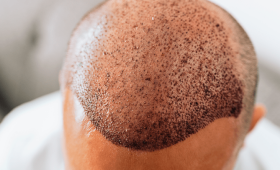
Follicular Unit Extraction (FUE) is one of the most common techniques used in modern hair transplantation. In this method, hair follicles are collected one by one from the nape area, which is the donor region, with the help of special micro-motors. Then, these follicles are meticulously placed into small channels opened in the recipient area. The greatest advantage of FUE is that it does not require stitches and does not leave a linear scar behind. The healing process is quite fast, and the results look extremely natural. Even in large areas at Norwood stages five or six, thousands of follicles can be successfully transplanted with this method.
What Are The Advantages Of DHI Technique?
The Direct Hair Implantation (DHI) technique is a method where hair follicles are collected through a special pen called “Choi” and simultaneously transplanted directly without opening a channel. This method increases the survival rate by minimizing the time the hair follicles stay outside. Furthermore, since it allows for transplantation between existing hairs, it may not be necessary to shave the hair completely. It gives excellent results, especially in cases such as Norwood two and three, where there is less hair loss or hair thickening is desired. DHI offers a more intensive and sensitive working opportunity for doctors and patients.
Do Natural Solutions Work For Hair Loss?
Natural oils, herbal cures, and methods such as massage can be beneficial for supporting scalp health, but their power to completely stop genetic hair loss is limited. For example, it is scientifically supported that rosemary oil, peppermint oil, and castor oil increase blood circulation in the scalp and nourish hair strands. However, these methods should generally be used as “auxiliaries” alongside medical treatments to stop progression on the Norwood Scale. Natural solutions can be a good option for maintaining hair quality after a hair transplant or for managing light thinning at the beginning stages.
How Does Hair Laser Treatment Work?
Low-level laser therapy (LLLT) is a method that aims to revitalize hair follicles through photobiostimulation. Light at a certain wavelength penetrates under the scalp, increasing the energy production (ATP) of cells and accelerating blood flow. This process can wake up sleeping hair follicles and allow thinner hair strands to grow thicker. Hair laser helmets or panels are usually applied in regular sessions at home or in a clinical setting. Due to the lack of side effects and being a painless procedure, it is a popular choice for patients in the early stages of the Norwood Scale.
Why Is Mesotherapy Beneficial For Hair?
Hair mesotherapy is the process of injecting vitamins, minerals, amino acids, and enzymes needed by the hair directly into the middle layer of the scalp. While it takes time for supplements taken orally to reach the hair follicles, these nutrients are delivered directly to the target area with mesotherapy. This method strengthens hair strands, reduces shedding, and makes hair look shinier. Mesotherapy, usually applied in 4-8 session cures, is a very effective medical aesthetic procedure for those who want to slow down the shedding process on the Norwood Scale and maximize hair quality.
What Are The Psychological Effects Of Hair Loss?
Hair loss is not just a physical change, but can also be a serious emotional burden. For many men, hair is a symbol of youth, attractiveness, and self-confidence. As one progresses on the Norwood Scale, problems such as body dysmorphic disorder, social anxiety, and depression can be seen in individuals. The person may start to avoid social environments or feel uncomfortable looking in the mirror. Therefore, hair loss treatment is not just an aesthetic intervention, but also a holistic healing process that restores the person’s mental well-being and quality of life.
Does Wearing A Hat Cause Hair Loss?
Although there is a common belief among the public that wearing a hat causes hair loss, this is not entirely true scientifically. Wearing a hat does not cut off the oxygen going to the hair follicles because hair follicles get oxygen from the blood circulation, not from the skin. However, wearing very tight hats can cause excessive sweating and friction on the scalp, damaging existing hair strands or triggering skin diseases. If the hat is not clean, it can pave the way for infection on the scalp, indirectly increasing shedding. In short, using a clean hat in normal sizes does not change your Norwood scale.
Can Hair Loss Be Prevented?
It may not always be possible to 100% stop completely genetic-based hair loss, but it is definitely possible to slow down the process significantly and protect existing hair for years. Early diagnosis is of vital importance here. A loss noticed in Norwood stage one or two can be stabilized with modern medicine and the right lifestyle changes. Regular nutrition, stress management, using appropriate care products for the scalp, and resorting to medical treatments when necessary ensure that baldness does not have to be destiny. The important thing is to get help from an expert before the shedding progresses too far.
Are Hair Transplant Results Permanent?
Hair transplant results are generally considered permanent because the transplanted hair follicles are taken from the nape and side areas, which are resistant to the DHT hormone. These follicles maintain this genetic resistance even when they are moved to their new places and do not fall out. However, your original hair in areas where no transplant was performed may continue to fall out. This situation requires continuing medical treatments after the transplant so as not to lead to an unnatural image over time, and for the hair design to be made considering future shedding. A correctly planned hair transplant offers a lifelong aesthetic solution.
Is The Norwood Scale Used For Women Too?
Since the hair loss pattern in women is different from men, the Norwood Scale is not suitable for women. Female pattern hair loss usually manifests as a general thinning at the top of the head rather than a regression in the front line. To classify this situation, the “Ludwig Scale” is used. The Ludwig Scale examines shedding in three main stages: slight thinning, noticeable opening, and advanced shedding. Causes of shedding in women are more closely related to hormonal changes (menopause, birth), thyroid problems, or iron deficiency, and treatment approaches are shaped accordingly.
How Does Smoking Affect Hair?
Smoking has devastating effects on hair health, just as it disrupts general health in the body. Toxins in cigarettes narrow blood vessels, disrupting micro-circulation in the scalp. This situation means that hair follicles are deprived of the vitamins and oxygen they need. In addition, smoking increases oxidative stress in the body, causing hair strands to turn white and weaken faster. Research shows that men who smoke progress faster on the Norwood Scale and that their healing processes after a hair transplant are slower and more problematic. If you want to protect your hair, you should stay away from cigarettes.
Is Scalp Massage Really Beneficial?
Scalp massage is a simple but effective auxiliary method in the fight against hair loss. A gentle massage done for a few minutes a day encourages more nutrients to reach the follicles by accelerating blood flow in the scalp. In addition, there is some scientific evidence that massage can help hair strands to thicken by mechanically stimulating hair follicle cells. Massage also reduces stress, lowering cortisol levels, which indirectly helps to prevent hair loss. Routineizing this method, which does not have any cost or side effects, will be beneficial for your hair health in the long run.
What Should Be The Conclusion About The Norwood Scale?
The Norwood Scale is a very powerful compass that allows you to understand where you are on your hair loss journey. By comparing your own situation with this scale, you can grasp the seriousness of your shedding and ask more conscious questions when consulting a professional. Remember that hair loss is not just something that happens to you, and today there is an effective solution for every stage of this problem. Whether it’s medical treatments, natural methods, or modern hair transplant techniques; the important thing is to take action instead of accepting the situation. Taking control of hair loss is the first step to rebuilding your self-confidence and social life.
Free Consultation
Fill out the form below to get your free medical travel plan and price quote.
Sources and how to verify this yourself
- Comparative study of graft survival by donor site (scalp, beard, chest) at 12 months — roughly 89% for scalp, 95% for beard and 76% for chest hair; survival also falls the longer grafts stay outside the body. source
- Ministry of Health, Regulation on International Health Tourism and Tourist Health, Official Gazette 26 April 2025, No. 32882 — authorisation requirement for facilities and intermediaries, TÜSKA accreditation, compulsory complication insurance (deadline 31 December 2025 for insurance, 31 December 2026 for accreditation). source
- Ministry of Health, Regulation on Promotion and Information Activities in Health Services, Official Gazette 12 November 2025, No. 33075 — treatment promises and guarantees are prohibited; price and campaign announcements are permitted only within international health tourism. source