What is buttock aesthetics?
Buttock aesthetics refers to the collection of surgical and sometimes non-surgical procedures aimed at making the buttocks fuller, more upright, shaped, and harmonious with general body contours. Today, these applications have become one of the most popular areas of modern plastic surgery, not only increasing volume but also improving body projection to create a dramatic change in an individual’s physical appearance. Since an aesthetic buttock structure is generally accepted as a symbol of youth and fitness, the demand for these procedures among both women and men is increasing every day.
Buttock implant or fat injection?
For many patients, the most challenging question is whether they should prefer buttock implants or fat injections, also known as the Brazilian Butt Lift (BBL). This choice varies depending on the patient’s body structure, the current body fat percentage they possess, and the final goal they wish to achieve. While fat injection offers a more natural feel and appearance, implants provide an excellent increase in volume, especially for very thin patients who do not have enough fat in their bodies to be transferred. Since both methods have their own unique technical requirements and recovery processes, it is healthiest to make a decision after a detailed examination by a specialist plastic surgeon.
How are silicone implants applied?
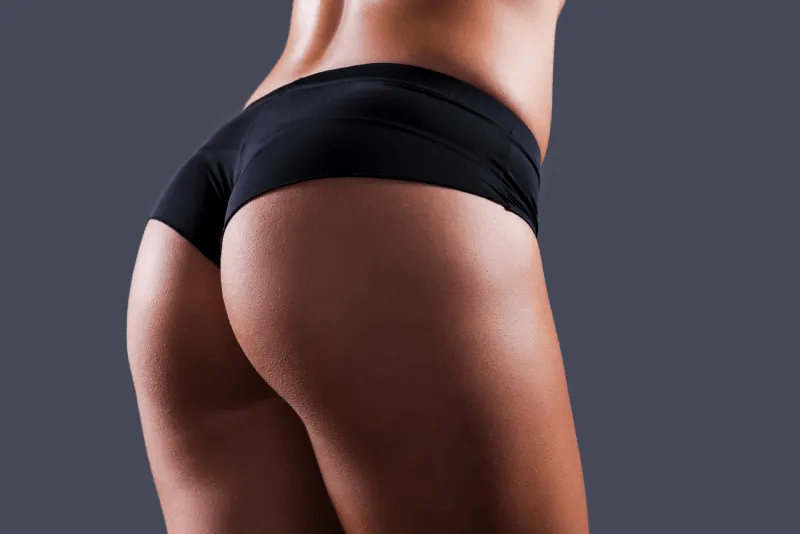
Buttock implant surgery is a procedure usually performed under general anesthesia that involves placing silicone prostheses between or on top of the gluteal muscles. The surgeon creates pockets where the prostheses will be placed by making an inconspicuous incision, usually in the sacral region between the two buttocks. Because the implants are supported by the muscle tissue in the area, the risk of displacement is minimized, and the patient is provided with a permanent projection. This procedure is the most guaranteed method of providing volume, especially for individuals who want significant fullness in the upper part of the buttocks but do not have sufficient body fat.
What is BBL or Brazilian Butt Lift?
A Brazilian Butt Lift (BBL) is a procedure involving the injection of excess fat taken from other parts of the body into the buttocks after undergoing special processing. This method is actually a part of the art of “body sculpting”; because not only are the buttocks enlarged, but unwanted fat in areas such as the abdomen, waist, and hips is removed by liposuction to achieve a classic hourglass appearance. The biggest advantage of BBL is the absence of allergy risk due to the use of the patient’s own tissue and the fact that the results look incredibly natural.
Is there enough fat for fat injection?
When planning a BBL surgery, one of the most critical stages is determining whether there is a sufficient amount of donor fat in the patient’s body to be transferred. For an ideal result, a considerable amount of fat usually needs to be drawn from the abdomen, back, and waist areas. In very thin individuals with a low body mass index, there may not be enough fat to bring the buttocks to the desired size. In this case, the surgeon either suggests that the patient gain some weight or directs them directly to the buttock implant method. The quality of the fat and how much of it survives after the procedure are also factors that directly affect the success of the outcome.
What are the advantages of buttock implants?
The most distinct advantage of buttock implants is that the volume they provide is predictable and permanent. While a portion of the fat injected in fat injection can be absorbed by the body, silicone implants never lose their shape. Additionally, they have the power to create a dramatic change even in very thin patients. Prostheses provide not only volume to the buttocks but also a very distinct uprightness and firmness. For individuals who want lines so sharp they cannot be achieved through sports or diet, implants are the fastest and most certain way to reach the targeted appearance.
How to achieve a natural look with fat transfer?
The fat transfer or BBL process provides a completely natural feel when touched or during movement because it uses the body’s own soft tissue. The surgeon strategically places the fat into different layers and points to mimic the anatomical curves of the buttocks. With this method, not only volume is gained, but also the depressions on the sides of the buttocks (hip dips) can be filled and an improvement in skin quality can be observed. The most important criterion for a natural appearance is the homogeneous distribution of the fat and the correct adjustment of the ratio of the buttocks to other body parts.
How long does the recovery process take?
The recovery process after buttock aesthetics is a period that requires patience. Usually, it takes 2 to 3 weeks for patients to return to their work lives, while full recovery and the settling of tissues spread over a period of 6 months to 1 year. The first few weeks are the period when edema and bruising in the surgical area are most intense. While pain may be slightly more in implant surgeries because muscle incisions can be made, sensitivity in the areas where liposuction was performed comes to the fore in BBL. The patient’s strict compliance with the surgeon’s instructions ensures that they get through this process comfortably.
How is pain control managed after surgery?
As with every surgical procedure, a certain amount of pain is expected after buttock aesthetics. Thanks to modern anesthesia techniques and long-acting local anesthetics used during surgery, the first few hours pass quite comfortably. In the following days, painkillers and muscle relaxants prescribed by the surgeon make the process manageable. Especially in implant patients, the pressure felt due to the stretching of the muscles is kept under control with medications. Ice applications and resting in the correct position also contribute greatly to reducing the sensation of pain and suppressing inflammation.
Who is suitable for buttock implants?
The most ideal candidates for buttock implants are individuals who have a genetically flat buttock structure and do not have enough transferable fat in their bodies. Additionally, those who have had a BBL before but were not satisfied with the results or who want firmer and more projected buttocks can also choose this method. Anyone whose general health condition does not constitute an obstacle to surgery, who has realistic expectations, and who accepts the physical limitations in the healing process can consider this operation. Implants are an indispensable option especially for those who are thin and desire a sporty buttock appearance.
Who is an ideal candidate for BBL surgery?
An ideal candidate for a Brazilian Butt Lift (BBL) is an individual who wants to gain volume in their buttocks while at the same time getting rid of stubborn fat in other parts of their body. These patients should generally have sufficient fat deposits in the abdomen, waist, or thigh areas. Good skin elasticity is important for the skin to easily adapt to its new form after liposuction. Individuals who do not smoke or can quit before surgery and are close to their ideal weight but have regional excesses constitute the patient group that feels the highest satisfaction from BBL results.
Are buttock implants permanent for life?
Buttock implants are produced from cohesive silicone gel, one of the most durable materials produced by modern medicine. These prostheses do not have to be replaced after a certain period like breast implants; they can remain in the body for life as long as they do not rupture or leak. However, over time, the aging of the body, the effect of gravity, and serious weight changes can change the general appearance of the buttocks. Even if the implant itself does not deteriorate, small revisions may be required to freshen the aesthetic appearance as a result of the sagging of the surrounding tissues. Still, it is possible to say that they offer a structurally “permanent” solution.
Do injected fats dissolve over time?
Not all of the fat cells injected in the BBL process are permanent. After surgery, approximately 30% to 40% of the transferred fat is naturally absorbed by the body, and the remaining 60-70% becomes permanent by gaining a blood supply in its new location. For this reason, surgeons usually inject fat slightly above the targeted volume. After the healing process is completed and the fats have taken hold, these cells act like a part of the body; meaning when the patient gains weight, the buttocks grow, and when they lose weight, they shrink a bit. It is vital not to apply pressure to the area after surgery to increase permanence.
Where do surgery scars occur?
In both operations, surgeons use anatomical folds to hide scars. In buttock implant surgery, the incision is usually made in the vertical line in the tailbone area where the two cheeks meet (intergluteal sulcus). In this way, the scar remains completely hidden inside underwear or swimwear. In BBL surgery, very small holes of 2-3 millimeters where liposuction cannulas enter are used. These points are usually hidden under the bikini line, inside the belly button, or in natural folds. Over time, these scars turn into skin color and become almost invisible.
What are the risks and complications?
Like every major surgical intervention, buttock aesthetics also harbors certain risks. Infection, bleeding, delay in wound healing, or complications related to anesthesia are among the general risks. Although rare, displacement of the prosthesis or capsular contracture can be seen in implant surgeries. In the BBL process, the most serious but rare risk is “fat embolism”; this situation occurs when fat accidentally escapes into a large vein. However, when performed by an experienced plastic surgeon following the correct technique and safety protocols, these risks are reduced to a minimum level.
Which method is safer?
The issue of safety is directly related to the experience of the surgeon and the equipment of the hospital rather than the technique used. BBL eliminates the risk of a foreign body reaction because it uses the body’s own tissue, but its surgical technique requires very sensitive expertise. Implants, on the other hand, are medical devices that have been used for many years and have a proven safety profile. Both methods are successfully applied thousands of times around the world. What matters is that the patient’s medical history is analyzed correctly and the procedure is performed in a fully equipped hospital environment, strictly adhering to sterilization rules.

When are the results fully visible?
The growth in the buttocks is noticed as soon as the surgery is over, but this is not the final result. In the first few weeks, the buttocks may look larger and tighter than they actually are due to edema and swelling. In BBL patients, the process of fat absorption takes about 3 months; at the end of this period, the shape of the buttocks begins to become clear. In implant patients, it may take a few months for the prosthesis to harmonize with the tissues and “settle” slightly downwards. Usually, around the 6th month, the edema caused by the surgery completely subsides, and patients begin to see the natural, aesthetic, and permanent form they dreamed of in full.
When can sports be done after surgery?
Restricting physical activity during the recovery period is essential for maintaining the results. Only light walks within the house are allowed for the first two weeks; this is to increase blood circulation and prevent the risk of clots. From the 4th week onwards, brisk walks and light lower body exercises can begin. However, at least 2-3 months should be waited for sports that work the buttock muscles intensely, such as squats, weightlifting, or heavy cardio. Returning to a sports routine must be done gradually with the surgeon’s approval to ensure that implants do not move or the fat transferred with BBL is not stressed.
How are buttock aesthetic prices determined?
There are many variables that affect buttock aesthetic prices. The method used (Implant, BBL, or a combination of both), the brand and quality of the chosen implant, the standards of the hospital where the surgery will be performed, and the surgeon’s expertise on this subject are the basic factors that determine the price. Additionally, if BBL is to be performed, the number of areas where fat will be taken and the liposuction technique (Vaser, Laser, etc.) also change the cost. Instead of focusing only on the price, prioritizing the surgeon’s success rates, patient reviews, and the security they offer is much more economical than the cost of undesirable results.
How is the type of anesthesia chosen?
Buttock aesthetic surgeries are almost always performed under general anesthesia, considering the scope and duration of the operation. Liposuction in a wide area and re-injecting the fat in BBL surgeries is a process that takes a long time. In implant surgery, since work is done in intramuscular planes, the patient being completely asleep and their muscles being relaxed provides comfort for the surgeon and a painless process for the patient. Local anesthesia or sedation can only be considered for very small touches or revisions. The anesthesiologist determines the safest protocol by examining the patient’s tests.
What is composite buttock aesthetics?
Composite buttock aesthetics is the combination of the buttock implant and fat injection methods in the same surgery. This “hybrid” approach is especially perfect for patients who want both a distinct volume and soft, natural transitions. Projection is gained at the center of the buttocks with a silicone implant, while the edges of the implant are softened and the side parts of the buttocks are shaped with the patient’s own fat. This method reduces the risk of the implant being noticed from the outside and gives the buttocks a much more aesthetic appearance that is “natural even when naked.” Today, top-level aesthetic results are usually achieved with this combined technique.
Is it possible for implants to shift?
In techniques applied in the past, shifting or displacement (malposition) of implants was a source of concern. However, in today’s modern surgical techniques, prostheses are usually placed inside or just below the large buttock muscle (gluteus maximus) by creating a “pocket.” Muscle tissue acts as a natural corset that holds the implant tightly. The surgeon’s experience and choosing the correct size of implant reduce this risk to almost zero. Avoiding excessive physical exertion in the postoperative period and using the recommended corsets are also factors that guarantee that the implants heal while remaining faithful to the plan.
Should massage be done after fat injection?
The issue of massage after BBL is quite sensitive and varies according to the surgeon’s preference. Lymphatic drainage massages are usually recommended starting from the 1st week to throw off edema and prevent hardening in the areas where liposuction was performed (where fat was taken). However, hard massage in the buttock area where fat was injected is strictly forbidden for the first few weeks; because this could damage the newly transferred fat cells that have not yet become vascularized. Any intervention to be made to the buttock area must be very gentle and only performed in line with the surgeon’s special instructions to soften the healing tissue.
Why is corset use important?
Wearing special compression corsets after surgery is not optional, but mandatory for both BBL and implant patients. The corset helps tighten the skin in the areas where liposuction was performed, reduces swelling, and prevents fluid accumulation (seroma) by closing the gaps between tissues. In the buttock area, it provides support for the implant or fat to remain stable. These corsets, which are usually requested to be worn day and night for the first 4-6 weeks, play a critical role in the correct shaping of body contours. Correct corset selection is an external factor that directly affects the success of the surgery.
What does the BBL pillow do?
For patients who have had BBL surgery, a “BBL pillow” or sitting ring is a life-saving tool. For the first 2-4 weeks after surgery, applying direct pressure to the transferred fats can prevent those fats from gaining blood supply and cause them to die. These special pillows allow the buttocks to stay in the air by giving the weight to the thigh bones. Thanks to this apparatus used when eating or sitting in mandatory situations, patients can continue their daily lives. This situation is less critical in implant patients, but correct sitting positions are still taught by the surgeon for a comfortable recovery.
Does pregnancy affect the results?
Having buttock aesthetic surgery does not constitute an obstacle to becoming pregnant or giving birth. However, hormonal changes and weight gain and loss situations during the pregnancy process can affect the results of the buttocks just as they affect all body aesthetics. Especially in patients who have had fat injection, a certain amount of decrease in the amount of fat in the buttocks can be seen when the body generally thins out. Implants are not structurally affected by this situation, but sagging can occur in the skin quality over them. For this reason, it is generally recommended that individuals planning a pregnancy soon postpone the surgery until after childbirth to preserve aesthetic success.
How does smoking affect recovery?
Smoking is the biggest enemy of all surgical procedures, but especially BBL and implant surgeries. Nicotine narrows the vessels and disrupts blood circulation; this can lead to the fat transferred in BBL not taking hold, and in implant surgeries, it can lead to the opening of stitches or the development of infection. For a successful recovery, smoking should be stopped at least 4 weeks before surgery and should not be smoked for at least 4 more weeks after surgery. Healing is delayed in tissues with low oxygenation, and aesthetic results can be seriously damaged. Following this rule is a vital prerequisite for the safety of the operation.
Might a revision surgery be necessary?
Although the best result is targeted in the first surgery, sometimes revision surgeries may be required due to asymmetries, insufficient volume, or recovery problems. In patients who have had BBL, if the fat is absorbed more than expected, a small second session of fat injection called a “touch-up” can be performed. In implant patients, it may rarely be necessary to change the prosthesis size or correct the position. Revision surgery is usually planned at least 6-12 months after the first surgery, once all tissues have fully healed. Setting out with an experienced surgeon is the biggest factor that minimizes the need for revision.
Which method is suitable for thin individuals?
The “gold standard” for very thin patients with almost no regional fat excess is buttock implants. Since enough fat cannot be collected from the bodies of these individuals, BBL alone does not give a satisfactory result. Implants can create an instant distinct curve and projection even in these patients who have a thin waist and leg structure. If the patient has even a little bit of fat, the composite technique, performed by adding a thin layer of fat on top of the implant, will give the most natural result. The depth at which the implant is placed in thin individuals should be determined much more meticulously so that it is not noticeable from the outside.
Large buttocks or upright buttocks?
Trends in buttock aesthetics are shifting from an “extremely large” appearance toward a more “upright and athletic” look. Many patients request not only to increase volume but also for the buttocks to lift upwards (butt lift effect). While this uprightness is provided by filling the upper pole of the buttocks with fat injection, implants have the power to structurally push the buttocks up. Aesthetic buttocks are evaluated not only by their size but also by their angle with the waist and their smoothness at the junction with the leg. The surgeon’s goal is to create a balanced silhouette that is both large and upright, suitable for the patient’s height and shoulder width.
Does cellulite disappear with buttock aesthetics?
This subject is generally misunderstood; buttock aesthetics is not a cellulite treatment. However, especially when the underside of the skin is filled with volume during fat injection (BBL), the skin stretches and a certain amount of improvement in the pitted appearance created by cellulite can be noticed. Additionally, stem cells inside fat cells can increase skin quality. On the other hand, a buttock implant also creates a smoother perception of the surface by stretching the skin. Still, for deep cellulite bands, performing additional procedures such as subcision simultaneously with or after these surgeries will give more effective results.
How are asymmetry problems resolved?
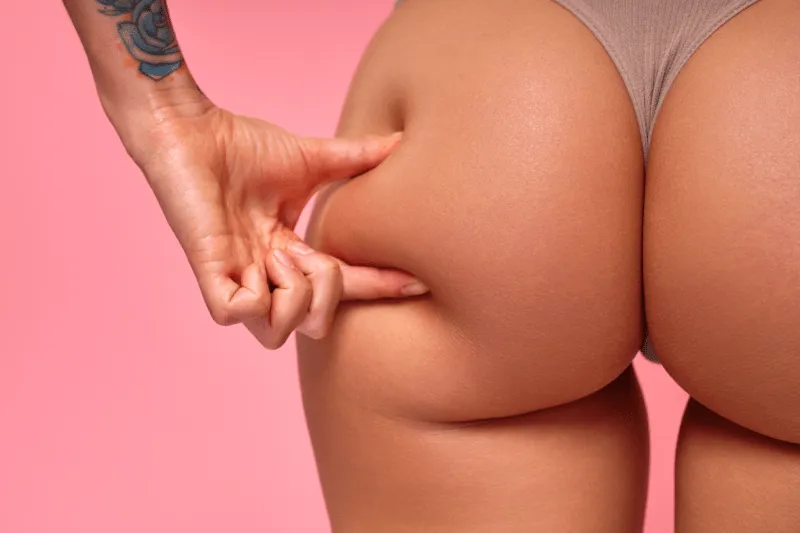
Almost everyone naturally has slight asymmetries in their body. It is common for one of the buttocks to be a little lower or smaller than the other. Buttock aesthetics is a great opportunity to correct these asymmetries. In the BBL method, the surgeon ensures balance by injecting more fat into the side that is lacking. In implant surgery, prostheses of different volumes can be used or the placement of the prostheses can be adjusted to correct the asymmetry. The artistic eye of the surgeon ensures that the difference between the two buttocks is minimized and a perfect harmony is captured when viewed from the front and back.
What should be looked for when choosing a doctor?
Buttock aesthetics is one of the most complex and specialized branches within body aesthetics. The first condition is that the doctor you choose should be a specialist in plastic, reconstructive, and aesthetic surgery. Examining the “before-after” photos of the buttock aesthetic surgeries the surgeon has performed before helps you understand their style. Additionally, you should not hesitate to ask what safety measures the surgeon takes during the surgery and what techniques they use against the risk of fat embolism if they are performing BBL (such as injection accompanied by ultrasound). A doctor who inspires confidence, provides clear answers to your questions, and manages your expectations realistically is the most correct choice.
What is the preparation process like before surgery?
The 2 weeks before the surgery are the foundation of a successful operation. In this process, blood thinners, herbal teas, and vitamin supplements should be discontinued. Blood tests, chest X-rays, and ECGs are taken to evaluate general health status. Smoking and alcohol use should be terminated. A shower should be taken on the morning of the surgery and fasting should be maintained from the hour specified by the surgeon. Additionally, arranging a companion to help you during the recovery period and completing preparations at home in advance, such as a BBL pillow, corset, and comfortable clothes, will ensure you spend the process much more peacefully.
How does buttock aesthetics affect self-confidence?
There is a strong link between body perception and self-confidence. Many patients prefer this surgery because they do not feel good about themselves in their clothes or they feel self-conscious at the beach. The proportional and curved lines obtained after surgery change individuals’ styles of dress and help them be more active and happy in their social lives. Beyond a physical change, the person feeling more feminine or masculine (according to preference) when they look in the mirror positively affects general quality of life and psychological well-being. Buttock aesthetics is an investment not just in a body part, but in a person’s confidence in themselves.
Free Consultation
Fill out the form below to get your free medical travel plan and price quote.
Sources and how to verify this yourself
- Howe M-S, Keys W, Richards D. Long-term (10-year) dental implant survival: a systematic review and sensitivity meta-analysis. Journal of Dentistry, 2019 — pooled 10-year implant survival 96.4% (95% CI 95.2–97.5%); conservative sensitivity estimate 93.2%. source
- Ministry of Health, Regulation on International Health Tourism and Tourist Health, Official Gazette 26 April 2025, No. 32882 — authorisation requirement for facilities and intermediaries, TÜSKA accreditation, compulsory complication insurance (deadline 31 December 2025 for insurance, 31 December 2026 for accreditation). source
- Ministry of Health, Regulation on Promotion and Information Activities in Health Services, Official Gazette 12 November 2025, No. 33075 — treatment promises and guarantees are prohibited; price and campaign announcements are permitted only within international health tourism. source