What Is Laminate Veneer And Why Is It Popular?
Laminate Veneer, also known as “leaf porcelain,” consists of extremely thin and aesthetic restorations applied only to the front surfaces of the teeth. The primary reason this method is so popular is that it offers an incredibly natural and radiant smile design with minimal abrasion (and sometimes none at all) to the tooth structure. The light transmittance of porcelain is very close to natural tooth enamel, ensuring that aesthetic results look far from artificial. Additionally, the fact that porcelain surfaces do not stain and are resistant to abrasion makes this treatment an indispensable option for patients seeking a long-term solution.
Does Laminate Veneer Fall Off The Tooth?
The most honest answer to the frequently asked question, “Does Laminate Veneer fall off the tooth?” is that the risk of falling is almost non-existent when performed with correct planning, high-quality materials, and by an expert physician. In modern dentistry, “bonding” agents create a chemical bond between the porcelain and the tooth enamel. This bond is so strong that it is often impossible to separate the porcelain from the tooth; it can only be removed by cutting. However, as in any medical restoration, the risk of falling or breaking theoretically exists in cases where biomechanical rules are not followed or patient care is neglected.
What Are The Reasons For Laminate Veneer Falling Off?
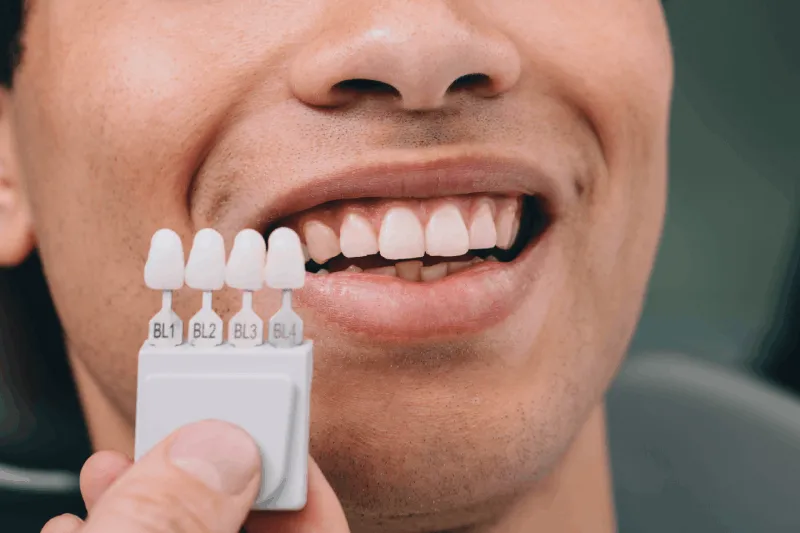
Several factors usually combine behind the falling off of a laminate veneer. The most common reasons include incorrect occlusion (bite) planning, inadequate tooth preparation, low-quality bonding materials, and patient habits such as bruxism (teeth grinding). Additionally, an insufficient amount of enamel on the tooth directly affects the bonding resistance. If the dentist cannot correctly calculate the thickness of the porcelain and the loads placed on the tooth, mechanical forces can put excessive stress on the adhesive bond, causing the veneer to loosen or fall off completely.
What Mistakes During The Bonding Process Cause Falling?
The bonding (cementation) stage is the “sine qua non” critical point of laminate treatment. The smallest isolation error at this stage, such as saliva or blood leaking into the bonding area, causes the bond to fail. Furthermore, incorrect setting of the etching time, non-homogeneous distribution of the bonding agent, or insufficient light-curing time also causes laminate veneers to fall off in a short time. The meticulousness of the physician and the quality of the technological equipment used are the most fundamental factors determining the lifespan of the veneer. A bonding process performed in a wet environment is, unfortunately, doomed to fail regardless of the quality of the material used.
Which Foods Increase The Risk Of Laminate Veneers Falling Off?
Although laminate veneers are very durable, they are sensitive to sudden and hard forces due to the nature of porcelain. In particular, breaking shelled foods like hazelnuts or walnuts with the teeth, carelessly biting hard objects like olive pits, or trying to bite off hard fruits like apples or quinces with the front teeth can cause the veneer to fall off or crack. Additionally, very sticky foods (certain gums or hard caramels) can exert a mechanical pulling force and dislodge the veneer if the marginal fit is not perfect. Therefore, it is recommended that laminate users make their eating habits a bit more “gentle.”
Does Teeth Grinding Cause Veneers To Fall Off?
Yes, bruxism—the habit of grinding and clenching teeth—is one of the greatest enemies of laminate veneers. These massive forces applied involuntarily throughout the night create excessive stress on the porcelain veneers. Over time, this stress causes the adhesive material to fatigue, leading the veneer to separate from the tooth or break into pieces. If the patient has such a habit, a custom-made night guard (protective splint) must be used after laminate treatment. Otherwise, even the best-made laminate may not be able to withstand these uncontrolled forces for long.
What Should I Do If My Veneer Falls Off?
If your laminate veneer falls off, the first thing you should do without panicking is to find and preserve that piece. Protect the fallen veneer by placing it in a clean box or a container filled with water. Absolutely do not try to glue it back yourself, as household glues damage the tooth and make it impossible for the doctor to reseat the veneer in its original place. Contact your dentist for an appointment without delay. During this process, sensitivity may occur in your tooth, so it is best to avoid very hot or cold drinks and not to chew anything with that area.
Can A Fallen Laminate Veneer Be Re-Bonded?
The answer to this question depends on why the veneer fell off and the condition of the piece. If the veneer came off completely intact (without breaking) and there is no new decay or damage to the underlying tooth structure, it can be successfully re-bonded by an expert physician after the surfaces are cleaned and special processes are applied. However, if a small part of the veneer broke when it fell or if the bonding surface is damaged, a new veneer is usually a healthier and longer-lasting solution. Your physician will make the most accurate decision after an examination under a microscope or magnifying loupes.
How Does The Condition Of Tooth Enamel Affect Retention?
The success of laminate veneers depends largely on the strength of “bonding to enamel.” Tooth enamel is the hardest and best-bonding tissue in the body. If there is not enough enamel on the tooth and the underlying dentin tissue covers a large area, the bonding resistance decreases significantly. The risk of laminate veneers falling off is higher on teeth that have eroded, are genetically weak in enamel, or have been previously over-abraded. In such cases, physicians may prefer full ceramic crowns (zirconium or Empress full crowns) instead of laminates. Enamel integrity is vital for a successful laminate.
Do Errors In The Preparation Phase Cause Falling?
Absolutely, yes. The tooth abrasion phase, which the dentist calls “preparation,” forms the foundation for the laminate veneer. If sharp corners are left on the tooth, these corners create stress points on the porcelain, leading to cracks. While insufficient abrasion of the tooth causes the veneer to be too thick and incompatible with the gums, excessive abrasion damages the bonding surface. If the incorrect preparation of the tooth’s form prevents the veneer from having “support areas” that help it hold on mechanically, the veneer relies solely on the strength of the adhesive, which is a technical error that increases the risk of falling.
How Important Is The Quality Of Bonding Materials?
In modern restorative dentistry, adhesives (resin cements) are engineering marvels. However, the quality and characteristics of every cement are not the same. Cements specifically produced for laminate veneers by world-standard recognized brands should be used. These cements do not change color aesthetically and lock onto the tooth and porcelain at a microscopic level. Using cheap or inappropriate adhesives causes the bond to loosen over time and dissolve due to moisture. A quality treatment starts with the selection of quality materials, and this choice directly determines the life of the restoration.
Does Lack Of Oral Hygiene Shorten The Lifespan Of Veneers?
Porcelain itself does not decay, but the natural tooth tissue under the porcelain is still susceptible to decay. If oral hygiene is neglected, plaque accumulates at the gum line where the veneer ends, leading to “marginal leakage” over time. Gum recession or hidden decay at the veneer margin causes the adhesive to lose its properties, leading to the hollowing of the veneer’s underside and, consequently, its falling off. Keeping laminate margins clean through regular tooth brushing, dental flossing, and the use of interdental brushes is the most important factor in ensuring the veneers stay in the mouth for decades.
Do Laminate Veneers Fall Off While Playing Sports?
Veneers falling off during sports usually occurs as a result of direct contact or an accident. Particularly in contact sports such as basketball, football, or boxing, a blow to the face can cause the veneer to break or fly out of place. This risk applies not only to laminate teeth but also to natural teeth. It is highly recommended that individuals involved in sports use protective devices called “mouthguards.” Protecting against traumas that may occur during sports preserves both your laminate investment and prevents the loss of your natural teeth. Normal physical activities do not create a force that would cause the veneer to fall off.
Does Smoking And Alcohol Consumption Affect Bonding Strength?
While smoking and alcohol consumption do not directly cause veneers to fall off, they pose an indirect risk by damaging gum health. Smoking leads to gum recession and inflammation. When the gums recede, the finish line (margin) of the veneer is exposed. Micro-leakage and decay can begin in this exposed area. Additionally, the continuous use of mouthwashes containing high concentrations of alcohol can affect the structure of some resin adhesives at a microscopic level. A healthy oral environment is essential for the veneers to integrate with the tissue, and harmful habits threaten this integrity over time.
Why Do Temporary Veneers Fall Off More Often Than Permanent Ones?
During the laminate treatment process, temporary veneers placed on the teeth while the permanent porcelains are being prepared are, by nature, bonded more weakly. This is because the temporaries must be easily removable without damaging the tooth when the permanents arrive. Temporary veneers are usually made of composite material and attached with “temporary” cements. Therefore, patients may see their temporary teeth fall off during this interim period (approximately 1-2 weeks). This situation is normal and does not give an idea about the success of permanent porcelain laminate veneers; porcelains are bonded with much more sophisticated and permanent methods.
How Long Is The Lifespan Of Laminate Veneers?
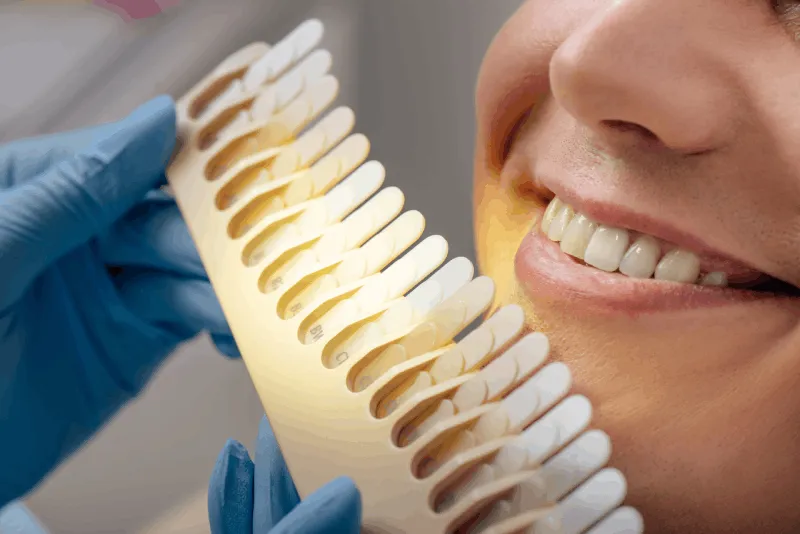
Laminate veneers can serve in the mouth for an average of 10 to 20 years, and sometimes much longer, when well cared for and applied with the correct technique. However, the concept of “lifespan” is not just about the veneer not falling off, but also about maintaining its aesthetic integrity and gum harmony. Over time, the gums may physiologically recede or the color of the tooth may change; in such cases, renewal may be required for aesthetic concerns. There are laminate cases in the literature that have been used without problems for over 20 years. This longevity is entirely a result of the collective success of the physician, technician, and patient.
Does Gum Recession Prepare The Ground For Veneers To Fall Off?
Gum recession leaves the sensitive area where the veneer meets the tooth unprotected. This area becomes a suitable environment for the accumulation of food debris and plaque. If decay starts in these areas, the decayed tissue softens the bonding surface and damages the retention of the veneer. Furthermore, gum recession causes the root surface of the tooth to be exposed, and the root surface is a tissue that is much harder to bond to than enamel. This situation prepares the ground for the veneer to leak from the margins and eventually fall off. With regular dentist check-ups, gum recession can be noticed early and precautions can be taken.
How Do Incorrect Bite Malocclusions Damage The Veneer?
In dentistry, the bite relationship between the lower and upper teeth, which we call “occlusion,” is the most critical engineering detail in laminate success. If the veneer enters the bite path of the lower teeth more than necessary or if “lateral” (side) forces come onto it during chewing movements, this creates a leverage effect. This leverage effect acts like a force constantly trying to pull the veneer out of place. The physician must meticulously check all jaw movements (right, left, forward) after finishing the laminate and eliminate these “interference” contacts. An incorrect bite is the most insidious reason for veneers falling off within months.
Is Marginal Leakage Of The Veneer A Sign Of Falling Off?
Marginal leakage occurs when the adhesive line between the veneer and the tooth loses its seal. This is usually noticed as a discolored, dark line at the edge of the veneer. This situation can be an early harbinger that the veneer will fall off. Bacteria entering the area where leakage occurs eventually erode the adhesive and decay the tooth under the veneer. If you notice a color change or a roughness that bothers the tongue at the edge of your veneer, you should consult your physician before the veneer falls off. With early intervention, the problem can sometimes be solved by cleaning and polishing the margins, but sometimes renewal is necessary.
Does Hot And Cold Sensitivity Indicate That The Veneer Is Loose?
Sensitivity does not always mean the veneer will fall off, but it can be a sign. Slight sensitivity for the first few weeks after treatment is considered normal. However, a sudden hot-cold sensitivity that starts months later may indicate that one edge of the veneer has opened and the tooth is left vulnerable. Fluids leaking through the points where the adhesive bond has weakened stimulate the nerve endings, causing pain. This situation is an indication that the veneer has started to separate from the surface it is bonded to. If you have such a complaint, it is important to have a check-up to see if the veneer has come loose or if there is leakage.
Does The Quality Of Porcelain Material Affect The Risk Of Falling Off?
Yes, the quality and type of porcelain (e.g., E-max, Empress, or Feldspathic porcelain) affect durability. High-quality porcelains create a much stronger bonding surface when etched due to their internal structures. Low-quality or inappropriately fired porcelains are more brittle and may not achieve full chemical integration with the adhesive. Additionally, the preparation process of porcelain in a laboratory environment is critical; the technician’s expertise and the CAD/CAM technology used ensure that the veneer fits the tooth with millimetric (micron-level) precision. The risk of a perfectly fitting veneer falling off is much lower than one that remains gapped.
How Durable Are Veneers?
Laminate veneers are as thin and fragile as an “eggshell” on their own. However, when bonded to the tooth with special techniques, they become a part of the tooth and gain immense resistance. A bonded laminate can withstand pressure forces as much as natural tooth enamel. Research shows that laminates are quite resistant to chewing forces. However, it should not be forgotten that this durability is for vertical forces; they are still sensitive to horizontal forces trying to pry the veneer out of place. Therefore, durability is parallel to correct use and protection.
For Which Teeth Is Applying Laminate Veneer Risky?
Not every tooth is a suitable candidate for a laminate. Teeth with very large fillings, teeth that have undergone root canal treatment and become brittle, or teeth that are excessively crowded or set too far back due to jaw structure fall into the risky group. Additionally, the risk of falling off may increase in very small (microdontia) teeth because the bonding area is insufficient. Application is also risky for patients who have severe teeth grinding and refuse to wear a protective splint. The physician should determine these risks in advance with panoramic X-rays and intraoral examinations and present alternatives such as full ceramic crowns or orthodontic treatment if necessary.
Can Incorrect Toothbrushing Techniques Displace The Veneer?
While incorrect brushing does not directly displace the veneer, it can damage the gums and the adhesive margin. Brushing horizontally and forcefully with a “sawing” motion using very hard-bristled brushes pushes the gums down. When the gums recede, the margin of the veneer becomes vulnerable. The ideal method is to brush with circular or sweeping motions from the gum toward the tooth using a soft or medium-hard brush. Additionally, toothpastes containing abrasive particles (some whitening pastes) can ruin the polish of the porcelain over time and microscopically erode the marginal adhesives.
Does Using Dental Floss Cause The Veneer To Fall Off?
There is a common misconception that “flossing pulls and drops the veneer.” On the contrary, flossing extends the life of laminate veneers. If a veneer falls off while flossing, its adhesive was already compromised or the marginal fit was faulty, and flossing actually allowed you to notice this problem early. A healthy and correctly bonded laminate easily resists the force applied by dental floss. Dental floss cleans the bacteria accumulating at the laminate margins, preventing decay and indirectly preventing the veneer from falling off. This is why flossing is indispensable for laminate owners.
How Should Laminate Veneers Be Maintained?
Maintenance is actually not very different from natural teeth, but it requires a bit more care. Brushing gently at least twice a day and regular daily flossing are the basic rules. A regular dentist check-up every six months ensures that any leakages or small problems are caught before they grow. It is necessary to avoid biting hard objects and to give up habits like nail-biting. If there is night grinding, the night guard must never be neglected. These simple steps will ensure that your laminate veneers remain as bright and solid as the first day for a lifetime.
Does The Veneer Fall Off Immediately In Case Of Impact Or Trauma?
In case of a severe impact (falling, accident, ball hit, etc.), laminate veneers usually break rather than fall off. This is because the adhesive bond is so strong that the porcelain breaks within itself instead of letting go of the tooth. Sometimes the impact is so great that the veneer can break together with the underlying tooth or come out of place. If your veneer is wobbly or broken after a trauma, an X-ray and examination should be performed immediately against the possibility of damage to the tooth’s nerve. Using a mouthguard during risky activities is the most logical approach to protect against impacts.
Do Teeth Whitening Products Weaken The Adhesive?
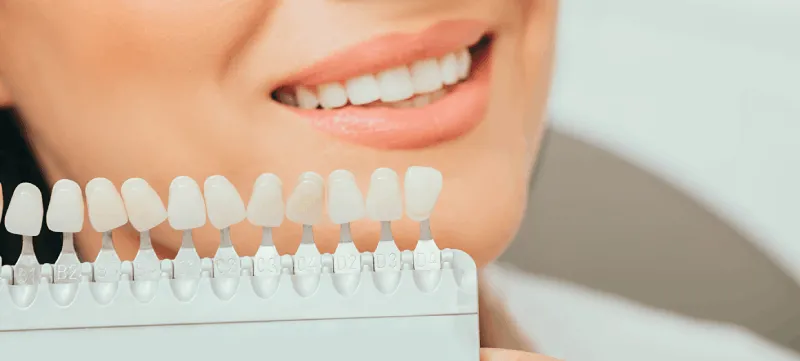
Office-type or home-type professional whitening products generally do not create a negative effect on porcelain and adhesive. However, uncontrolled high-acid whitening kits purchased from the internet or whose contents are unknown can damage the structure of adhesive resins and the surface polish of the porcelain. Also, an important point is this: Whitening gels do not change the color of the porcelain; they only whiten natural teeth. If you want to whiten your other non-laminate teeth, it is of critical importance for color harmony that you do this under the control of an expert according to the color of your veneers.
Can I Glue A Fallen Veneer Back On By Myself At Home?
Absolutely not! This is one of the biggest mistakes you can make. Superglues or other strong adhesives sold in markets are toxic and cause permanent damage to the tooth tissue. Additionally, because these adhesives create a certain thickness, the veneer will not sit perfectly in its original place, leading to bite malocclusions and causing the veneer to break again in a short time. Even worse, when your physician has to remove a veneer glued with household glue, the porcelain may shatter, and you lose both your veneer and your tooth tissue. Keep the fallen piece clean and only trust your physician.
What Happens If A Fallen Veneer Is Swallowed?
Since laminate veneers are very small pieces, if they are accidentally swallowed, they are usually excreted through the body naturally and without problems. The porcelain material is biocompatible and is not digested by stomach acid, yet it does not harm the body. If you suspect the veneer has been swallowed and there are no symptoms like shortness of breath or severe abdominal pain, there is usually no need for concern. However, if the veneer has escaped into the windpipe (coughing fit, difficulty breathing), medical help should be sought urgently. In any case, since the swallowed veneer will not return, your physician will make a new one.
From What Age Is This Treatment Safer?
Laminate treatment is generally applied to individuals whose jaw development is complete and whose gum levels have stabilized. This usually corresponds to after the age of 18-20. At very young ages, the nerve chambers (pulp) of the teeth are wide, so the abrasion process can be risky, and since gum recession continues, veneer margins can be exposed in a short time. There is no upper age limit; every adult with healthy tooth and gum tissue can have laminates. As long as the bone structure and general oral health are in place, laminate treatment at advanced ages is a great way to achieve a much younger appearance.
Why Is Laminate Veneer Treatment With Cure Holiday Safe?
Cure Holiday is an organization that follows world standards in aesthetic dentistry and provides its patients with the safest treatment environment with its expert staff and state-of-the-art equipment. Every laminate veneer application performed here begins with a meticulous digital smile design process. Cure Holiday experts ensure that veneers not only look beautiful but also integrate perfectly with the tooth by staying true to biomechanical principles. Thanks to the top-tier porcelain materials and advanced bonding systems used, problems such as “veneer falling off” are rendered almost impossible. Patients receive a long-lasting and safe smile with the detailed care guidance we provide after treatment.
What Quality Standards Does Cure Holiday Offer To Its Patients?
At Cure Holiday, we accept quality not just as a word but as a standard. All laminate veneers used in our clinic are designed and produced in a computer environment with high-precision CAD/CAM technology. This technology minimizes the risk of falling off by reducing the fit between the tooth and the veneer to the micron level. Furthermore, the adhesive cements used are sourced from the world’s most respected brands, and each bonding process is performed under sterilized conditions where full isolation is ensured. With our transparent communication, high material quality, and patient-oriented approach, we ensure that every patient leaves our clinic happy and safe.
How Do You Achieve Permanent Results With Cure Holiday Expertise?
The secret of permanent results lies in the combination of correct diagnosis and perfect application. Cure Holiday’s expert dentists prepare a personalized plan by evaluating not only your teeth but your entire facial analysis and chewing functions. If there are risky situations like teeth grinding or incorrect bite, these problems are solved or preventive measures are taken before the treatment. The microscopic meticulousness shown during the application phase ensures that the veneers are bonded with a strength no different from your natural tooth. The treatment journey you will take with Cure Holiday means not just having a new smile, but owning a functional work of art that you will use safely for years.
Why Should You Choose Cure Holiday For Your Dream Smile?
Your smile is your signature, and you want to entrust this signature to the best hands. Cure Holiday makes a difference in the sector with the experience, technological superiority, and patient satisfaction-oriented service approach it offers in laminate veneer treatment. Every patient is special to us; therefore, instead of standard solutions, we produce long-lasting restorations with minimized risk of falling or breaking, compatible with your facial features, skin color, and character. If you aim for perfection in both aesthetics and functionality, we invite you to the Cure Holiday family with our professional team and comfortable treatment processes. That radiant smile of your dreams is just a few appointments away with Cure Holiday expertise.
Free Consultation
Fill out the form below to get your free medical travel plan and price quote.
Sources and how to verify this yourself
- Howe M-S, Keys W, Richards D. Long-term (10-year) dental implant survival: a systematic review and sensitivity meta-analysis. Journal of Dentistry, 2019 — pooled 10-year implant survival 96.4% (95% CI 95.2–97.5%); conservative sensitivity estimate 93.2%. source
- Ministry of Health, Regulation on International Health Tourism and Tourist Health, Official Gazette 26 April 2025, No. 32882 — authorisation requirement for facilities and intermediaries, TÜSKA accreditation, compulsory complication insurance (deadline 31 December 2025 for insurance, 31 December 2026 for accreditation). source
- Ministry of Health, Regulation on Promotion and Information Activities in Health Services, Official Gazette 12 November 2025, No. 33075 — treatment promises and guarantees are prohibited; price and campaign announcements are permitted only within international health tourism. source