Why is Facelift Aesthetics So Popular?
Facelift surgery, one of the most in-demand procedures in plastic surgery today, maintains its popularity thanks to its power to reverse the negative effects of time and gravity on the face. People do not just want to look younger; they also want to reflect the energy of their inner world onto their outer appearance. Thanks to modern medical technologies, techniques have been developed that offer much more natural, “undetectable” results and faster recovery times. In an era where social media and visual communication have increased, this situation leads individuals of all ages to turn to these procedures to feel more self-confident and vibrant.
How Do Facial Aging Signs Begin?
Although the aging process actually begins biologically in the late 20s, visible effects generally become prominent in the 30s and 40s. As the production of collagen and elastin, the basic building blocks of the skin, slows down, the skin loses its elasticity. First, fine lines around the eyes appear, followed by the deepening of the nasolabial folds—the grooves running from the edge of the nose to the corner of the mouth. Gravity causes the fat pads in the face to shift downward, leading to the flattening of the cheeks and the loss of clarity in the jawline (jowl line). This process occurs at different speeds depending on the person’s genetic structure, sun exposure, and lifestyle.
What is the Ideal Age for Facelift Surgery?
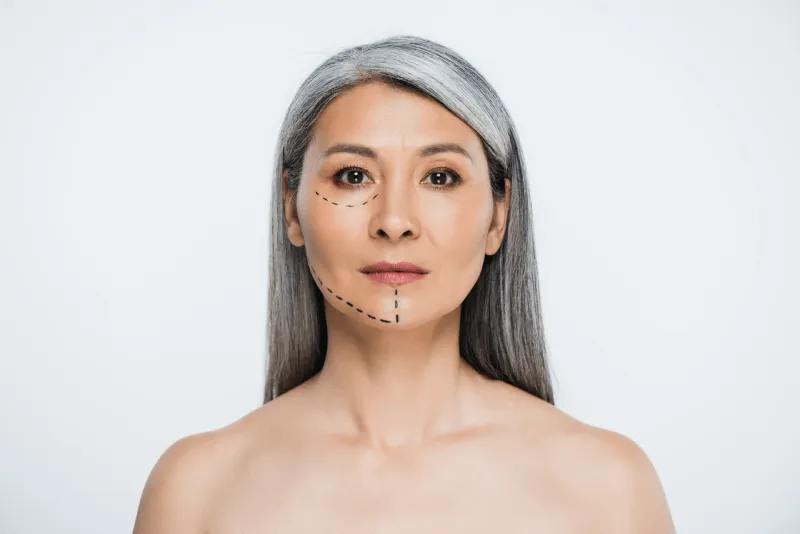
There is no “single correct age” for facelift surgery because aging follows a different calendar for everyone. While patients between the ages of 40 and 65 are the most frequent group applying for this operation, individuals in their late 30s who experience significant sagging due to genetic reasons or individuals in their 70s with good health can also benefit from this surgery. What is important is the condition of the tissues rather than chronological age. If non-surgical methods (fillers, botox, suspension) are no longer sufficient and permanent sagging has occurred in the skin, that moment is the most ideal time for a facelift.
What is Classic Facelift Surgery?
A classic facelift, referred to in medical literature as “Rhytidectomy,” is the most comprehensive surgical procedure covering the lower third of the face and the neck area. This surgery does not just stretch the skin; it also reshapes the SMAS tissue, which is the layer of muscle and fascia beneath the skin. It is performed through incisions starting from the front of the ear and extending behind the ear and into the scalp. The classic technique is considered the gold standard for sharpening the jawline, correcting the “turkey neck” appearance, and restoring the general facial oval, especially in patients with advanced sagging.
Who is Suitable for Classic Facelift?
This operation is generally designed for individuals aged 50 and over who have severe sagging, deep wrinkles, and excess skin on their face and neck. Patients who experience tissue displacement along with volume loss in the middle and lower parts of the face, whose jawline has completely become obscured, and whose neck skin has loosened gain the highest efficiency from a classic facelift. It is also suitable for individuals who have previously had a mini facelift but need a more radical change as the years pass. The patient’s general health being suitable for anesthesia and being a non-smoker directly affects the recovery success.
What is the SMAS Facelift Technique?
SMAS (Superficial Musculoaponeurotic System) is a critical tissue layer located just beneath the facial skin, including muscles and connective tissue. While only the skin is pulled in traditional stretching methods, in the SMAS technique, this deep tissue layer is suspended by stretching it upward and outward. In this way, the basic structure of the face is rejuvenated without creating excessive tension on the skin. The biggest advantage of the SMAS facelift is that the result is much longer-lasting and natural. In contrast to artificial facial expressions that look like they have “entered a wind tunnel,” the SMAS technique moves the volume to the right places without disturbing the character of the face.
In Which Situations is Deep Plane Facelift Performed?
The Deep Plane facelift is an advanced technique where the surgeon goes beneath the SMAS layer to release the deep ligaments of the face and move the entire mid-face structure as a whole. This method is preferred especially for patients with very severe sagging in the mid-face area (cheekbones and nasolabial region). Since the skin and SMAS layer are moved as a single block without being separated from each other, the blood circulation of the tissues is better preserved and bruising is usually less. This technique is perfect for those who want to eliminate the aging signs in the center of the face and obtain the longest-lasting result (15 years and over).
How Long Does Classic Facelift Surgery Take?
A classic facelift surgery generally takes between 4 and 6 hours, depending on the scope of the procedure and the additional procedures to be combined (eyelid aesthetics, fat injection, etc.). The meticulous release of tissues by the surgeon, bleeding control, and placing the stitches so that they do not leave scars are processes that take time. If the surgery is limited to only a facelift, the time may be shorter; however, modern approaches usually combine it with a neck lift for a total rejuvenation, so the process may be extended. For the safety of the patient, it is essential that the operation is performed in a fully equipped hospital environment.
How is the Recovery Process After Classic Facelift?
It is normal to see slight tension, edema, and occasional bruising in the face area during the first few days after surgery. Patients are usually kept in the hospital overnight under observation. Keeping the head elevated and applying ice during the first week accelerates healing. Stitches are usually removed between the 7th and 10th days. After approximately 2 weeks, patients can return to their work lives and social activities. However, it may take 3 to 6 months for the face to fully settle, for the edema to disappear completely, and for the scars to become indistinct. Being patient and following the doctor’s instructions during this process determines the quality of the result.
What is Mid-Face Lift Surgery?
A Mid-face lift is a special surgical procedure targeting the center of the face, specifically the area from the lower eyelids to the corners of the mouth. It aims to move the sagging cheek tissue back to where it should be, namely over the cheekbones. Its difference from a classic facelift is that the focus is not on the jawline or neck, but on the volume loss and sagging in the middle of the face. Usually performed through small incisions made from the temporal (temple) area or inside the mouth, and sometimes together with lower eyelid aesthetics, this procedure gives the person a fresher and more rested expression.
Which Regions Does Mid-Face Lift Target?
The primary target of this operation is the “malar” fat pads in the upper part of the cheeks. When this area sags, the “tear trough” (eye groove) deepens, causing a tired expression under the eyes, and the cheeks flatten, giving the face a squarish or tired form. The mid-face lift horizontally lifts these tissues vertically, making the cheekbones prominent, reducing the depth of the nasolabial lines, and shortening the distance between the lower eyelid and the cheek, providing a smooth transition. In this way, the aging signs in the center of the face are effectively eliminated.
How is Cheek Sarking Corrected with Mid-Face Lift?
Cheek sagging occurs as a result of the soft tissues in the mid-face region succumbing to gravity. During a mid-face lift, the surgeon releases the sagging fat pads from the surrounding tissues and fixes them to the fascia tissue in the temple region using special stitching techniques or suspension methods. This process provides a natural elevation without inflating the face, unlike fillers. By returning the tissues to their own anatomical position, the cheeks look fuller and more upright, while the downward tendency at the corners of the mouth is also lightened. The result is the person regaining their cheek form from 10-15 years ago.
Is Mid-Face Lift Surgery Permanent?
No aesthetic operation can completely stop the aging process, but the mid-face lift is quite long-lasting in terms of the results it provides. The effect of the procedure usually continues between 7 and 10 years. The tissues relocated by surgery adapt to their new places and tighten there. Of course, gravity and natural aging will continue, so there may be very slight changes over time, but the patient never returns to that distinct sagging level before the surgery. Maintaining a healthy lifestyle, protecting from the sun, and moisturizing the skin can extend this period to many more years.
Is Mid-Face Lift Performed Without Scars?
In aesthetic surgery, the word “scarless” usually means that the scars are hidden in places where they will not be seen. In mid-face lifts, incisions are usually hidden inside the hair in the temple region or just at the lash line of the lower eyelid, and sometimes inside the mouth. After these incisions heal, it is almost impossible to notice them from the outside. If modern endoscopic techniques are used, incisions can be kept much smaller (a few millimeters). The surgeon’s stitching ability and the patient’s wound healing capacity also play an important role in the success of this process; but ultimately, the goal is for “no visible scar” to remain.
What is a Mini Facelift?
A mini facelift is a less invasive version of the classic facelift and is also commonly known as the “weekend facelift.” In this procedure, incisions are kept much shorter than the classic method (usually limited only to the front of the ear) and the intervention made to the tissues under the skin is more limited. The basic aim is to eliminate slight sagging in the jawline and give the lower part of the face a tighter appearance. Since less tissue trauma is created, bruising and swelling are at a minimum level. The mini facelift is designed for people who are in the early stages of aging and do not yet need a major surgical operation.

Who are the Ideal Candidates for a Mini Facelift?
The most suitable candidates for a mini facelift are generally individuals between the ages of 35-50 whose skin elasticity is not yet very damaged but who have slight sagging starting to become prominent in the jawline (jowls). People who do not have excessive skin surplus in the neck area and only want a recovery in the lower part of the face are very satisfied with this method. It is also an excellent option for patients who need to return to work very quickly, do not have time for long recovery periods, and are looking for a more natural, light touch. This intervention performed at a young age can also postpone the time for larger surgeries that may be needed in the future.
What are the Differences Between Mini Facelift and Classic Facelift?
The most basic difference between the İtwo techniques is the application area and the depth of the intervention. While the classic facelift covers the entire face and neck, the mini facelift focuses only on the lower half of the face. In the classic method, incisions extend to the scalp and behind the ear, while in the mini method, the incision is limited only to the front of the ear. Also, while the SMAS layer is widely released and shaped in the classic surgery, in the mini facelift, this layer is only suspended with stitches or intervened in a very limited area. The recovery process takes 1 week in the mini facelift, while this period can reach 2-3 weeks in the classic method.
What are the Advantages of Mini Facelift Surgery?
The biggest advantage of the mini facelift is the short surgery time and the possibility of returning to social life quickly. The fact that it can usually be performed under local anesthesia and sedation is a great comfort for patients who are hesitant about general anesthesia. Thanks to the short incisions, scar management is easier and the risk of the scars being seen even when the hair is tied up is very low. Also, the risk of complications being less than classic stretching and costs remaining more economical are among the reasons for preference. The results are extremely natural; people around you realize there is a change but have difficulty noticing that it is an aesthetic surgery.
When Can One Return to Social Life After a Mini Facelift?
Patients who have a mini facelift can usually go to their homes a few hours after the surgery. There may be a slight swelling for the first 2-3 days, but this situation is not as dramatic as in the classic surgery. Most patients can comfortably return to their normal work lives and social activities 5 to 7 days after the surgery by applying makeup. Thanks to the thin stitches and their being hidden in the ear fold, an aesthetic image is quickly achieved. Avoiding heavy sports and direct sunlight for approximately 2-3 weeks will be sufficient for the tissues to settle and for the scars to heal in the best way.
What are the Key Differences Between the Three Techniques?
To summarize; Mini Facelift is a minimal procedure performed at early ages to recover the jawline. Mid-Face Lift provides a volumetric rejuvenation targeting the center of the face, cheekbones, and under-eyes. Classic Facelift is the most comprehensive method used in advanced sagging, covering the lower part of the face, jawline, and neck. The mini technique is more about skin tension, while the mid-face is about tissue volume, and the classic technique is about removing both the deep tissues (SMAS) and excess skin. The incision sites, application depth, and target audience of each are different from each other.
Which Facelift Technique is More Suitable for You?
The most important factors determining which technique is suitable for you are; the elasticity of your skin, the degree of sagging, which region of your face you complain about most, and the time you can allocate for the recovery process. If you think only your cheeks are sagging and your under-eyes have emptied, Mid-Face Lift; if there is only a slight loosening in your jawline, Mini Facelift; if both your face and your neck have intense sagging and skin surplus, Classic Facelift will be the right choice for you. You should make this decision after a physical examination with an expert surgeon, by clearly expressing your expectations.
How Should the Preparation Process Before Facelift Surgery Be?
A successful facelift operation requires meticulous preparation. The use of cigarettes and tobacco products must be completely stopped at least 2 weeks before the surgery; because nicotine impairs blood circulation, delaying wound healing and causing serious tissue losses. Blood-thinning medications (aspirin, etc.), herbal teas, and vitamin supplements should be discontinued under doctor control as they may increase the risk of bleeding. On the day of surgery, comfortable, front-buttoned clothes should be chosen and no makeup or cream should be applied to the face area. Also, arranging a companion to accompany you after the operation and preparing your resting area at home will increase your comfort.
How Do Swelling and Bruising Subside After Facelift Surgery?
Edema and bruising are natural results of surgical intervention and usually peak in the first 48-72 hours. To minimize these, applying intermittent ice in the first few days is very effective. Using double pillows to keep your head higher than heart level while sleeping reduces fluid accumulation. Bruise-relieving creams and supplements like arnica recommended by your doctor can also speed up the process. Reducing salt consumption and drinking plenty of water help the body throw off excess fluid. Generally, from the 10th day, the bruises start to turn yellow and disappear largely by the end of the 2nd week, the remaining light color changes can be easily covered with makeup.
Are Stitches Visible in Facelift Surgery?
The basic rule in aesthetic surgery is to hide the scars in the natural folds of the body or in invisible areas like the scalp. Facelift stitches pass right in front of or behind the cartilage protrusion (tragus) in front of the ear, and extend behind the ear by turning under the earlobe. In the first months, these scars may be in the form of a pink line, but over time they turn white and match the skin color. The surgeon throwing the stitches without creating tension is the most critical point determining the “scar” quality. Stitches made with modern techniques become noticeable only when looked at very closely and carefully once healing is complete.
Are Non-Surgical Facelift Methods as Effective as Surgery?
Non-surgical methods such as Hifu (Focus Ultrasound), Gold Needle, French Hanger, or thread lifting are quite successful in mild sagging and tightening the skin. However, none of these methods are as deep, comprehensive, and permanent as a surgical facelift. Non-surgical procedures generally stimulate the collagen of the skin or mechanically pull the tissue up a bit; but they cannot cut and remove excess skin or permanently reposition the SMAS layer. Therefore, for a patient with advanced sagging, non-surgical methods only mean “gaining time”; for a real and radical change, surgery is inevitable.
Is Facelift Surgery Performed Under General Anesthesia?
Comprehensive and long-lasting operations like Classic and Mid-Face Lift are generally performed under general anesthesia for the comfort and safety of the patient. In this way, the patient feels no pain and the surgeon can work more comfortably. However, in cases requiring Mini Facelift or limited intervention, the “sedation” (half-sleep state) method applied together with local anesthesia may also be preferred. Which type of anesthesia will be used is decided together by your surgeon and anesthesia specialist, by evaluating your health history and the duration of the procedure to be performed. Thanks to modern anesthesia techniques, the waking process after surgery is quite comfortable and nausea-free.
Can Facelift Operations Be Combined with Other Aesthetic Procedures?
Yes, facelift surgeries are frequently combined with other aesthetic procedures, and this situation is generally called “Total Face Rejuvenation.” The most commonly combined procedures are upper and lower eyelid aesthetics (Blepharoplasty), brow lift, neck lift, and fat injections performed to add volume to the face. Also, laser peeling or dermabrasion can be added to eliminate stains and fine wrinkles on the skin surface. The biggest advantage of these combinations is that the entire face rejuvenates in harmony with each other in a single anesthesia session and the patient experiences a single recovery process.
Should Neck Lift Surgery Be Performed Together with Facelift?
The face and neck are anatomically a whole; therefore, when there is sagging in the face, loosening is usually seen in the neck as well. Stretching only the face and leaving the neck can cause an aesthetically incompatible and “unfinished” image. Therefore, in 90% of classic facelift surgeries, a neck lift is included in the procedure. With a neck lift, fats under the chin are removed (liposuction), neck muscles (platysma) are tightened, and excess skin is removed by stretching it toward the back of the ear. In this way, the chin contour becomes clear and a “sharp profile” is obtained. However, if the patient’s neck region is very tight and problem-free, this step can be skipped.
When are the Results Fully Visible After a Facelift?
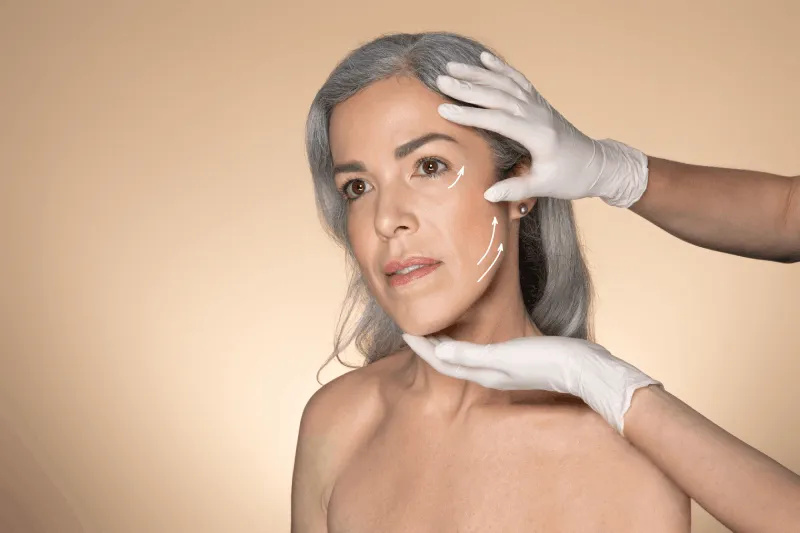
You can see the change in your face immediately after the surgery, but this is not the “real” result. Swelling in the first weeks may make the face look fuller and tighter than it is. At the end of the 1st month, approximately 70% of the edema disappears and your facial lines start to become clear. Around the 3rd month, a more natural appearance settles with the softening of tissues and their adaptation to new places. The final result emerges between the 6th month and the 1st year with the complete fading of the stitch scars and the skin regaining its real elasticity. Being patient in this process is necessary to appreciate the beauty of the result.
What are the Risks and Complications of Facelift Surgery?
As in every surgical procedure, some risks are present in facelift surgery. These may include bleeding (hematoma), infection, poor wound healing, asymmetry, and temporary or permanent nerve damage. Nerve damage is usually very rare and most of the time temporary; it is seen in the form of short-term limitations in facial movements. To reduce the risk of hematoma, small tubes called “drains” are sometimes used during surgery. In operations performed by an experienced surgeon under sterile hospital conditions, these risks are minimized. The patient’s not smoking and strictly following the recovery rules are of vital importance in preventing complications.
Why is Sun Protection Important After Surgery?
Newly operated tissues and fresh scars are extremely sensitive to sun rays. Sunlight (UV rays) causes the healing scars to darken permanently (hyperpigmentation) and the collagen structure of the skin to deteriorate rapidly. It is essential to use high-factor (SPF 50+) sunscreens, wear wide-brimmed hats, and avoid direct sunbathing for the first 6 months after surgery. Protecting from the sun not only ensures that the scars become indistinct but also helps protect the youth effect obtained with surgery for many more years.
What are the Advantages of Having Facelift Surgery with Cure Holiday?
Cure Holiday offers its patients a world-class health service in operations requiring sensitivity such as facelift surgery. Working with the most experienced and expert plastic surgeons in Turkey, Cure Holiday promises you not just a surgery, but a holistic transformation. In centers where the most modern surgical techniques (SMAS, Deep Plane, Endoscopic methods) are used, the most natural results are targeted by making personalized analyses. The biggest advantage of being treated with Cure Holiday is the high success rates and its professional approach focusing on patient satisfaction; thus you can safely reach the rejuvenation you dream of.
Why is Cure Holiday a Reliable Choice in Health Tourism?
When it comes to health tourism, trust comes before everything else. Cure Holiday provides service in hospitals with international certificates, at the highest hygiene and safety standards. The detailed consultation process starting before the patients even come to their country, the moment of surgery, and the following follow-up process are meticulously managed. The reliability of Cure Holiday is fixed with the references of thousands of happy patients coming from all over the world. With its transparent price policy, translator support you can communicate with without a language barrier, and assistant team being with you at every step, you feel safe as if you were at home.
What Do Cure Holiday Treatment Packages Include?
Cure Holiday offers comprehensive VIP packages focusing not only on the health but also on the comfort of its patients. These packages include; greeting from the airport with luxury vehicles, 5-star hospital accommodation where the operation will be performed, high-comfort hotel reservations where you will spend the convalescence period, and all hospital-hotel transfers. Also, all necessary medical tests, medications you need to use after surgery, and special corsets are included in the package. While you only focus on your change, Cure Holiday plans all logistic details for you. This “all-inclusive” approach provides a stress-free treatment process for patients coming from abroad.
How Can You Take the First Step to Start the Change with Cure Holiday?
All you need to do to regain a younger and vibrant face is to contact the expert consultant team of Cure Holiday. You can get a free pre-evaluation by reaching us through our website or contact numbers. With the first analysis to be made through your photos, the most suitable facelift technique and treatment plan for you are determined. After this process where all your questions are answered, the most suitable date for you is determined and your travel plan is created. As the Cure Holiday family, we are always with you to turn back time and transform into the best version of yourself!
Free Consultation
Fill out the form below to get your free medical travel plan and price quote.
Sources and how to verify this yourself
- Ministry of Health, Regulation on International Health Tourism and Tourist Health, Official Gazette 26 April 2025, No. 32882 — authorisation requirement for facilities and intermediaries, TÜSKA accreditation, compulsory complication insurance (deadline 31 December 2025 for insurance, 31 December 2026 for accreditation). source
- Ministry of Health, Regulation on Promotion and Information Activities in Health Services, Official Gazette 12 November 2025, No. 33075 — treatment promises and guarantees are prohibited; price and campaign announcements are permitted only within international health tourism. source