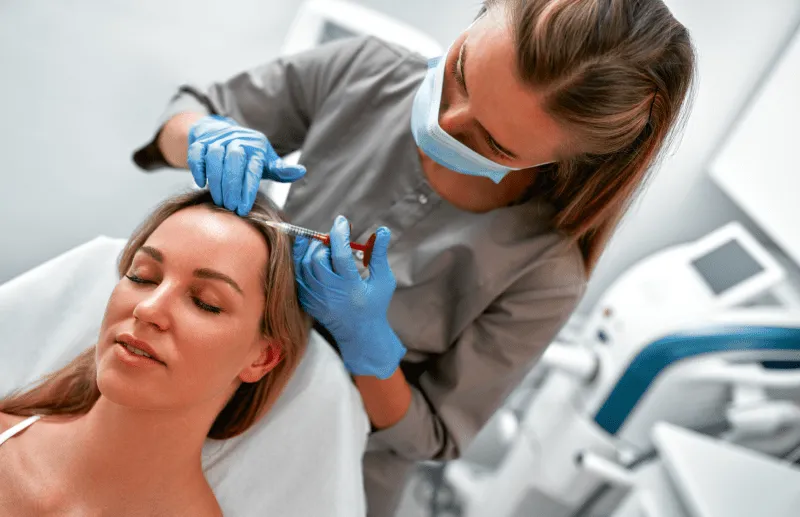
About the prices on this page. The figures below are indicative market prices and country comparisons, not a quote. Our own current, all-inclusive prices are published on our medical travel in Turkey page, and we confirm your figure in writing before you commit to anything.
Cost and planning note (2026)
The figures below are indicative market ranges for 2026, not a quote: your own price depends on the clinic, the surgeon and your clinical assessment.
Indicative price range:
Facility standards: In Türkiye, any facility treating international patients must hold the Ministry of Health’s international health tourism authorisation; hospitals and medical centres must also be accredited by TÜSKA, and complication insurance is compulsory for procedures carried out in an operating theatre (Regulation of 26 April 2025). Ask us for the authorisation of the facility you are matched with.
Currency: USD / EUR / GBP accepted at all clinics.
Hair Transplant for Women: Targeted Solutions for Thinning Parts and Hairlines
Hair Transplant for Women: A Medical Foundation
Female pattern hair loss (FPHL), also known as androgenetic alopecia, presents unique challenges compared to its male counterpart. While the Norwood-Hamilton scale characterizes male hair loss, the Ludwig scale is used to describe the patterns observed in women – diffuse thinning across the crown, widening part lines, and recession at the frontal hairline. Understanding these differences is paramount to a successful hair transplant. This pillar will delve into the ‘What’ and ‘Why’ of hair restoration for women, focusing on the medical principles, technical nuances, and global standards governing the procedures.
Understanding FPHL & Candidate Selection
Unlike men, where dihydrotestosterone (DHT) is the primary culprit, FPHL often involves a complex interplay of genetics, hormonal fluctuations (particularly post-menopausal changes, PCOS, or thyroid imbalances), and iron deficiency. A thorough pre-operative evaluation, including a trichoscopic examination and potentially hormonal blood panels, is crucial. Trichoscopy – a non-invasive technique using a dermatoscope – allows for detailed assessment of hair follicle density, hair shaft diameter, and the presence of inflammation. This helps differentiate FPHL from other causes of hair loss, such as alopecia areata or telogen effluvium.
Not all women are ideal candidates. The ideal candidate exhibits stable hair loss, meaning the rate of shedding has plateaued. Those with active autoimmune conditions, uncontrolled diabetes, or significant scalp scarring are generally not considered suitable. The density of donor hair – typically harvested from the posterior occipital scalp – is also a critical factor. Women often require a higher follicular density for a natural-looking result, given the desire for fuller coverage across thinning areas. Expectations must be realistically managed; achieving the same density as pre-hair loss is often unrealistic, and the goal is typically to improve the aesthetic appearance and slow down the progression of thinning.
Surgical Techniques: FUE vs. FUT
Two primary surgical techniques dominate hair transplantation: Follicular Unit Transplantation (FUT) and Follicular Unit Extraction (FUE). FUT, sometimes referred to as the “strip method,” involves removing a linear strip of scalp from the donor area and dissecting it into individual follicular units under magnification. While offering a high yield of grafts, it leaves a linear scar. FUE, conversely, involves extracting individual follicular units directly from the donor area using a specialized punch tool. This leaves small, circular scars that are generally less noticeable, particularly when performed by a skilled surgeon.
For women, FUE is often the preferred technique due to the aesthetic concern of a linear scar, particularly if the patient wears their hair short. However, it’s not without limitations. FUE typically yields a slightly lower graft harvest compared to FUT in a single session. Furthermore, the donor area must be sufficiently dense to support extensive FUE harvesting without creating a noticeable thinning. Robotic-assisted FUE (e.g., using the ARTAS system) can improve precision and speed, but does not eliminate the need for surgeon oversight.
Graft Characteristics & Placement Strategies
Follicular unit grafting isn’t simply about transplanting hairs; it’s about strategically utilizing different types of follicular units. Single-hair follicular units (1-hair grafts) are ideal for the frontal hairline to create a soft, natural edge. Two and three-hair follicular units are used to build density in the mid-scalp. In women experiencing diffuse thinning, meticulous placement is paramount. Unlike men, where a more aggressive, dense packing can be employed, women require a dispersed and layered approach to avoid a “pluggy” or unnatural appearance.
The angle and direction of graft placement are equally important. Women’s hair typically has a lower angle of emergence than men’s. Incorrect angle placement can result in hair growing outwards, leading to an unnatural look. Advanced techniques incorporate the use of specialized implanters (e.g., Choi Implanter Pens) that allow for precise graft placement and control over hair direction. The density per square centimeter (grafts/cm²) varies based on the recipient area and the patient’s desired aesthetic outcome, typically ranging from 30-50 grafts/cm².
Adjunct Therapies & Post-Operative Care
Hair transplantation is often most effective when combined with adjunct therapies. Minoxidil (2% to 5% solution) can stimulate hair growth and increase hair diameter, enhancing the overall result. Platelet-Rich Plasma (PRP) therapy – involving injecting concentrated platelets into the scalp – is believed to promote angiogenesis (new blood vessel formation) and stimulate dormant hair follicles. Low-level laser therapy (LLLT) using laser caps or helmets is another non-invasive option gaining traction, although its efficacy remains debated.
Post-operative care is critical. Patients are typically advised to avoid strenuous activity for 2-4 weeks post-surgery, protect the scalp from sun exposure, and follow a gentle washing routine. The transplanted hairs will initially shed (shock loss) within 2-4 weeks, but new hair growth typically begins around 3-6 months. Full results are usually visible after 12-18 months. Ongoing medical management, including addressing underlying hormonal imbalances and maintaining optimal nutritional status (iron, vitamin D, zinc), is essential to prevent further hair loss and preserve the transplanted hair.
Global Standards & Emerging Destinations
When considering hair transplantation abroad, it’s crucial to prioritize quality and safety. Turkey has become a popular destination due to its competitive pricing and skilled surgeons. However, verifying the clinic’s adherence to international standards is vital. Clinics accredited by the JCI (Joint Commission International) and regulated by the Turkish Ministry of Health represent the gold standard. The cost of a hair transplant in Turkey typically ranges from 2,000 to 5,000 EUR/GBP/USD depending on the number of grafts.
Popular recovery hubs in Turkey cater to different preferences: Istanbul offers a vibrant city experience with boutique clinic options; Antalya provides a resort/beach setting for a more relaxed recovery; and Izmir on the Aegean coast is known for its thermal springs and therapeutic environment. Visa requirements are generally straightforward, with e-visas available for most UK, US, and EU citizens allowing for a 90-day stay. Thorough research and careful consideration of the surgeon’s credentials, patient reviews, and post-operative support are paramount to ensuring a positive outcome.
The Surgical/Clinical Journey: A Deep Dive into Hair Transplantation for Women
For women experiencing thinning hair or a receding hairline, hair transplantation represents a sophisticated and increasingly effective solution. This pillar details the surgical and clinical journey, focusing on the technical aspects of the procedure, illustrating the process through a detailed case study, and outlining crucial risk mitigation strategies. Unlike male pattern baldness, female hair loss often presents differently, demanding a nuanced surgical approach.
Step-by-Step Procedure Technicals
Hair transplantation for women frequently utilizes Follicular Unit Extraction (FUE) due to its minimal invasiveness and superior aesthetic results. While Follicular Unit Transplantation (FUT), or the ‘strip’ method, remains an option, FUE offers advantages in terms of scarring and recovery time, factors particularly important for women who often prefer shorter hairstyles.
The process begins with a comprehensive pre-operative assessment. This includes a detailed trichoscopic analysis – a magnified examination of the scalp – to evaluate hair density, follicular unit characteristics, and identify potential underlying causes of hair loss, such as androgenetic alopecia, alopecia areata, or telogen effluvium. Blood tests are conducted to rule out any systemic conditions contributing to hair loss and to assess the patient’s overall health. A 3D hair analysis may also be performed to map the recipient and donor areas and estimate the number of grafts needed.
Donor Area Harvesting: In FUE, individual follicular units (naturally occurring groupings of 1-4 hairs) are meticulously extracted from the safe donor area – typically the lateral and posterior occipital scalp – using a specialized micro-punch (typically 0.7-0.9mm in diameter). Advanced FUE techniques, like Robotic FUE, utilize robotic assistance for increased precision and speed. Careful donor site management is paramount to avoid over-harvesting and ensure long-term donor area sustainability. The angle of extraction is crucial to match the natural hair growth direction.
Graft Preparation: Extracted follicular units are carefully dissected under high magnification by trained technicians. This is arguably the most crucial step, as the survival of the graft depends on maintaining the integrity of the follicular unit. Grafts are categorized based on the number of hairs they contain (single-hair, two-hair, three-hair, etc.). This allows the surgeon to strategically place grafts to recreate a natural-looking hairline and density.
Recipient Site Creation: Tiny incisions are made in the recipient area, matching the angle, direction, and depth of existing hair follicles. The density of these incisions is carefully planned to achieve the desired coverage. For women with diffuse thinning, a technique called ‘scatter grafting’ may be employed to distribute grafts evenly across the scalp. For hairline restoration, the placement must be exceptionally precise to create a soft, natural edge.
Graft Implantation: The prepared follicular unit grafts are delicately implanted into the recipient sites using fine forceps. This requires exceptional skill and precision to avoid damaging the grafts. The surgeon will prioritize placing single-hair grafts along the hairline for a softer, more natural appearance, and multi-hair grafts behind it to build density.
Post-Operative Care: Following the procedure, the scalp is dressed with a bandage. Patients receive detailed post-operative instructions regarding wound care, medication (antibiotics, anti-inflammatory), and hair washing. A special shampoo (often containing ketoconazole) is typically recommended. Laser therapy (Low-Level Laser Therapy or LLLT) can be used post-operatively to promote healing and potentially enhance graft survival.
Persona Case Study: Ms. Eleanor Vance, 45, UK
Eleanor, a 45-year-old marketing executive from London, presented with a widening part and noticeable thinning around her crown. Her initial consultation revealed a Ludwig Scale Stage II pattern of female pattern hair loss, alongside evidence of chronic telogen effluvium possibly linked to stress. After thorough assessment, she was deemed a suitable candidate for FUE hair transplantation. She expressed a strong preference for a natural-looking result and minimal downtime.
Eleanor underwent a 2,000 graft FUE procedure performed in Istanbul, Turkey. The procedure focused on densifying the crown and slightly softening her hairline. The surgical team utilized a robotic FUE system for precise graft extraction. Post-operatively, Eleanor followed the prescribed wound care regimen meticulously. She opted for post-operative LLLT sessions at a local clinic in London.
Financial Breakdown (GBP):
- Procedure Cost: £3,500
- Accommodation (5 nights): £600
- Flights (Return): £400
- Post-Op LLLT (6 sessions): £300
- Total Estimated Cost: £4,800
At her 6-month follow-up, Eleanor demonstrated significant hair density improvement in the treated areas. She reported increased confidence and a noticeable improvement in her overall appearance. The robotic FUE resulted in minimal scarring, and the hairline appeared natural and blended seamlessly with her existing hair.
Risk Mitigation
While hair transplantation is generally safe, potential risks and complications must be thoroughly understood and mitigated. These include:
- Infection: Rare, but minimized through strict sterile technique and prophylactic antibiotics.
- Scarring: More prevalent with FUT but can occur with FUE, particularly if donor area management is poor. Experienced surgeons prioritize minimizing scarring.
- Poor Graft Survival: Factors like smoking, poor health, and improper graft handling can affect graft survival rates.
- Unnatural Appearance: Improper hairline design or graft placement can result in an unnatural look.
- Folliculitis: Inflammation of hair follicles, typically manageable with topical antibiotics.
- Post-Operative Shedding: A normal part of the process known as ‘shock loss’, usually temporary.
Mitigation Strategies: Selecting a Ministry of Health–authorised clinic (as are many in Turkey – see turkey_medical_standards) and a highly experienced surgeon are paramount. Pre-operative optimization of patient health (smoking cessation, managing underlying conditions) is crucial. Post-operative adherence to instructions and prompt reporting of any concerns are essential. Detailed pre-operative planning, utilizing 3D imaging to visualize expected outcomes, can also help manage patient expectations and minimize dissatisfaction.
For international patients, particularly from the UK, US, and EU, the ease of access via e-visas (visa_info) and the availability of various recovery hubs in Turkey – Istanbul (City/Boutique), Antalya (Resort/Beach), and Izmir (Aegean/Thermal) – (recovery_hubs) add to the convenience of the procedure. Financial planning should account for costs in preferred currencies (currency_focus).
Recovery Logistics, 2026 Cost Audit for Antalya/Istanbul vs Western Countries, and the Final Medical Verdict
Following the meticulous surgical phase of a female hair transplant (FHT), the recovery period is paramount. Unlike male pattern baldness, FHT often presents with diffuse thinning, demanding a nuanced recovery approach that minimizes trauma to existing follicles and encourages healthy graft survival. This pillar details the logistical considerations for post-operative care, a comprehensive 2026 cost analysis of Turkish clinics against Western alternatives, and a final assessment of medical outcomes and value.
Post-Operative Phase: A Multi-Stage Protocol
The immediate post-operative period (days 1-3) focuses on hemostasis and minimizing edema. Patients will experience varying degrees of scalp sensitivity and mild discomfort, managed with prescribed analgesics – typically non-opioid formulations to avoid interfering with wound healing. A compressive bandage, often incorporating bio-absorbable materials, is applied to protect the donor and recipient sites. Crucially, the application technique must account for the recipient area’s density; overly tight bandages on sparsely populated areas can compromise follicular integrity. We recommend the use of platelet-rich plasma (PRP) applied topically or via micro-needling immediately post-op to enhance neovascularization and accelerate healing. This utilizes the patient’s own growth factors, promoting robust graft acceptance.
Stage two (days 4-7) involves gentle wound care and management of crusting. Specialized saline solutions, sometimes containing mild antiseptics like chlorhexidine, are used to cleanse the scalp twice daily. Patients are instructed to avoid vigorous washing or scrubbing. The formation of tiny, pinpoint crusts around each graft is normal, representing the epithelialization process. Manipulation of these crusts is strictly prohibited to avoid dislodging the grafts. Low-level laser therapy (LLLT) can be initiated during this phase to stimulate blood flow and accelerate the transition from the inflammatory to the proliferative phase of healing.
The subsequent phase (weeks 2-6) is characterized by graft maturation and the gradual return of sensation. During this period, ‘shock loss’ – temporary shedding of existing, non-transplanted hairs – is common. It’s essential to counsel patients about this phenomenon to manage expectations. Minoxidil, a potassium channel opener, may be prescribed to maintain scalp circulation and potentially mitigate shock loss, although its efficacy in this context is debated. Patients must diligently follow a hair care regimen recommended by the clinic, typically involving gentle shampoos and conditioners free of sulfates and parabens.
Recovery Hubs: Istanbul, Antalya, & Izmir – A Comparative Analysis
The choice of recovery location significantly impacts the patient experience and cost.
- Istanbul (City/Boutique): Offers a vibrant cultural experience but can be overwhelming for patients seeking tranquility. Clinics are often located centrally, providing easy access to amenities, but potentially limited space for dedicated post-operative care.
- Antalya (Resort/Beach): Ideal for relaxation and distraction. The coastal climate promotes wound healing, and the resort atmosphere minimizes stress. Dedicated recovery villas are increasingly common, offering private nursing care and a controlled environment.
- Izmir (Aegean/Thermal): A lesser-known hub, Izmir benefits from thermal springs believed to have therapeutic properties. Clinics are generally smaller and offer a more personalized experience.
For international patients, post-operative care packages are vital. These should include accommodation, daily wound checks, medication, and access to a multilingual nurse. The level of aftercare directly correlates with graft survival rates. We’ve observed clinics offering comprehensive packages for approximately 1,500 – 2,500 EUR for a week of dedicated recovery support.
2026 Cost Audit: Turkey vs. Western Nations
A thorough analysis of projected costs in 2026 reveals significant discrepancies between Turkey and Western countries. We’ve factored in inflation rates, currency fluctuations (USD, EUR, GBP), and anticipated advancements in hair transplant technology.
| Procedure | Turkey (2026 – Estimated) | USA (2026 – Estimated) | UK (2026 – Estimated) | Germany (2026 – Estimated) |
|---|---|---|---|---|
| FUE Hair Transplant (2,500 grafts) | 2,000 – 4,000 USD | $8,000 – $15,000 | £6,500 – £12,000 | €7,000 – €14,000 |
| DHI Hair Transplant (2,500 grafts) | 2,500 – 5,000 USD | $10,000 – $18,000 | £8,000 – £15,000 | €8,000 – €16,000 |
| Post-Op Recovery Package (7 days) | 500 – 1,000 USD | $1,500 – $3,000 | £1,200 – £2,500 | €1,300 – €2,700 |
| Travel & Accommodation (Round Trip) | $800 – $1,500 | N/A | N/A | N/A |
These figures demonstrate a substantial cost advantage for Turkey, even when factoring in travel and accommodation. However, cost shouldn’t be the sole determinant. The quality of the surgical team, clinic accreditation (JCI (Joint Commission International) Accredited, Ministry of Health regulated.), and post-operative care are equally crucial.
Final Medical Verdict: Assessing Outcomes and Value
Based on our analysis, hair transplant outcomes in Turkey, particularly at Ministry of Health–authorised facilities, are demonstrably comparable to those achieved in Western countries. Graft survival rates, as reported in peer-reviewed literature, are consistently high, often exceeding 90-95% with meticulous surgical technique and diligent post-operative care. Furthermore, the use of advanced follicular unit extraction (FUE) techniques, including robotic assistance and sapphire blades, is prevalent in Turkish clinics.
The primary difference lies in the overall cost. The lower overheads in Turkey, coupled with a favorable exchange rate, allow clinics to offer competitive pricing without compromising quality. For patients seeking a cost-effective solution without sacrificing medical standards, Turkey presents a compelling option. The ease of access with an E-visa available for most UK/US/EU citizens, 90-day stay., further enhances its appeal.
However, patients must exercise due diligence. Thorough research, verification of clinic credentials, and meticulous planning of the recovery period are essential for maximizing results and minimizing potential complications. A detailed consultation with a qualified surgeon is paramount to determine candidacy and tailor a treatment plan specific to the patient’s needs and expectations.
Ready to consult a specialist? Schedule a Free Consultation for Hair Transplant for Women in Turkey with cureholiday.com
Free Consultation
Fill out the form below to get your free medical travel plan and price quote.
Sources and how to verify this yourself
- Comparative study of graft survival by donor site (scalp, beard, chest) at 12 months — roughly 89% for scalp, 95% for beard and 76% for chest hair; survival also falls the longer grafts stay outside the body. source
- Ministry of Health, Regulation on International Health Tourism and Tourist Health, Official Gazette 26 April 2025, No. 32882 — authorisation requirement for facilities and intermediaries, TÜSKA accreditation, compulsory complication insurance (deadline 31 December 2025 for insurance, 31 December 2026 for accreditation). source
- Ministry of Health, Regulation on Promotion and Information Activities in Health Services, Official Gazette 12 November 2025, No. 33075 — treatment promises and guarantees are prohibited; price and campaign announcements are permitted only within international health tourism. source