About the prices on this page. The figures below are indicative market prices and country comparisons, not a quote. Our own current, all-inclusive prices are published on our medical travel in Turkey page, and we confirm your figure in writing before you commit to anything.
Cost and planning note (2026)
The figures below are indicative market ranges for 2026, not a quote: your own price depends on the clinic, the surgeon and your clinical assessment.
Indicative price range:
Facility standards: In Türkiye, any facility treating international patients must hold the Ministry of Health’s international health tourism authorisation; hospitals and medical centres must also be accredited by TÜSKA, and complication insurance is compulsory for procedures carried out in an operating theatre (Regulation of 26 April 2025). Ask us for the authorisation of the facility you are matched with.
Currency: USD / EUR / GBP accepted at all clinics.
Neck Lift vs. Face-Tite: Minimally Invasive Options for Patients in Their 40s
Neck Lift vs. Face-Tite: A Deep Dive into the Procedures
For patients in their 40s beginning to see the effects of aging – subtle skin laxity, loss of jawline definition, and the emergence of platysmal bands – the decision between a traditional neck lift (platysmaplasty) and minimally invasive radiofrequency (RF) technologies like Face-Tite can be complex. This exploration provides a detailed medical foundation for understanding both procedures, outlining their technical specifics, expected outcomes, and alignment with global standards. This pillar focuses exclusively on the ‘what’ and ‘why’ of these interventions, providing a crucial foundation for informed patient decision-making.
Understanding the Aging Process in the Lower Face & Neck
The lower face and neck exhibit aging through a combination of factors. Firstly, descending platysmal bands – vertical muscle fibers running from the collarbone to the jawline – become more prominent as the connective tissue surrounding them weakens. Secondly, subcutaneous fat pads in the jowl and neck regions experience descent, contributing to a loss of definition. Thirdly, skin elasticity decreases due to diminished collagen and elastin production, leading to laxity and wrinkling. Finally, bony resorption around the mandible exacerbates the appearance of sagging.
The Traditional Neck Lift (Platysmaplasty): Technical Details
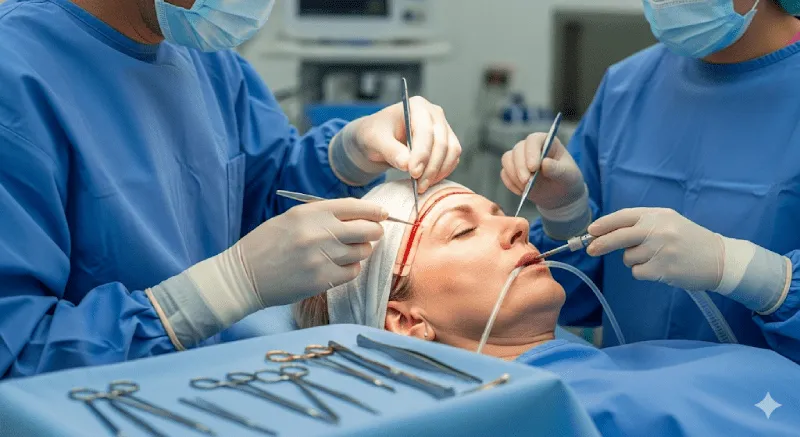
A neck lift is a surgical procedure designed to address the underlying causes of an aging neck. The core technique involves an incision placed strategically along the hairline and behind the earlobe to conceal scarring. This allows access to the platysma muscle, which is then tightened and re-suspended. Excess skin is removed, and the subcutaneous fat is either sculpted or removed via liposuction. Crucially, a key element often overlooked is the division of the digastric muscle tendon, relieving the pulling effect on the platysma. Variations include limited incision neck lifts, which utilize shorter incisions, and composite neck lifts, which address both the skin and deeper structures. The extent of the dissection dictates the degree of correction achievable.
- Surgical Approach: Incision placement (hairline, behind ear), platysma muscle manipulation, skin redraping.
- Anesthesia: Typically general anesthesia, although local anesthesia with sedation can be used in specific cases.
- Procedure Duration: 2-4 hours
- Hospital Stay: Typically overnight, though some patients can be discharged the same day.
- Expected Downtime: 2-3 weeks for significant swelling and bruising to subside.
Face-Tite: Radiofrequency-Assisted Contraction
Face-Tite is a minimally invasive procedure utilizing bipolar radiofrequency (RF) energy to contract subcutaneous tissue and remodel collagen. A small probe is inserted beneath the skin, while a return electrode is placed on the surface. RF energy generates heat, causing controlled thermal injury to the dermis and the underlying tissues. This stimulates collagenesis (new collagen production) and causes immediate tissue contraction. The key principle is the targeted heating of the subcutaneous fat and the tightening of the fibrous septae that compartmentalize it. This differs fundamentally from laser-based skin tightening, which primarily affects the epidermis and superficial dermis.
- Technical Mechanism: Bipolar RF energy delivery, dermal and subcutaneous tissue heating, collagen contraction and neo-collagenesis.
- Anesthesia: Local anesthesia with mild sedation.
- Procedure Duration: 60-90 minutes per side.
- Hospital Stay: Typically outpatient.
- Expected Downtime: 7-10 days for initial swelling and discomfort. However, subtle textural changes and continued tightening can occur over 6-12 months.
Comparative Analysis: When to Choose Which Procedure
The ideal procedure depends on the severity of the patient’s concerns and their anatomical profile.
- Neck Lift Best For: Significant skin laxity, pronounced platysmal bands, substantial submental fat (double chin), and patients seeking a dramatic, long-lasting correction. This is the gold standard for significant lower facial and neck rejuvenation.
- Face-Tite Best For: Mild to moderate skin laxity, early signs of platysmal banding, and patients seeking a less invasive option with a shorter recovery period. Face-Tite is particularly effective for patients with good skin elasticity who want a subtle to moderate lift.
It’s crucial to understand that Face-Tite’s results, while noticeable, are generally less dramatic than a traditional neck lift. While Face-Tite can significantly improve skin tightness and reduce fat, it cannot reposition deeper tissues to the same extent as a surgical neck lift. Furthermore, the longevity of results often differs, with a neck lift typically providing more sustained correction over a decade or more.
Complications and Risks
Both procedures carry inherent risks. Neck lifts, being surgical, have a higher risk of complications such as hematoma, seroma, wound infection, and nerve injury (potentially leading to temporary or permanent numbness or weakness). Asymmetry and noticeable scarring are also potential concerns, although skilled surgeons minimize these risks with meticulous technique. Face-Tite risks include burns (though rare with experienced practitioners), contour irregularities, and prolonged swelling. Skin pigmentation changes are also a possibility, particularly in individuals with darker skin tones. A thorough pre-operative assessment is crucial to identify and mitigate these risks.
Global Standards and Medical Tourism in Turkey
For individuals considering medical tourism, particularly in a location like Turkey, understanding the quality and safety standards is paramount. Turkish medical facilities are increasingly aligning with international benchmarks. Currently, facilities achieving JCI (Joint Commission International) Accreditation and operating under the strict regulations of the Ministry of Health represent the gold standard. This accreditation signifies adherence to rigorous standards in patient safety, quality of care, and facility management.
Turkey offers a cost-effective alternative for these procedures, with a neck lift typically ranging from $4,000 – $8,000 USD, and Face-Tite from $2,000 – $4,000 USD. Prices can vary based on the surgeon’s experience, the complexity of the case, and the facility chosen. Payments are typically accepted in USD, EUR, and GBP. Patients from the UK, US, and EU can conveniently obtain an E-visa for a 90-day stay, facilitating recovery in one of Turkey’s diverse recovery hubs. Popular choices include:
- Istanbul: Offers a vibrant city experience with access to a wide range of accredited hospitals and boutique recovery accommodations.
- Antalya: Provides a relaxing resort atmosphere with beachside recovery options.
- Izmir: Situated on the Aegean coast, known for its thermal springs and specialized recovery centers.
Selecting a board-certified plastic surgeon with extensive experience in both procedures is vital, regardless of location. A detailed consultation, including a thorough examination and discussion of realistic expectations, is essential for achieving optimal results.
Neck Lift vs. Face-Tite: The Surgical & Clinical Journey
For patients in their 40s beginning to notice the effects of gravity and volume loss in the lower face and neck, both neck lift (platysmaplasty) and Face-Tite represent compelling, minimally invasive options. While both procedures aim to restore a more youthful contour, their approaches, recovery profiles, and technical demands differ significantly. This pillar details the surgical/clinical journey for each, alongside a comprehensive case study and crucial risk mitigation strategies, particularly within the context of medical tourism to Turkey.
Neck Lift: A Traditional Refinement
The traditional neck lift addresses several key anatomical changes. This isn’t merely ‘tightening skin’; it’s a multi-faceted procedure. The foundational step involves releasing the platysma muscle – a broad, sheet-like muscle extending from the chest to the jawline. With age, the platysma can develop vertical bands, contributing to the “neck cords” appearance. The muscle is then re-draped and secured with sutures, creating a smoother, more streamlined neckline.
Crucially, a neck lift often necessitates addressing the digastric muscle, located beneath the platysma. Releasing or partially removing this muscle can further soften the appearance of banding. Liposuction is frequently incorporated to remove excess submental fat (the fat pad under the chin), optimizing contouring. Finally, excess skin is excised, and the remaining skin is redraped, repositioning the neck skin to a more youthful location. The incision placement varies – often following the natural skin creases around the ear and extending under the chin to camouflage scarring. The extent of the incision depends on the degree of correction needed.
Step-by-Step Procedure: Neck Lift
- Anesthesia: Typically general anesthesia, ensuring patient comfort and complete muscle relaxation.
- Incision & Dissection: Peri-auricular incision (around the ear) and submental incision (under the chin). Dissection of platysma and digastric muscles.
- Muscle Repositioning: Platysma plication (suturing) and potential digastric muscle management.
- Liposuction: Targeted removal of submental fat with tumescent liposuction.
- Skin Redraping & Closure: Excess skin excision, redraping, and meticulous layered closure, prioritizing scar concealment.
- Drainage & Compression: Placement of surgical drains and application of a compression garment.
Face-Tite: Radiofrequency Assisted Contraction
Face-Tite represents a significant advancement in minimally invasive facial rejuvenation. It employs bipolar radiofrequency (RF) energy to contract both the dermis (skin) and the underlying SMAS (superficial musculoaponeurotic system) layer. Unlike a traditional neck lift requiring dissection and suturing, Face-Tite delivers energy via an internal probe inserted through a small incision (typically 5mm) and an external handpiece applied to the skin.
The RF energy generates heat, causing collagen contraction and subsequent neocollagenesis (new collagen formation). This effectively tightens the skin and lifts the underlying tissues without extensive dissection. The SMAS layer, crucial for facial support, is specifically targeted, providing a more profound lifting effect than skin-only treatments. Simultaneously, the procedure stimulates fibroblast activity, encouraging long-term tissue remodeling. Because it’s minimally invasive, it often requires significantly less downtime than a traditional neck lift.
Step-by-Step Procedure: Face-Tite
- Anesthesia: Typically local anesthesia with sedation.
- Internal Probe Insertion: Small incisions are made, and the internal RF probe is inserted, mapping the SMAS layer.
- External Applicator Application: The external handpiece delivers RF energy through the skin, completing the circuit and heating the targeted tissues.
- Controlled Heating & Contraction: Precise control of RF energy to achieve optimal tissue contraction while minimizing thermal damage.
- Post-Procedure Protocol: Application of a compression garment and skincare regimen to support healing and collagen remodeling.
Persona Case Study: 45-Year-Old Female (UK)
Meet Eleanor, a 45-year-old professional from the UK. She presented with mild to moderate skin laxity in the neck and jawline, noticeable platysmal bands, and early jowling. She desired a natural-looking rejuvenation without extensive downtime. After consultation, Eleanor opted for Face-Tite.
Her clinical journey began with a virtual consultation followed by comprehensive pre-operative assessments in Istanbul. Post-procedure, she stayed in a boutique recovery hotel in Istanbul for 7 days, benefiting from daily nurse check-ups and lymphatic drainage massage. The total cost, including travel, accommodation, and the procedure, was approximately £6,500 (approximately 7,500 USD or 6,900 EUR). She experienced mild swelling and bruising for approximately 2 weeks, returning to work after 14 days. Follow-up consultations were conducted virtually at 3 and 6 months post-procedure, confirming excellent results and patient satisfaction.
Risk Mitigation & Considerations for Medical Tourism (Turkey)
While Turkey presents a cost-effective option for these procedures, meticulous risk mitigation is paramount. Complications, though rare, can include infection, seroma (fluid collection), nerve injury, skin necrosis (especially with Face-Tite if energy parameters are not carefully controlled), and asymmetrical results.
Key Mitigation Strategies:
- Surgeon Credentials: Verify the surgeon’s board certification and experience in performing both neck lifts and Face-Tite. Look for surgeons affiliated with Ministry of Health–authorised facilities.
- Facility Accreditation: Ensure the clinic is regulated by the Turkish Ministry of Health and ideally holds JCI accreditation – demonstrating adherence to international quality standards.
- Pre-Operative Medical Evaluation: A comprehensive medical history and physical examination are essential to identify and address any pre-existing conditions.
- Post-Operative Care: Arrange for adequate post-operative care, including access to a qualified nurse and physician. Recovery hubs in Istanbul, Antalya and Izmir provide diverse options catering to varying preferences.
- Communication & Language Barriers: Confirm clear communication channels with the surgical team, ideally with access to English-speaking staff.
- Travel Insurance: Obtain comprehensive travel insurance covering medical complications and potential re-admission to hospital.
Regarding financial aspects, Turkey uses the Turkish Lira (TRY). However, most reputable clinics offer pricing in USD, EUR, and GBP, providing currency stability for international patients. A typical neck lift in Turkey can range from $4,000 – $8,000 USD, while Face-Tite is generally between $2,500 – $5,000 USD. These figures exclude travel and accommodation costs.
Visa requirements are straightforward; an e-visa is available for most UK/US/EU citizens, granting a 90-day stay.
Recovery Logistics, 2026 Cost Audit for Antalya/Istanbul vs Western Countries, and the Final Medical Verdict
For patients in their 40s considering a neck lift or FaceTite, the procedural selection is only the first, and often least complex, decision. Equally critical is meticulous planning around recovery, encompassing logistical considerations, financial transparency, and a realistic assessment of post-operative expectations. This pillar delves into these crucial aspects, focusing specifically on the growing trend of medical tourism to Turkey – Istanbul, Antalya, and Izmir – alongside a detailed cost comparison with Western alternatives, projecting figures to 2026. We’ll provide a final medical verdict, considering both procedural efficacy *and* the holistic patient experience.
Post-Operative Recovery Profiles: Neck Lift vs. FaceTite
Both neck lift (platysmaplasty and/or lipectomy) and FaceTite represent minimally invasive approaches to facial rejuvenation, but their recovery trajectories differ significantly. A traditional neck lift, even when employing limited incision techniques, involves dissection of platysmal muscles, potential repositioning of the digastric muscle, and skin re-draping. This induces more substantial soft tissue trauma, resulting in a typical recovery period of 4-6 weeks for significant swelling and bruising to subside, with residual numbness potentially persisting for several months due to nerve disruption – particularly of the marginal mandibular nerve. Post-operative discomfort typically requires opioid analgesia for the initial 3-5 days, transitioning to NSAIDs. Lymphatic drainage massage is paramount, initiated within 72 hours and continued for 4-6 weeks to optimize fluid resorption and minimize seroma formation.
FaceTite, conversely, utilizes radiofrequency (RF) energy to contract subcutaneous tissues and dermal layers. This minimally disrupts muscle layers and relies on collagen remodeling rather than direct tissue manipulation. While some degree of swelling and bruising is inevitable, recovery is demonstrably faster. Patients can generally resume light activities within 3-5 days and experience a significant reduction in swelling within 1-2 weeks. Analgesic requirements are typically limited to over-the-counter pain relievers. However, it’s critical to understand that FaceTite’s efficacy is largely dependent on the patient’s skin elasticity; individuals with significant skin laxity may require adjunctive procedures or experience less dramatic results. A potential, albeit rare, complication is skin pigmentation changes due to RF energy, requiring careful parameter control and post-operative sunscreen use.
Recovery Hubs in Turkey: A Comparative Analysis
Turkey presents a compelling destination for medical tourism, boasting internationally accredited facilities and a significantly lower cost of living. However, the ideal recovery location within Turkey depends on patient preference.
- Istanbul (City/Boutique): Offers a vibrant cultural experience, abundant shopping, and readily available amenities. However, the bustling city environment may not be conducive to quiet recovery. Post-operative care is typically delivered through private clinics and dedicated recovery hotels.
- Antalya (Resort/Beach): Provides a relaxed, tranquil setting ideal for post-operative rest and rehabilitation. The Mediterranean climate and access to the sea can promote healing. Many hospitals and clinics offer recovery packages in conjunction with luxury resorts.
- Izmir (Aegean/Thermal): Combines a coastal location with access to thermal springs known for their therapeutic properties. This is particularly advantageous for patients undergoing procedures involving significant soft tissue manipulation, as the thermal waters can aid in reducing inflammation and promoting lymphatic drainage.
Regardless of the chosen hub, dedicated post-operative care is vital. This includes regular wound checks by a qualified surgeon, lymphatic drainage therapy administered by a certified therapist, and access to immediate medical attention should any complications arise. CureHoliday.com prioritizes partnerships with clinics adhering to JCI (Joint Commission International) accreditation and operating under the strict regulations of the Turkish Ministry of Health.
2026 Cost Audit: Turkey vs. Western Countries (USD, EUR, GBP)
A detailed cost analysis, projecting to 2026, reveals significant savings associated with undergoing these procedures in Turkey. It’s crucial to factor in not just the surgical fee, but also anesthesia, hospital stay, post-operative medications, lymphatic drainage therapy, and accommodation. We’ll present these figures for comparative analysis:
| Procedure | Western Countries (Average – US/UK/Germany) – 2026 Estimate | Turkey (Istanbul/Antalya/Izmir) – 2026 Estimate |
|---|---|---|
| Neck Lift | $15,000 – $25,000 USD / €13,500 – €22,500 EUR / £11,500 – £20,000 GBP | $4,500 – $8,000 USD / €4,050 – €7,200 EUR / £3,500 – £6,000 GBP |
| FaceTite | $8,000 – $15,000 USD / €7,200 – €13,500 EUR / £6,000 – £11,500 GBP | $2,500 – $5,000 USD / €2,250 – €4,500 EUR / £1,900 – £3,800 GBP |
*Note: These figures are estimates and may vary depending on surgeon experience, facility location, and individual patient needs. They include a conservative inflation rate of approximately 3% per annum for Western countries.*
Furthermore, consider ancillary costs. Round-trip airfare from the UK/US/EU to Turkey typically ranges from $600 – $1,200 USD. Accommodation for 2 weeks can range from $700 – $2,800 USD depending on the chosen level of luxury. A standard Turkish e-visa is easily obtainable for most nationalities, costing approximately $50 USD. Thus, even factoring in travel and accommodation, the overall cost savings remain substantial.
The Final Medical Verdict: Aligning Procedure with Patient Profile & Logistics
The ‘best’ procedure is entirely patient-specific. For individuals with moderate skin laxity and a desire for minimal downtime, FaceTite represents an excellent option. However, patients with significant skin redundancy, platysmal band definition, or a desire for a more dramatic and long-lasting result will likely benefit more from a traditional neck lift.
When considering medical tourism, Turkey offers a compelling value proposition. However, it’s paramount to prioritize accreditation, surgeon qualifications, and dedicated post-operative care. Choosing a recovery hub that aligns with your personality and desired level of activity is also crucial. CureHoliday.com meticulously vets all partner facilities to ensure adherence to the highest medical and logistical standards, offering a seamless and safe experience for our patients. The confluence of procedural efficacy, cost-effectiveness, and comprehensive recovery support makes Turkey a viable and increasingly popular destination for facial rejuvenation.
Ready to consult a specialist? Schedule a Free Consultation for Neck Lift vs. Face-Tite in Turkey with cureholiday.com
Free Consultation
Fill out the form below to get your free medical travel plan and price quote.
Sources and how to verify this yourself
- Ministry of Health, Regulation on International Health Tourism and Tourist Health, Official Gazette 26 April 2025, No. 32882 — authorisation requirement for facilities and intermediaries, TÜSKA accreditation, compulsory complication insurance (deadline 31 December 2025 for insurance, 31 December 2026 for accreditation). source
- Ministry of Health, Regulation on Promotion and Information Activities in Health Services, Official Gazette 12 November 2025, No. 33075 — treatment promises and guarantees are prohibited; price and campaign announcements are permitted only within international health tourism. source