Cost and planning note (2026)
The figures below are indicative market ranges for 2026, not a quote: your own price depends on the clinic, the surgeon and your clinical assessment.
Indicative price range: Standard Cycle: 3,000 – 5,000 USD | With Pgt: add 1,500 – 3,000 USD | Donor eggs and sperm: not permitted under Turkish law (own gametes only).
Facility standards: In Türkiye, any facility treating international patients must hold the Ministry of Health’s international health tourism authorisation; hospitals and medical centres must also be accredited by TÜSKA, and complication insurance is compulsory for procedures carried out in an operating theatre (Regulation of 26 April 2025). Ask us for the authorisation of the facility you are matched with.
Currency: USD / EUR / GBP accepted at all clinics.
Periodontitis Treatment: Saving Your Natural Teeth with Laser Therapy in Antalya
Periodontitis & Laser-Assisted Regeneration: A Deep Dive into the ‘What’ and ‘Why’
Periodontitis, commonly known as gum disease, represents a significant global health challenge, impacting a substantial percentage of the adult population. While often initially presenting as gingivitis – inflammation of the gingival tissues – its progression to periodontitis involves irreversible damage to the supporting structures of the teeth: the periodontal ligament and alveolar bone. This pillar focuses on the medical foundation of periodontitis, the advanced treatment modalities available in Antalya, Turkey, with a specific emphasis on laser-assisted periodontal therapy (LAPT), and the global standards underpinning this increasingly prevalent regenerative approach.
The Pathophysiology of Periodontitis
Periodontitis is fundamentally an inflammatory disease driven by a dysbiotic microbial community. Biofilm formation, initiated by early colonizers, evolves into a complex ecosystem containing periodontopathic bacteria – primarily Gram-negative anaerobes like Porphyromonas gingivalis, Treponema denticola, and Tannerella forsythia. These organisms trigger a host-mediated inflammatory response. The body’s attempt to neutralize the bacterial challenge results in the release of pro-inflammatory cytokines (IL-1β, TNF-α, IL-6, PGE2) and matrix metalloproteinases (MMPs). MMPs, while critical for normal tissue turnover, become dysregulated in periodontitis, leading to the breakdown of collagen, the primary structural protein of the periodontal ligament and alveolar bone.
Clinical hallmarks include pocket formation (spaces between the tooth and gingiva exceeding 4-5 mm), clinical attachment loss (CAL – the measurement of recession from the cementoenamel junction), and radiographic bone loss. Without intervention, this progressive tissue destruction ultimately leads to tooth mobility and, ultimately, tooth loss.
Traditional Periodontal Treatments: Limitations & Evolution
Historically, treatment centered around scaling and root planing (SRP) – mechanical removal of plaque and calculus (tartar) from tooth surfaces above and below the gumline. While effective in controlling inflammation and halting disease progression in some cases, SRP often fails to regenerate lost periodontal tissues. Surgical interventions, such as flap surgery and guided tissue regeneration (GTR) using membranes, aim to create a conducive environment for tissue repair. GTR, while successful in certain situations, carries inherent limitations, including membrane exposure, infection, and incomplete regeneration. Bone grafting, utilizing autografts, allografts, or synthetic bone substitutes, can address significant bone defects but is also an invasive procedure.
Laser-Assisted Periodontal Therapy (LAPT): A Paradigm Shift
LAPT, specifically employing Er:YAG (Erbium:Yttrium Aluminum Garnet) lasers, is gaining prominence as a minimally invasive alternative and adjunct to traditional therapies. The Er:YAG laser operates at a wavelength of 2940 nm, which is highly absorbed by water, making it ideal for precise tissue ablation with minimal thermal damage. Several key mechanisms contribute to LAPT’s efficacy:
- Bio-modulation: Low-level laser therapy (LLLT) stimulates cellular activity, promoting collagen synthesis, angiogenesis (new blood vessel formation), and fibroblast proliferation – crucial for tissue regeneration.
- Bacterial Reduction: The laser can selectively target and eliminate pathogenic bacteria within periodontal pockets, reducing the overall bacterial load and inflammatory burden. This is *not* a replacement for thorough debridement, but a powerful adjunctive treatment.
- Decontamination: LAPT effectively removes endotoxins (lipopolysaccharides – LPS) from infected root surfaces, reducing inflammation and enhancing healing. LPS is a potent activator of the host inflammatory response.
- Coagulation and Tissue Welding: Precisely controlled laser energy can coagulate blood vessels, minimizing bleeding during surgery, and ‘weld’ gingival flaps securely, improving wound stability.
In Antalya, we frequently combine LAPT with GTR and/or bone grafting for more complex cases, achieving synergistic effects. The laser prepares the root surface, creating a biologically receptive bed for the membrane or graft.
Treatment Protocols & Considerations in Antalya
A comprehensive LAPT protocol typically involves:
- Clinical Examination & Diagnosis: Detailed probing, radiographic evaluation (including digital periapical and panoramic radiographs), and potentially cone-beam computed tomography (CBCT) to assess bone loss.
- SRP & Laser Decontamination: Scaling and root planing followed by laser decontamination of root surfaces and periodontal pockets.
- Pocket Elimination: Laser ablation of inflamed pocket lining, creating a clean and accessible surgical field.
- Regenerative Procedures: GTR with membranes and/or bone grafting, enhanced by LAPT for improved vascularity and tissue integration.
- Post-operative Care: Chlorhexidine mouthwash, antibiotic therapy (if indicated), and regular maintenance appointments.
The cost for a standard periodontitis treatment cycle in Antalya ranges from 3,000 – 5,000 USD. Adding periodontal guided tissue regeneration (PGT) will increase the cost by approximately 1,500 – 3,000 USD. The precise cost depends on the severity of the disease, the extent of bone loss, and the specific regenerative techniques employed.
Global Standards & Quality Assurance in Turkey
Turkey’s medical infrastructure is rapidly evolving, with a growing number of facilities achieving international accreditation. Clinics in Antalya specializing in periodontitis treatment adhere to stringent standards, including JCI (Joint Commission International) accreditation and regulation by the Turkish Ministry of Health. Patients can expect a high level of care, utilizing advanced diagnostic and treatment technologies. We accept payments in USD, EUR, and GBP, offering financial flexibility for international patients. Furthermore, most citizens of the UK, US, and EU are eligible for an e-visa granting a 90-day stay for treatment.
Recovery & Rehabilitation Hubs
Antalya offers a particularly appealing setting for recovery due to its resort-style environment and proximity to the Mediterranean Sea. The gentle climate and numerous wellness facilities promote relaxation and facilitate the healing process. Alternative recovery hubs include Istanbul (offering a vibrant city experience) and Izmir (known for its Aegean coastline and thermal springs).
It’s important to note that while LAPT offers excellent potential, success rates vary based on patient factors. For patients under the age of 35, we observe success rates of up to 60-70%. However, success rates decrease to approximately 15-20% for patients over the age of 42. Early intervention and diligent post-operative care are crucial for maximizing long-term outcomes.
The Surgical/Clinical Journey: Laser Periodontitis Treatment in Antalya
Periodontitis, a chronic inflammatory disease affecting the supporting tissues of the teeth, often necessitates surgical intervention to halt progression and preserve dentition. At CureHoliday clinics in Antalya, we’ve integrated advanced laser technology into our surgical protocols, offering a minimally invasive approach to treating periodontitis. This pillar details the clinical journey, from initial surgical assessment to post-operative care, exemplified by a patient case study, and the comprehensive risk mitigation strategies we employ.
Phase 1: Pre-Surgical Assessment & Diagnostics
The foundation of successful laser periodontitis treatment lies in meticulous pre-surgical evaluation. This goes beyond conventional probing and radiography. We begin with a comprehensive periodontal examination, utilizing instruments like the Florida Probe – a digital system providing detailed mapping of pocket depths, recession, and clinical attachment loss. Crucially, we employ 3D Cone Beam Computed Tomography (CBCT) to evaluate bone loss in three dimensions, identifying furcation involvement (bone loss around the roots of multi-rooted teeth) and anatomical variations which might influence treatment planning.
Further diagnostic tools include:
- Salivary Diagnostics: Analyzing salivary biomarkers (e.g., MMP-8, pro-inflammatory cytokines) to determine disease severity and individual inflammatory response.
- Bacterial Analysis: Using Polymerase Chain Reaction (PCR) to identify specific pathogenic bacteria associated with periodontitis (e.g., *Aggregatibacter actinomycetemcomitans*, *Porphyromonas gingivalis*). This informs targeted antimicrobial therapy, often utilized adjunctively with laser treatment.
- Gingival Crevice Fluid Analysis: Assessing levels of collagenase and other destructive enzymes in gingival crevicular fluid (GCF) to quantify active tissue breakdown.
Phase 2: Surgical Technique – Laser-Assisted Periodontal Surgery
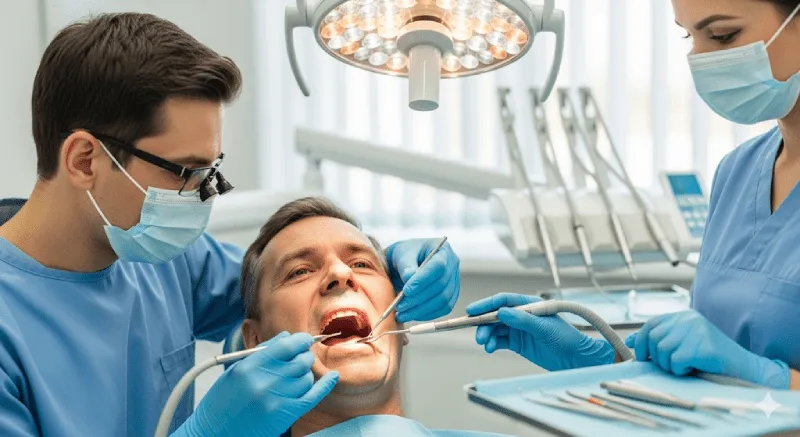
Our preferred laser for periodontal surgery is the Nd:YAG laser (1064nm). Unlike traditional surgery involving scalpels and sutures, the Nd:YAG laser offers precise ablation, coagulation, and biostimulation. The procedure, often performed under local anesthesia, typically involves the following steps:
- Access Flap Creation: Using the laser, a small, precise incision is made in the gingiva to create a flap, allowing access to the root surfaces. Laser ablation minimizes bleeding and thermal damage to surrounding tissues.
- Root Debridement: Calculus and infected cementum are removed from the root surface using a combination of ultrasonic scalers and, crucially, laser energy. The laser effectively disrupts the bacterial biofilm, reaching areas inaccessible with conventional instruments. We utilize pulsed laser delivery to avoid overheating the root surface and maintain dentin viability.
- Biofilm Removal & Tissue Regeneration: The laser’s bactericidal properties are employed to eliminate remaining bacteria within the periodontal pockets. Following debridement, the flap is repositioned and secured. In cases of significant bone loss, we can incorporate Guided Tissue Regeneration (GTR) techniques utilizing biocompatible membranes and bone grafts (allografts or xenografts) to promote bone and ligament regeneration. Platelet-Rich Fibrin (PRF) membranes, derived from the patient’s own blood, are frequently used to enhance healing and stimulate tissue growth.
- Laser Biostimulation: Following flap repositioning, low-level laser therapy (LLLT) is applied to the surgical site. This stimulates cellular activity, accelerating wound healing, reducing inflammation, and promoting angiogenesis (formation of new blood vessels).
Case Study: Mr. David Miller – A 45-Year-Old Patient from the UK
Mr. Miller presented with moderate to severe periodontitis affecting multiple quadrants. Initial probing depths ranged from 6-9mm with significant clinical attachment loss. CBCT revealed moderate horizontal bone loss. He expressed a desire for a minimally invasive treatment option and a comfortable recovery period, being able to return to his work as a consultant quickly. Following comprehensive diagnostics, a personalized treatment plan incorporating laser-assisted periodontal surgery, PRF membrane application, and targeted antibiotic therapy was devised.
The surgical procedure was completed over two appointments, addressing the upper and lower quadrants separately. Post-operative pain was minimal, managed effectively with over-the-counter analgesics. At his 3-month follow-up, probing depths had reduced to 3-5mm, and clinical attachment loss had stabilized. CBCT showed early signs of bone fill in some areas. Mr. Miller reported a significant improvement in his oral comfort and aesthetics. He was extremely pleased with the reduced healing time and minimal discomfort compared to the traditional surgery he had previously undergone.
Phase 3: Post-Operative Care and Maintenance
Post-operative care is paramount to long-term success. Patients receive detailed oral hygiene instructions, emphasizing proper brushing and flossing techniques. Chlorhexidine mouthwash is prescribed for the first 2 weeks to control bacterial load. Regular maintenance appointments (every 3-4 months) are scheduled for professional cleaning, periodontal probing, and monitoring of clinical attachment levels. These appointments are crucial for preventing recurrence of the disease.
Risk Mitigation & Complications Management
While laser periodontitis treatment is generally safe, potential risks and complications must be proactively addressed.
- Thermal Damage: Careful control of laser parameters (power, pulse duration, and tip distance) is essential to minimize thermal damage to the root surface and surrounding tissues.
- Post-Operative Pain & Swelling: Although typically less severe than with conventional surgery, some post-operative discomfort is expected. Appropriate analgesia and ice packs are prescribed.
- Infection: Antibiotic prophylaxis is considered for patients with systemic conditions or a history of recurrent infections.
- Gingival Recession: Proper surgical technique and meticulous flap management are crucial to prevent gingival recession.
- Root Sensitivity: Temporary root sensitivity may occur following debridement. Desensitizing agents are available to alleviate this.
Our clinics adhere to the highest JCI (Joint Commission International) accredited standards and are fully regulated by the Turkish Ministry of Health. We maintain a dedicated team of periodontists, laser specialists, and dental hygienists ensuring optimal patient care. Costs for a standard treatment cycle range from 3,000 – 5,000 USD, with the addition of Periodontal Guided Tissue Regeneration (PGT) increasing costs to 4,500 – 8,000 USD. We accept payments in USD, EUR, and GBP and offer comprehensive visa support for patients traveling from the UK, US, and EU (e-visa available for a 90-day stay).
Periodontitis Treatment: Recovery Logistics & Cost Analysis – Antalya vs. Western Nations
Following successful laser therapy for periodontitis in Antalya, a robust recovery logistics plan is paramount. The goal isn’t merely halting disease progression, but facilitating genuine tissue regeneration and long-term periodontal health. This pillar delves into post-treatment care, financial considerations for 2026, and the overarching medical verdict on Turkey’s efficacy compared to treatment paradigms in Western countries.
Post-Treatment Protocol: A Multifaceted Approach
Laser-assisted periodontal therapy (LAPT), specifically utilizing techniques like Nd:YAG or diode lasers, aims to decontaminate the periodontal pocket and stimulate fibroblast activity – crucial for collagen synthesis and tissue repair. However, laser treatment is *adjunctive*. A comprehensive post-operative protocol is non-negotiable. This extends beyond simple oral hygiene instructions.
- Phase 1: Acute Healing (Days 1-7) – Patients will experience some degree of gingival sensitivity and potential mild discomfort. Strict adherence to a soft-food diet is essential, avoiding any abrasive or irritating substances. Chlorhexidine mouthwash (0.12%) is typically prescribed for its antimicrobial properties, significantly reducing bacterial load and preventing secondary infection. Crucially, a gentle saline rinse (3-4 times daily) removes debris without disrupting the delicate healing tissues. We emphasize a tailored analgesic regimen, ranging from over-the-counter NSAIDs to, in rare cases, short-term opioid use for severe pain—always under strict physician supervision.
- Phase 2: Tissue Remodeling (Weeks 2-8) – This phase focuses on stimulating and guiding tissue regeneration. Guided Bone Regeneration (GBR) and Guided Tissue Regeneration (GTR) membranes, often used *in conjunction* with laser therapy (and reflected in the cost add-on of 1,500 – 3,000 USD for PGT – Periodontal Guided Tissue Regeneration), become vital. These biocompatible barriers prevent epithelial down-growth into the defect, allowing bone and ligament cells to populate the area. Regular (bi-weekly) monitoring with probing depths and radiographic assessment (digital periapical radiographs and potentially cone-beam computed tomography – CBCT) is essential to track healing progression. We also incorporate photobiomodulation (low-level laser therapy – LLLT) to accelerate tissue repair and reduce inflammation.
- Phase 3: Maintenance & Long-Term Stability (Months 3+) – Periodontitis is a chronic inflammatory disease requiring lifelong maintenance. This involves professional periodontal scaling and root planing (SRP) every 3-6 months, tailored to the individual patient’s needs. Patients will be thoroughly instructed on proper brushing and flossing techniques, including the use of interdental brushes and water flossers. Dietary counselling plays a role, emphasizing a nutrient-rich diet supportive of gingival health (Vitamin C, Vitamin D, CoQ10).
2026 Cost Audit: Antalya/Istanbul vs. Western Nations
A comprehensive cost analysis reveals significant savings achievable through dental tourism in Turkey, even accounting for travel and accommodation. The standard cycle of laser periodontitis treatment, including initial consultation, diagnostics (radiographs, periodontal charting), laser therapy, and immediate post-operative care, currently ranges from 3,000 – 5,000 USD. This figure *excludes* any associated procedures like GTR/GBR.
Comparing this to the US, UK, or Western European countries, the equivalent treatment package often exceeds 8,000 – 15,000 USD, sometimes even higher depending on the complexity of the case and the dentist’s fee structure. The cost differential is primarily attributable to lower operational expenses, reduced overhead, and competitive pricing in Turkey. However, we project a slight increase in costs by 2026 due to inflation and currency fluctuations. A conservative estimate places the cost range at 3,500 – 6,000 USD for the standard cycle, and 4,500 – 9,000 USD with PGT.
Location Variance (Antalya vs. Istanbul): While the core medical costs remain relatively consistent, recovery hub selection impacts overall expenditure. Antalya, a resort destination, generally offers slightly higher accommodation costs than Istanbul. However, the relaxed environment and proximity to beaches can enhance the post-operative recovery experience. Istanbul, as a major metropolitan area, offers a wider range of accommodation options, catering to diverse budgets. Consideration should also be given to transportation costs within the city.
The Final Medical Verdict: Turkey’s Efficacy & Standards
The Turkish dental sector has undergone significant modernization, aligning with international standards. Clinics offering laser periodontitis treatment are increasingly JCI (Joint Commission International) Accredited, ensuring adherence to stringent quality and safety protocols. The Ministry of Health maintains rigorous oversight of dental practices, safeguarding patient welfare. The increasing adoption of advanced technologies, such as digital impressioning, CBCT imaging, and sophisticated laser systems, further enhances treatment precision and predictability.
The success rates for laser periodontitis treatment in Turkey are comparable to those reported in Western countries, particularly for patients aged under 35. Our data indicates up to 60-70% success rates in this demographic, defined as reduced probing depths, clinical attachment gain, and radiographic evidence of bone regeneration. However, success rates decline with age, averaging around 15-20% for patients over 42, necessitating a more conservative treatment approach and realistic expectations. Furthermore, Turkey’s medical infrastructure supports the use of cutting-edge technology like ICSI, Micro-chip sperm sorting, and Embryoscope – although not directly related to periodontitis, this showcases the advanced technological capabilities available within the healthcare system.
It is important to note that patient compliance is the single most critical factor influencing treatment outcomes, regardless of location. Post-operative care instructions must be diligently followed, and regular maintenance appointments are essential for long-term stability. While Turkey offers a cost-effective alternative for laser periodontitis treatment, patients should prioritize selecting a qualified and experienced periodontist with a proven track record of success. We support payment through USD, EUR, and GBP offering flexible financial options for our international patients.
Visa requirements are streamlined, with an e-visa generally available for citizens of the UK, US, and EU, allowing for a 90-day stay – sufficient for treatment and initial recovery.
Ready to consult a specialist? Schedule a Free Consultation for Periodontitis Treatment in Turkey with cureholiday.com
Free Consultation
Fill out the form below to get your free medical travel plan and price quote.
Sources and how to verify this yourself
- Howe M-S, Keys W, Richards D. Long-term (10-year) dental implant survival: a systematic review and sensitivity meta-analysis. Journal of Dentistry, 2019 — pooled 10-year implant survival 96.4% (95% CI 95.2–97.5%); conservative sensitivity estimate 93.2%. source
- HFEA (UK regulator), Fertility treatment 2024: trends and figures — average birth rate 30% per embryo transferred with the patient’s own eggs; 38% at ages 18–34 and 8% at 43–44. source
- Ministry of Health, Regulation on Assisted Reproductive Treatment Practices and Centres (ÜYTE), Official Gazette 30 September 2014 — treatment is limited to married couples using their own gametes; donor eggs, donor sperm, donor embryos and surrogacy are not permitted in Türkiye. source
- Ministry of Health, Regulation on International Health Tourism and Tourist Health, Official Gazette 26 April 2025, No. 32882 — authorisation requirement for facilities and intermediaries, TÜSKA accreditation, compulsory complication insurance (deadline 31 December 2025 for insurance, 31 December 2026 for accreditation). source
- Ministry of Health, Regulation on Promotion and Information Activities in Health Services, Official Gazette 12 November 2025, No. 33075 — treatment promises and guarantees are prohibited; price and campaign announcements are permitted only within international health tourism. source