What Is The Sapphire Fue Technique?
Sapphire FUE (Follicular Unit Extraction) is a revolutionary technique considered a technological upgrade of the classic FUE method. In this specific technique, instead of the traditional metal blades used to open hair channels, very sharp and smooth tips produced from real sapphire crystals are used. The smooth surface and high sharpness of sapphire tips minimize tissue damage during the channel opening process, making a much denser and more natural transplantation possible. This method is considered one of the most ideal options worldwide, especially for patients who need a high number of grafts in large areas and are looking for a permanent, high-quality solution.
How Is The Dhi Method Applied?
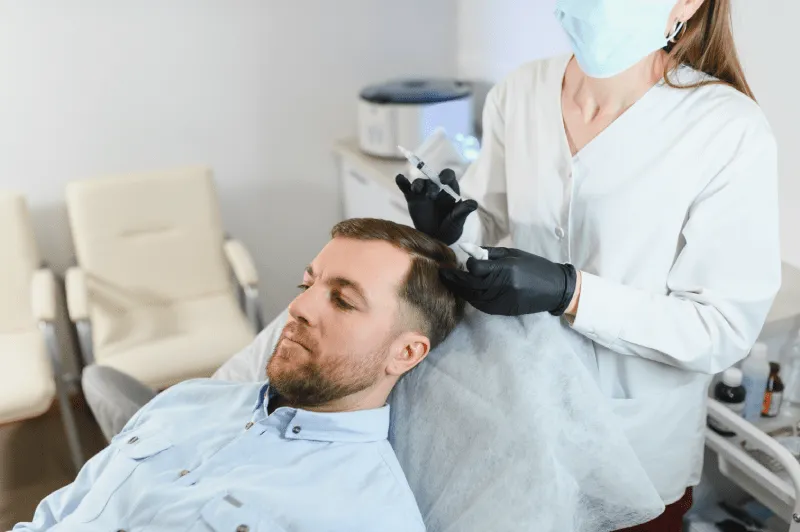
DHI, or Direct Hair Implantation, is the process of placing hair follicles meticulously taken from the donor area directly into the transplantation area with the help of a special medical pen called the Choi Implanter. Unlike other traditional methods, in the DHI technique, channel opening and follicle placement are performed simultaneously in a single move. Thanks to this integrated process, hair follicles stay outside the body for a minimum amount of time, which protects the vitality and health of the grafts at the highest level. It is frequently preferred by patients who want to increase hair density, those undergoing thickening operations, and individuals who do not want to cut their hair completely, opting for a non-shaven transplant.
What Are The Main Differences Between Sapphire Fue And Dhi?
The most distinct and distinguishing difference between these two popular methods emerges during the application stages of the operation. In the Sapphire FUE method, the process is gradual; first, the channels are opened, and then the collected follicles are manually placed into these opened channels. In the DHI method, there is no separate channel opening stage; the Choi implanter pen opens the path and leaves the follicle in place within seconds as soon as it enters the tissue. Furthermore, the Sapphire FUE technique generally performs faster and more efficiently in covering very wide bald areas, while the DHI method is much more suitable for dense, detailed work, especially for thickening efforts by entering between existing hairs.
What Are The Advantages Of Sapphire Tips In Hair Transplantation?
The greatest and most critical advantage of sapphire tips is that they have a much smoother, harder, and more durable structure compared to metal tips. Thanks to this smoothness, the skin tissue on the scalp is much less irritated during the channel opening process, and the post-operative wound healing process is significantly accelerated. Additionally, because sapphire tips are structurally very thin, they allow the channels to be opened at much closer distances to each other. This situation maximizes the hair density to be obtained as a result of the transplantation, providing the patient with a much more natural, bushy, and aesthetic appearance that lasts a lifetime.
What Is The Choi Implanter Pen?
The Choi implanter pen is a high-tech medical tool considered the heart and most important building block of the modern DHI technique. At the tip of this pen, there is a very thin, hollow needle with a special mechanism. The hair follicle taken from the donor area is carefully placed inside this needle, and then the surgeon pushes the follicle under the skin with a single press by pricking the scalp with the pen at a specific angle. This special pen allows the surgeon to adjust the exit direction, depth, and angle of the hair (usually 40-45 degrees) with millimetric precision, which greatly increases the artistic success and naturalness of the operation.
Which Method Provides More Natural Results?
Both methods have the capacity to provide wonderful, permanent, and extremely natural results when applied by expert and experienced hands. However, the DHI method may offer a slightly higher degree of control and precision to the surgeon in terms of adapting to the natural growth direction and angle of the hair, thanks to the Choi pen. On the other hand, the micro-channels opened in the Sapphire FUE method also lay the groundwork for the hair to emerge at the correct angle. Ultimately, naturalness depends directly on the aesthetic perspective of the team performing the operation, their experience, the design of the front hairline according to facial lines, and the correct strategic placement of the grafts rather than just the device used.
Which Method Has A Faster Healing Process?
When viewed from a general perspective, both methods are minimally invasive, meaning they are techniques that cause the least damage to the tissue. However, since large incisions or pre-prepared channels are not opened in the DHI method, post-operative scabbing and bleeding may be slightly less than in the Sapphire FUE method. In Sapphire FUE, thanks to the anti-bacterial properties and non-damaging crystal structure of the sapphire tips used, the healing process occurs much faster than the classic metal-tipped FUE method. In both advanced techniques, patients generally get rid of their scabs within a short period of 10-15 days and regain their completely normal social appearance.
How Is The Channel Opening Process Performed In Sapphire Fue?
In the Sapphire FUE operation, the channel opening process is the second and most critical stage performed after the follicles are meticulously taken from the donor area with a micro motor. The surgeon uses sapphire tips to open thousands of small holes in the area to be transplanted, suitable for the thickness and angle of the hair. At this stage, the extraordinary sharpness of the sapphire tips ensures that the holes are opened exactly in the size of the graft, preventing unnecessary tissue trauma. This precise working discipline facilitates the biological integration of the transplanted hair with the skin and is a factor that significantly reduces edema or swelling that may occur after the operation.
Is There A Channel Opening Process In The Dhi Method?
No, there is no channel opening stage performed in the traditional sense and in a separate time frame in the DHI method. The main reason why this method is called “direct” is exactly this. The Choi implanter pen creates a tiny opening in the skin while it contains the hair follicle and places the follicle in that spot within seconds. This integrated situation means less processing on the scalp and less fatigue of the tissue. Additionally, it offers an extremely safe procedure by minimizing the risk of damaging the existing healthy hair follicles while entering between them in the area to be transplanted, ensuring a very dense result.
Will There Be Significant Scarring After Hair Transplantation?
In modern hair transplantation techniques, especially in tissue-friendly methods such as Sapphire FUE and DHI, no visible or aesthetically disturbing scarring is expected after the operation. Since the follicles are taken one by one from the donor area with the help of a micro motor, micro-level dots that can only be noticed when looked at very closely with a magnifying glass are formed in the nape area, and these heal in a short time. In the transplanted area, Sapphire FUE and DHI are methods that leave no traces at all. When the hair starts to grow a few months after the procedure, it is never understood from the outside that any surgical intervention was performed, and the result is completely aesthetic.
Which Technique Allows For More Grafts To Be Transplanted?
Generally, the Sapphire FUE method has a structure that allows for a much higher number of grafts to be transplanted in a single operation session. A transplantation of 4000 to 5000 or sometimes even more grafts can be completed more quickly and comfortably with Sapphire FUE in one session. In the DHI method, the process of placing each follicle manually into the pen and then transplanting it is technically slower, so it is generally preferred to stay around 2500-3500 grafts in one session for surgical efficiency. For patients who have very wide baldness and want full coverage in one go, Sapphire FUE is usually ahead in terms of time and quantity efficiency.
Which Method Is Superior In Terms Of Hair Density?
The DHI method is quite assertive and successful in increasing the hair density per square centimeter, thanks to the special Choi needles that allow hair follicles to be transplanted very close to each other. However, Sapphire FUE also promises very dense and full results thanks to the micro sapphire tips used. If the patient has existing hair and the density is to be increased by transplanting between these hairs, DHI is unmatched. On the other hand, if maximum density and a wide coverage area are to be given to a completely bald area, Sapphire FUE is always evaluated by surgeons as a strong, reliable, and aesthetic alternative.
How Long Does The Hair Transplantation Operation Take?
Although the total duration of the operation varies depending on the number of grafts to be transplanted and the technique applied, Sapphire FUE operations are generally completed between 6 to 8 hours. DHI operations, on the other hand, may take a bit longer due to the process of manually placing each hair follicle into the pen and then meticulously transplanting it; sometimes requiring a work shift that can reach 8-10 hours for the same number of grafts. The most important factor determining the duration of the operation is the amount of hair the patient needs and the coordination ability of the surgical team. Although the duration seems long, the process is managed quite comfortably for the patient with meal and rest breaks given during the operation.
Is Pain Felt During The Operation?
Thanks to today’s advanced local anesthesia methods and pharmacological possibilities, it is not possible for the patient to feel any pain, ache, or discomfort during the operation. Many modern clinics use “needle-free anesthesia” (pressure anesthesia) devices for patients who are wary of anesthesia needles or have a fear of needles. These devices provide numbness within seconds by delivering the anesthetic liquid under the skin with high pressure. Sapphire FUE or DHI procedures performed after the area is completely numbed pass extremely comfortably for the patient; patients can usually listen to music, listen to podcasts, watch movies, or fall into a deep sleep during this process.
How Is The Donor Area Protected?
The donor area is the area where the hair is healthiest, generally between the two ears and on the nape, which is genetically resistant to shedding. Protecting this area during and after the operation is as vital as the success of the hair transplant itself. Experts prevent the area from becoming excessively thin and its aesthetic appearance from being spoiled by observing a homogeneous distribution while taking the follicles. After the collection process is finished, the area is bandaged in a sterile way and cared for with special healing lotions. Within a few days, the tiny holes in the donor area close completely, and within about 10 days, this area recovers and returns to its old healthy and bushy appearance.
How Should The First Wash Be Done After Transplantation?
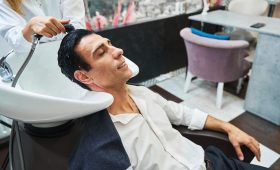
The first washing process after the hair transplant operation is usually performed in the clinic environment by a specialist nurse or at home with detailed instructions from the doctor 48 hours after the operation. At this stage, one must be extremely gentle so that the newly transplanted sensitive follicles do not move or get damaged. A special softening foam or lotion is applied to the transplanted area and waited for about 30 minutes to ensure that the scabs that have started to form soften. Then, rinsing is done with lukewarm and non-pressurized water with light finger touches. This sensitive washing process is repeated every day for about 10-12 days, and keeping the scalp clean is critical for the grafts to hold.
How Does The Scabbing Process Progress?
Within the first few days following the hair transplant operation, it is biologically completely normal for small blood leaks and, accordingly, tiny scabs the size of a pinhead to form where the channels were opened or the pen was entered. These scabs are a natural part of the skin’s own repair and healing process. Thanks to the special “scab shedding” washes performed around the 10th day, these scabs start to fall off slowly and painlessly. With the shedding of the scabs, the newly transplanted young hair strands start to appear for the first time underneath. In this critical process, the golden rule is that the scabs should never be scratched with fingernails and should be allowed to fall off completely on their own so that the follicles are not damaged.
What Is Shock Loss And When Does It Start?
Shock loss is a temporary and normal process that occurs in the period between the 2nd week and the 2nd month after the hair transplant operation, which sometimes causes patients to panic. It means that some or all of the transplanted hair strands fall out and the follicles enter a resting phase under the skin. Although this situation leads many patients to worry “did the transplant fail?”, it is actually a healthy phase of the operation. Only the hair strands are what fall out; the living hair follicles remain under the skin and continue to be nourished to come out stronger. After shock loss is completed, permanent hair starts to grow again from around the 3rd month to last a lifetime.
Who Is A Suitable Candidate For Sapphire Fue?
The Sapphire FUE method is a perfect solution, especially for people who have a wide bald area and aim to have the highest possible number of hair strands transplanted in a single session. Every adult individual who has generally healthy scalp, has a sufficient amount of high-quality grafts in the donor area (nape and sides), and aims for permanent, natural results can be a suitable candidate for this method. Additionally, for individuals who have a metal allergy or a sensitive skin structure, sapphire tips offer a much safer option as they are bio-compatible and hypoallergenic. A detailed hair and skin analysis by an expert doctor is the most accurate way to confirm your candidacy.
Is The Dhi Technique Suitable For Women?
Yes, the DHI method is at the top of the most recommended and applied hair transplant techniques for women worldwide. The most fundamental reason for this is that the DHI method can be applied without the need to shave the hair completely, preserving the existing hair length. Since hair loss in women is usually in the form of regional thinning, making a sensitive thickening by entering between existing long hairs with the Choi implanter pen gives a much more aesthetic and successful result. The fast recovery after the operation and returning to social life without experiencing a change in hair cut is an invaluable advantage for female patients.
Is Non-Shaven Hair Transplantation Possible?
While in most traditional methods the entire head needs to be shaved (cut to zero) for the operation to be efficient, today it is completely possible to perform non-shaven hair transplantation with Sapphire FUE and especially the DHI technique. In the DHI method, shaving is only done in a small window-shaped area in the donor area (on the nape part), and this area can be easily covered with the long hair on top after the procedure. The front or top area to be transplanted is not shaved at all. This method is a revolutionary convenience for professionals or people with high aesthetic concerns who do not want it to be known by others that they have had a hair transplant.
Why Is The Waiting Time For Grafts Outside Important?
Hair follicles start to lose their vitality rapidly from the moment they are separated from the body because they are deprived of oxygen and nutrients. Therefore, it is of vital importance to place the grafts back under the skin as soon as possible after collection. In the DHI method, collection and transplantation are done almost simultaneously and sequentially, so the time the grafts stay in the external environment is minimum. In the Sapphire FUE method, the collected grafts are kept in special nourishing solutions and controlled cooled environments until their turn for transplantation comes. Shortening the waiting time is the most fundamental biological factor that directly increases the harmony of the transplanted hair with the skin, the retention rate, and the general success percentage of the operation.
Which Method Has A Lower Risk Of Infection?
Both Sapphire FUE and DHI techniques are safe methods with an extremely low risk of infection when applied in modern and sterile hospital/clinic conditions. However, the smooth and non-porous surface of the sapphire tips used in Sapphire FUE makes it difficult for microorganisms and bacteria to hold on, and it also creates a natural defensive shield as it reduces tissue damage. In the DHI method, the absence of a separate channel opening stage and the shorter contact time of the inner layers of the skin with air are factors that minimize the risk of infection. Using the antibiotics prescribed by the doctor after the surgery and full compliance with hygiene rules is the most effective way to prevent this risk practically to zero.
When Are Hair Transplant Results Fully Seen?
The hair transplant process is a long-term journey that requires patience, care, and time. The first 3 months after the operation usually pass with healing tissue and shock loss phases. From the 6th month onwards, about 50% of the transplanted hair will have emerged, and an exciting, noticeable change starts from the outside. Obtaining full results, that is, for all transplanted hair to come out, thicken, and take the desired form, usually takes a time between 12 to 18 months. At the end of this period, the hair reaches its final density, can be combed, cut in the desired model, and starts to look completely natural, like the person’s own original hair.
Should Prp Treatment Be Applied Together With Hair Transplantation?
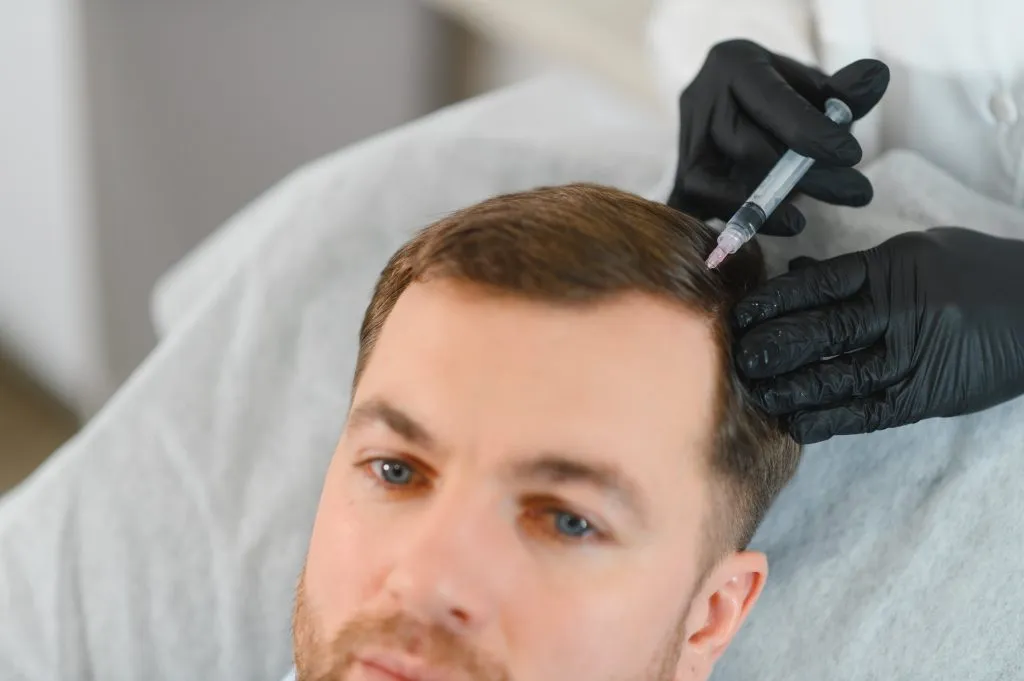
PRP (Platelet Rich Plasma) treatment is a supportive method that is frequently recommended in modern medicine together with hair transplant operations and crowns the success of the operation. The plasma rich in growth factors obtained from the patient’s own blood is injected into the transplanted area. This process ensures that the transplanted hair follicles hold onto their new places much faster and more strongly, accelerates tissue repair in the scalp, and also helps the existing thin hair to revitalize. Many experts state that including PRP sessions in the treatment protocol to reinforce the success of the operation, accelerate healing, and increase hair quality provides very significant benefits.

Is Hair Transplantation A Permanent Solution?
Yes, a hair transplant performed by a professional surgical staff with the right technique and modern equipment is the only definitive solution that is lifelong for male pattern baldness. The hair in the area between the nape and the back of the two ears, chosen as the donor area, is naturally resistant to the DHT (Dihydrotestosterone) hormone, which causes shedding, from birth. The hair follicles taken from these areas continue to maintain this non-shedding feature even when they are moved to their new places (top or front area). Therefore, the transplanted hair does not fall out except for the aging process. However, it is always more sensible to make a holistic hair health plan with your doctor as your existing old hair in areas where the operation was not performed may continue to have the potential to fall out.
How Does The Age Factor Affect The Choice Of Hair Transplant?
The medical lower limit for a hair transplant operation is usually 20-22 years of age; however, most experts consider the 30s, when the shedding pattern is fully established, as the ideal start. In early transplants performed at a very young age, a second operation requirement may certainly arise in the future because the shedding of original hair may continue. As age progresses, the hair quality and follicle density in the donor area may naturally decrease. Sapphire FUE or DHI can be successfully applied to suitable candidates in every age group; however, since the shedding rate is high in young people, DHI, which provides a more sensitive thickening, and Sapphire FUE, which has high efficiency as the need for wide area coverage increases in later ages, are becoming more frequently preferred methods.
Which Technique Does The Scalp Structure Determine?
Biological factors such as the thickness, elasticity, moisture rate, and oil balance of the scalp play a critical role in determining which method the surgeon will choose. For example, on a very hard and fibrotic scalp, sharp sapphire tips give much more controlled and successful results to open the channels precisely, while on more thin, delicate, and sensitive scalps, the minimal invasive and non-channel approach of the DHI method may be a much safer and healthier choice for protecting the tissue. Your doctor will examine all the biological characteristics of your scalp in the physical examination to be performed and will explain to you with scientific reasons which apparatus or method will produce the most efficient result by giving the least damage to your tissue.
How Are Complications Prevented?
The most fundamental and indispensable way to prevent unwanted complications after a hair transplant is to perform the operation in a fully equipped, sterile hospital environment and under the supervision of expert doctors. Detailed blood tests, allergy tests, and health history questioning performed before the operation determine possible risks in advance. After the operation, it is of vital importance to use the medications prescribed by the doctor without interruption, to have the first critical washes performed by professional teams, and to protect the head area from physical impacts, sun, and dust. A hygienic environment, correct equipment, and full compliance with the doctor’s advice are sufficient and necessary to completely prevent problems such as possible edema, infection, or follicle loss.
When Can Sports Be Done After Hair Transplantation?
In the first stages of the healing process, it is of great importance that the newly transplanted hair follicles do not move and the blood pressure inside the head does not increase suddenly. For the first week after the operation, only very light-paced short walks are allowed. Individual sports with a light tempo that do not tire the body much can be started from the 15th day. However, it is recommended to wait at least 1 month, or even ideally 2 months, for heavy sports that require effort and carry a risk of head impact, such as lifting heavy dumbbells, fitness, football, or basketball. Swimming (due to pool chlorine or sea salt) and extremely hot environments like a sauna are also free after 1 month with the doctor’s approval.
Why Is Turkey The Best Choice For Hair Transplantation?
Turkey has managed to become the first and most prestigious center that comes to mind when hair transplantation and aesthetic surgery are mentioned worldwide in recent years. The main reasons for this include the incredible experience gained by Turkish doctors and surgical teams with thousands of cases, the simultaneous or even more pioneering use of the latest technologies (such as Sapphire FUE and DHI) with the world, and the fact that costs are much more reasonable compared to Europe or America in proportion to the quality of service offered. Additionally, the unique hospitality offered by Turkey, 5-star accommodation possibilities, and rich tourist options allow patients to turn this surgical process into an enjoyable and unforgettable trip rather than a source of stress.
Why Has Health Tourism Developed In Turkey?
Turkey has become a global brand in the field of health tourism with government-supported incentives, modern technological infrastructure, and world-class hospitals with JCI (Joint Commission International) accreditation. Thanks to its geographical location, it offers very easy transportation opportunities for patients coming from Europe, the Middle East, and Asia with only a few hours of flight distance. Health personnel and consultants are proficient in many foreign languages; this makes communication flawless. Additionally, thanks to the “all-inclusive” package programs offered specially for individuals (accommodation, VIP transfer, professional guidance), the patient feels special and safe from the moment they enter the country. This professional service network has made Turkey a global healing center.
What Is The Hair Transplant Experience Like With Cure Holiday?
Cure Holiday has made it its mission to turn your hair transplant process from being just a medical operation into a peaceful and luxurious holiday experience that also rests your soul. Bringing together the best surgeons, the most talented health teams, and the most modernly equipped clinics with its deep experience in the sector, Cure Holiday offers a boutique and special service to each of its patients. Every single detail is meticulously planned, from the detailed online consultation before the operation to the VIP greeting at the airport, from accommodation in luxury hotels to the follow-up that will last a lifetime after the operation. With Cure Holiday, while you feel as comfortable and safe as in your own home, you live the happiness of achieving the bushy and healthy hair of your dreams.
Why Should Cure Holiday Be Preferred?
The most important and valid reason for you to prefer Cure Holiday is the institution’s unwavering principle of working focused on transparency, honesty, and maximum quality. Here, you are approached not just as a “patient” or “customer”, but as a “guest” who is the foundation of a friendship that will last a lifetime. It is guaranteed by Cure Holiday that all medical equipment used in operations (Sapphire tips, Choi implanter pens) are original and of the highest quality. The success of the operation results obtained and the smiles of thousands of happy patients are the biggest reference of Cure Holiday. Additionally, thanks to the support team you can contact continuously throughout the process, you can focus completely on your goal without even experiencing the hesitation of being in a foreign country for a moment.
How Is The Treatment Process In Turkey Planned With Cure Holiday?
Your treatment and change process starts with great care from that first moment you contact Cure Holiday. In the first stage, an online consultation is held with experts through photos of your hair taken from different angles, and the number of grafts you need and the most suitable technique (Sapphire FUE or DHI) for you are clarified. Then, a special travel and treatment plan is created for you in accordance with your calendar. Our VIP team, who welcomes you when you land in Turkey, ensures your comfortable transportation to the clinic and your luxury hotel. All your medical care sets, shampoos, and detailed usage instructions are presented to you in full after the operation. To open a new page in your life and refresh your self-confidence with Cure Holiday, all you need to do is create your appointment and take the first step towards this change in the fascinating atmosphere of Turkey.
Free Consultation
Fill out the form below to get your free medical travel plan and price quote.
Sources and how to verify this yourself
- Comparative study of graft survival by donor site (scalp, beard, chest) at 12 months — roughly 89% for scalp, 95% for beard and 76% for chest hair; survival also falls the longer grafts stay outside the body. source
- Ministry of Health, Regulation on International Health Tourism and Tourist Health, Official Gazette 26 April 2025, No. 32882 — authorisation requirement for facilities and intermediaries, TÜSKA accreditation, compulsory complication insurance (deadline 31 December 2025 for insurance, 31 December 2026 for accreditation). source
- Ministry of Health, Regulation on Promotion and Information Activities in Health Services, Official Gazette 12 November 2025, No. 33075 — treatment promises and guarantees are prohibited; price and campaign announcements are permitted only within international health tourism. source