What are the Most Common Causes of Tooth Yellowing?
Tooth yellowing is an aesthetic problem that occurs as a result of the wear of tooth enamel over time or the penetration of external factors into the tooth. Frequent consumption of coloring beverages such as tea, coffee, and red wine, smoking, and inadequate oral care are the primary reasons for this situation. In addition, as age progresses, the thinning of the tooth enamel and the underlying yellowish dentin layer becoming more prominent is an inevitable process. The loss of the natural whiteness of the teeth can cause individuals to feel hesitant while smiling, and this situation can turn into a factor that psychologically damages self-confidence.
How Do Tooth Stains Affect Your Social Life?
Our smile is the most important part of the first message we give in social interactions. Prominent stains or yellowing on the teeth can lead to a wrong perception of the individual’s hygiene habits. This situation can cause the person to feel the need to close their mouth while talking or laughing, and thus move away from social environments. From job interviews to special meetings, a perfect smile is the key to leaving a positive first impression in every field. If aesthetic problems are not resolved, the individual’s ability to express themselves may be restricted, and situations such as introversion can be triggered.
How Much of a Role Do Genetic Factors Play in Tooth Color?
Like the bone structure, the tooth color of every individual has a foundation determined by their genetic codes. While some people naturally have a whiter tooth enamel, some are born with teeth in gray or yellowish tones. Genetic predisposition directly affects the thickness and mineral structure of the tooth enamel, determining how resistant it will be against external factors. If there is a history of tooth color problems in the family, it may be difficult for the individual to have a white smile only with brushing. In such cases, professional whitening or veneer treatments become the only options that offer a permanent solution.
What Are the Consequences of Tooth Decay and Neglected Dental Care?
When dental care is neglected, plaque accumulation increases rapidly, leading to the formation of acids that destroy the tooth enamel. This process causes cavities, which are initially small holes, to deepen over time and reach the inner nerves (pulp) of the tooth. Untreated cavities not only lead to tooth loss but also prepare the ground for severe pain and systemic infection risks. Deterioration of oral health can bring serious complications that can affect the whole body, from the digestive system to heart health. Therefore, it is of vital importance to intervene before problems grow.
What is the Relationship Between Enamel Loss and Tooth Sensitivity?
Although tooth enamel is the hardest tissue in the body, it can wear out over time due to reasons such as acidic foods, hard brushing, or teeth grinding. When the enamel layer thins, the sensitive dentin layer and microscopic channels underneath are exposed, leading to extreme sensitivity to hot, cold, or sweet foods. Tooth sensitivity is a condition that significantly reduces the quality of life and takes away the pleasure of eating. Since enamel loss is an irreversible damage, protecting this tissue or restoring the lost tissue with artificial materials such as veneers is necessary for both protection and functionality.
What are the Aesthetic Advantages of Crowning All Teeth?
Full mouth crowning treatment is the most comprehensive aesthetic operation that offers the opportunity to redesign your smile from top to bottom. By ensuring that all teeth are in perfect harmony with each other in terms of color, form, size, and alignment, a smile suitable for the golden ratio rules is obtained. Color tone inconsistencies experienced in single tooth treatments are completely eliminated in this method. A sparkling, white, and symmetrical tooth set makes the person’s facial features look younger and more dynamic. All aesthetic defects are resolved with a single treatment process, and the dreamed-of Hollywood smile is achieved.
How Does Full Mouth Crowning Improve Chewing Function?
Crowning all teeth is a great solution not only for aesthetic concerns but also to regain impaired chewing function. The vertical dimension, which is deteriorated due to worn, broken, or missing teeth, is brought to its ideal level thanks to the crowns. This situation ensures that the jaw joint works healthier and helps in better grinding of nutrients. When a correct closure (occlusion) is provided, chewing forces are distributed equally to all teeth and excessive loading of some teeth is prevented. Thus, the load on the digestive system decreases and the general health status is positively affected.
How Does Complete Dental Restoration Increase Your Self-Confidence?
For individuals who hide their smile due to common problems in their teeth, complete dental restoration opens the door to a new life, so to speak. Having a perfect smile allows the individual to be more active in social environments and express themselves more freely. Research shows that a healthy and aesthetic smile directly increases success in business life and social attractiveness. An individual who trusts themselves when looking in the mirror radiates positive energy to their surroundings. This psychological transformation is one of the most valuable and permanent side effects of the treatment and carries the quality of life of the patients to the peak.
How Do Dental Crowns Support Facial Aesthetics?
Teeth play a critical role not only inside the mouth but also in supporting the lips and the lower region of the face. The decrease in face height due to tooth wear or loss can lead to the lip corners sagging downwards and a more aged appearance. This support is regained with a restoration covering all teeth; the lips look fuller and fine wrinkles on the face decrease. Dental crowns create a non-surgical face-lift effect, so to speak, correcting the proportion of the face. This holistic approach creates a dramatic and positive change in the general appearance of the patient.
Is Crowning All Teeth Economical in the Long Run?
When problems in the teeth are treated piece by piece, there is a high probability of new problems constantly emerging over time, and this situation can lead to higher total costs. Full mouth restoration can be a more economical choice in the long run as it stabilizes all oral health at once. Full mouth crowns made with quality materials offer trouble-free use for decades with correct care. This collective solution, which reduces the need to sit in the dentist’s chair frequently, saves both time and budget. Investing fully in your health once is much more sensible than continuous patch treatments.
Why Should Full Mouth be Preferred for a Functional Smile?
A functional mouth structure means that the teeth work harmoniously with each other and jaw movements are not restricted. During the full mouth restoration process, the physician plans not only the appearance of the teeth but also the relationship between the lower and upper jaw with millimeter precision. This planning prevents joint pains and minimizes the damages created by parafunctional habits such as teeth grinding. Having each of the teeth in an ideal position also facilitates intraoral cleaning. This treatment, which melts both aesthetics and functionality in a single pot, is the highest form of oral health.
Can Speech Disorders be Corrected with Dental Crowns?
The alignment, length, and position of the front teeth are of vital importance for the correct pronunciation of some sounds. The contact of the tongue with the teeth is decisive in the production of letters such as “S”, “F”, “V”, and “T”. Lisps or speech disorders caused by tooth loss or misaligned teeth can be resolved with correctly designed crowns. Phonetic tests performed during full mouth restoration guarantee that the patient can speak in the clearest and most fluent way with their new teeth. In this way, the patient not only looks beautiful but also has a much more confident and understandable diction.
Is Crowning the Best Way to Get Rid of Old Dentures?
Removable dentures (plates) have disadvantages such as difficulty of use, moving in the mouth, and causing sores. In addition, these prostheses can accelerate bone resorption over time. Old-style, metal-supported porcelain crowns create an unnatural image by forming a gray line at the gum edges. Full mouth crowning or implant-supported crowns are the most modern way to get rid of these old and cumbersome systems. Fixed crowns give a natural tooth feeling, allowing the patient to get out of the prosthesis psychology. This transition, which offers more comfortable eating and speaking opportunities, maximizes the life comfort of the patient.
How Do Dental Crowns Protect Gum Health?
Crowns that are correctly prepared and have perfect margin (border) compatibility serve as an important barrier in protecting gum health. Smooth-surfaced ceramic or zirconium materials are more resistant to plaque accumulation than even natural tooth enamel. This situation reduces the risk of gum inflammation and periodontal diseases. Since all gums are rehabilitated during the full mouth restoration process, the intraoral flora reaches a healthier balance. The biological compatibility of the crowns with the gums ensures the protection of a healthy, non-bleeding, and pink gum appearance in the long run.
How is a Symmetrical Smile Design Achieved?
One of the most important elements underlying beauty is symmetry. In full mouth restorations, it is aimed that the teeth on both sides are identical to each other, taking the midline of the face as a reference. Tooth lengths, widths, and gum levels are adjusted precisely with the help of digital software. This symmetry creates an image perceived by the human brain as aesthetic and attractive. Thanks to manual or digital design processes, the curve most suitable for the patient’s lip structure and smile line is determined. The result is a balanced and fascinating smile design where no tooth looks incompatible with the others.
With Which Stages Does Dental Crown Treatment Begin?
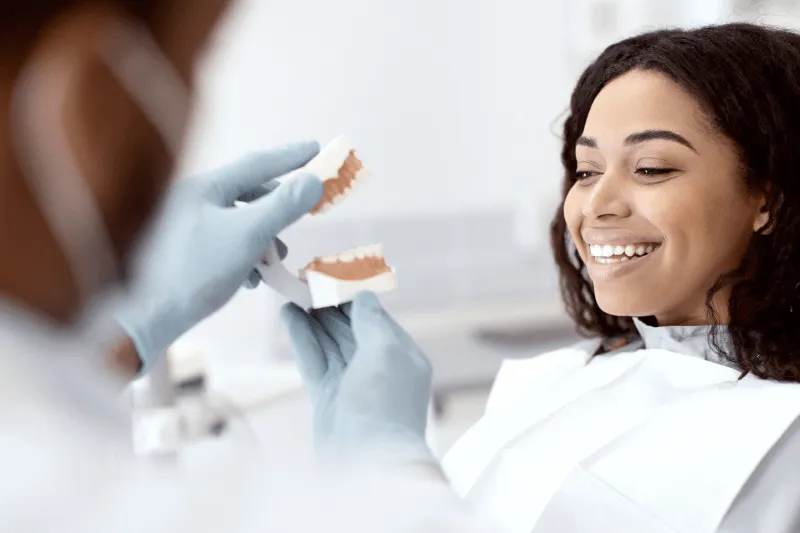
The treatment process begins with the consultation phase, where the patient’s expectations are listened to and a comprehensive intraoral examination is performed. In the first meeting, panoramic X-rays and intraoral photographs are taken to analyze the current situation. The patient’s general health history and allergies, if any, are noted. The treatment plan is shaped by determining the tooth forms suitable for the patient’s face shape and skin color. At this stage, the patient is informed in detail about the cost, duration of the treatment, and the materials to be used. The foundation of a successful treatment is built on this transparent communication and correct planning between the physician and the patient.
Which Digital Methods are Used in the First Examination?
In modern dentistry, digital technologies are the biggest helpers that minimize the margin of error. In the first examination, 3D digital models of the teeth are created using intraoral scanners. This method eliminates the trouble of taking old impressions that require putty-like substances to be put into the patient’s mouth. Thanks to “Digital Smile Design” software, how the patient will look after the treatment can be simulated on their photos. Thus, the patient has the chance to see the final result before even starting the treatment. This digital data set is a guide that ensures all treatment processes proceed error-free.
How is the Tooth Preparation and Reshaping Process Done?
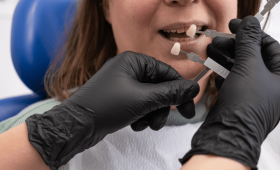
A certain amount of abrasion must be made on the tooth surface so that the crowns fit perfectly on the tooth and do not exceed the natural tooth size. This procedure is performed completely painlessly under local anesthesia. The amount of abrasion may change according to the type of crown to be applied; for example, while only a very thin layer is taken from the front surface in laminate veneers, a surrounding preparation is made in zirconium crowns. The physician shapes the tooth in a form that will provide the most ideal support for the crown by preserving the structural integrity of the tooth. At this stage, special burs and cooling systems are used to prevent sensitivity.
How Important are Temporary Teeth in the Treatment Process?
After the teeth are prepared, temporary teeth are attached so that the patient does not remain toothless until the permanent crowns are produced in the laboratory environment. Temporary teeth both protect the prepared teeth from external factors and allow the patient to continue their chewing and speaking functions. In addition, these teeth are like a rehearsal in terms of aesthetics; they give an idea about the length and form of the teeth and allow for changes in the final design. The few-day process spent with temporary teeth is also an adaptation period for the patient to get used to the new tooth structure. During this process, sensitivity control is made to move safely to the permanent stage.
Why is the Digital Impression Method Better Than the Traditional Method?
The trays and putty-like materials used in traditional impression methods trigger the gag reflex in many patients and carry the risk of dimensional changes in the impression. Digital impression, on the other hand, creates a perfect copy of the teeth in a computer environment by scanning thousands of data points in seconds. Since these data are sent to the laboratory instantly, the process speeds up. The precision of digital impressions is at the micron level, which guarantees that the produced crowns fit the tooth perfectly, leave no gaps, and thus prevent secondary caries risk. This technology, which maximizes patient comfort, raises the standards of treatment.
How are Teeth Designed During the Laboratory Process?
The impressions transferred to the computer environment are shaped by expert technicians and dentists using CAD (Computer-Aided Design) software. The anatomical structure of each tooth, chewing surfaces, and their contact with other teeth are optimized in a virtual environment. Then, these designs are sent to CAM (Computer-Aided Manufacturing) devices and scraped untouched from special blocks (zirconium, ceramic, etc.). In this process, the color transitions and transparency details of the tooth are processed with great care. The laboratory stage is the point where art meets technology and is the most critical phase determining the aesthetic quality of the crown.
How are the Trial Stage and Color Selection Performed?
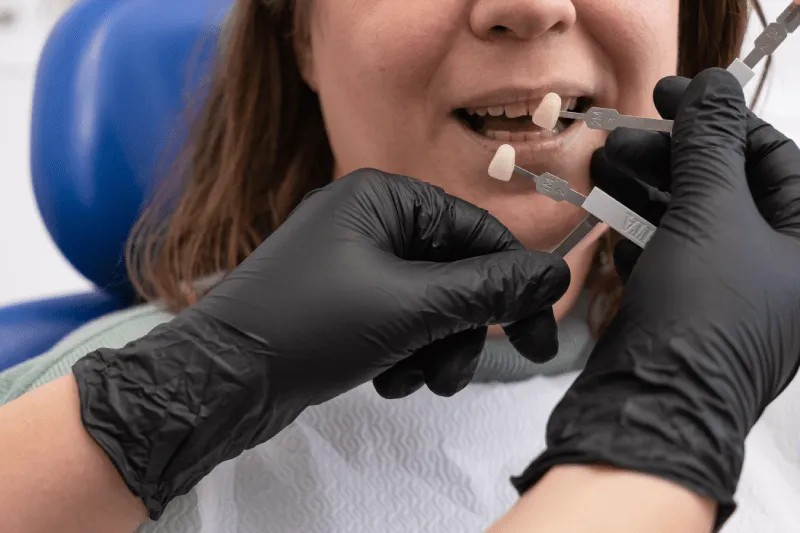
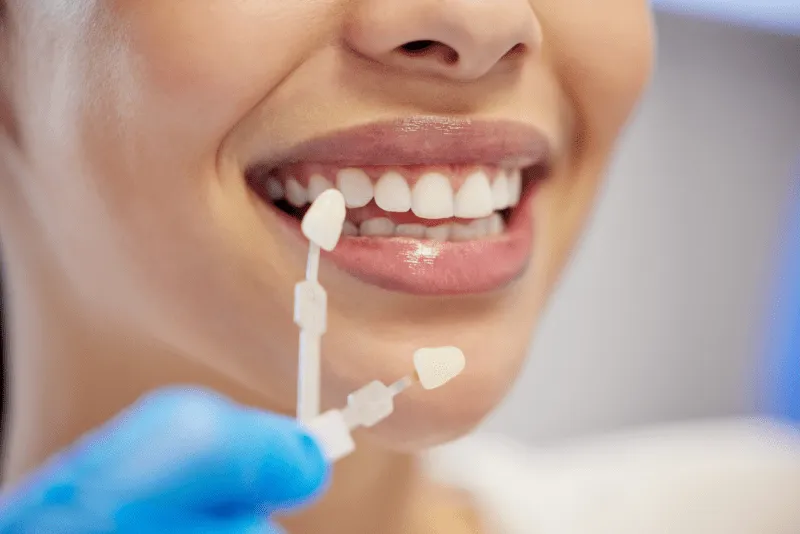
The trial stage, performed before the permanent crowns are bonded, is the moment when the patient and the physician check whether they are satisfied with every detail. The compatibility of the crowns with the gums, the closure, and the general aesthetics are evaluated intraorally. While selecting the color, the patient’s skin color, eye color, and age factor are taken into consideration. A wide scale is offered, from very light white tones to more natural beige tones. The patient expresses their opinions by looking in the mirror and is sent back to the technician for small corrections if necessary. This stage is the final touch made for the result to be perfect.
How Long Does the Bonding of Permanent Crowns Take?
After everything is approved, the bonding (cementation) phase of the crowns is started. This procedure usually takes 1-2 hours and requires very precise work. The tooth surface and the inner part of the crown are prepared with special acids and agents. Then, using high-strength dental adhesives, each crown is placed one by one. Adhesive residues are cleaned and hardened with laser light to ensure maximum retention. When the bonding process is finished, the teeth become fully functional immediately. This stage is the moment when the patient officially meets their new smile they have been waiting for for months or years.
Is Pain or Ache Felt During Treatment?
Pain control is very advanced in modern dentistry and the feeling of pain, which is the biggest fear of patients, has been almost completely eliminated. Since the reshaping process in which the teeth are prepared is done under local anesthesia, the patient feels nothing. For patients with a phobia of anesthesia, sedation or general anesthesia options are also available. Since temporary teeth are attached after the procedure, sensitivity is minimized. A slight pressure feeling that lasts for a day or two after the crowns are attached is normal and easily passes with simple painkillers. In short, this treatment process is much more comfortable than you think.
What Should be Considered in the First Week After Crowning?
The first week following the completion of the treatment is the period when the gums and mouth muscles adapt to the new restoration. Avoiding very hard or sticky foods for a short time is beneficial for the crowns and adhesives to settle completely. Initially, a difference may be felt in some letters while speaking, but the tongue will adapt to this situation within a few days. Regular brushing and flossing should be started immediately. If a height or discomfort is felt in the closure, this situation can be corrected with a small abrasion. This short adaptation phase is the preliminary preparation for the comfort that will last for many years.
Why are Zirconium Crowns Preferred So Much?
Zirconium is a material described as “white gold” that offers both durability and aesthetics together. Since it does not contain metal, it does not cause blackening at the gum edges and its light transmittance is very close to natural tooth enamel. In this way, zirconium crowns do not look artificial and give the closest reaction to the natural tooth under light. Since its tissue compatibility (biocompatibility) is extremely high, it does not prepare the ground for gum diseases. Especially the fact that it is solid enough to withstand the chewing force of the posterior group teeth and elegant enough to meet the aesthetics of the front teeth makes zirconium indispensable for full mouth treatments.
How Do E-max Veneers Provide a Natural Tooth Appearance?
E-max (Lithium Disilicate) veneers are considered the peak of aesthetics today. Thanks to its glass-ceramic structure, it has perfect transparency and light-reflecting properties. Since the E-max material can imitate the layered structure in the enamel of the natural tooth, it cannot be understood to be a veneer even when looked at very closely. It is generally preferred for the front teeth where aesthetic concerns are highest. Despite its thin structure, it is quite durable as it is reinforced in a laboratory environment. For patients who want the brightest and most vivid smile without compromising naturalness, E-max is arguably the best option.
What is the Difference Between Porcelain Laminate Veneer and Crown?
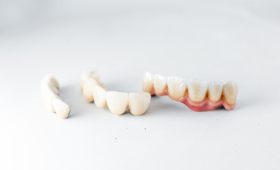
Porcelain laminate (leaf porcelain) is an aesthetic cover applied only to the front surface of the tooth and requiring very little abrasion (sometimes none). Laminate is ideal if the general structure of the tooth is sound but there are color or small crookedness problems. A crown, on the other hand, is a cap that surrounds the entire circumference of the tooth and is preferred if there are large material losses, root canal treatment, or fractures in the tooth. In full mouth restorations, sometimes a combination of laminates in the front and crowns in the back can be made. Which method will be chosen is determined by the expert physician according to the protection need of the existing tooth tissue and the desired mechanical strength.
In Which Situations are Metal-Supported Porcelain Crowns Used?
Metal-supported porcelains are a type of crown that contains a metal skeleton for durability in its substructure. Although they have lost their popularity in the front teeth today with increasing aesthetic expectations, they can still be preferred in some cases due to their budget-friendliness and high resistance in very long bridges. However, since they do not transmit light, they do not exhibit an image as natural as zirconium or E-max. In addition, over time, a grayish color, which is the reflection of the metal, may occur at the gum border. These crowns are offered as a safe alternative mostly in posterior regions or in cases where cost is in the foreground.
What is the Durability Advantage of Monolithic Zirconium?
Monolithic zirconium is the method of producing the crown by scraping it from a single block and not adding a porcelain layer from the outside. The biggest advantage of this method is that it completely eliminates the risk of porcelain chipping. It is the safest solution especially for patients with a teeth-grinding habit (bruxism) or very high chewing force. New generation monolithic zirconiums also give quite aesthetic results thanks to developing coloring techniques. For those looking for both unbreakable strength and satisfactory visuals, monolithic structures form a solid foundation in full mouth treatments.
What is the Best Material for Full Mouth Restoration?
There is no single option as “the best” material; the best material is the one determined according to the specific needs of the patient. If aesthetics is in the foreground, a combination of E-max in the front and zirconium in the back is frequently applied if strength is required. The closure relationship of the teeth, the habits and expectations of the patient affect the material selection. Your physician will recommend the combination that will be the most long-lasting and look the most natural for you by analyzing the force distribution in the mouth. What matters is the mark and quality of the material as much as the skill of the physician in processing that material and applying it to the tooth.
Why is Biocompatible Material Selection Important?
Biocompatibility is the fact that a material is compatible with living tissue (gum and bone) and does not start allergic reactions. Since zirconium and full ceramics do not contain metal, they are not perceived as foreign substances by the body. This allows the gums to surround the crown “as if it were its own tissue”. In metal-supported structures, nickel or chrome allergy, which can be seen in some patients, can cause tissue recessions and inflammations. Biocompatible materials prevent bad breath, protect gum health, and make the success of the treatment sustainable for years. Health should come before aesthetics.
What is the Difference of High Light Transmittance Crowns?
The most characteristic feature of natural tooth enamel is that it transmits and reflects light. Crowns with low light transmittance look dull, matte, and like “dentures”. Materials with high light transmittance, such as E-max and new generation zirconiums, on the other hand, absorb light and reflect it from the lower layers, adding a vivid depth to the tooth. In this way, teeth change color and shine just like natural teeth in different lighting environments (daylight, night light, etc.). This detail is the finest touch that separates aesthetic dentistry from an ordinary prosthesis procedure and creates a work of art.
Can Laminate Veneers be Applied to All Teeth?
Laminate veneers are generally applied to the front teeth (5 teeth each on the right and left) visible in the smile line. Since chewing pressure is much higher in the back teeth, the use of crowns (zirconium) in this region is more common and safe. However, in some special cases, if only aesthetic touches are required, they can also be applied to the outer surfaces of the posterior teeth. While planning full mouth restoration, the physician provides the function with posterior teeth (crowns) and aesthetics with anterior teeth (laminates or crowns). In short, although laminate can be physically applied to every tooth, it is best to be selective for mechanical reasons.
On Which Factors Does the Life of Crown Types Depend?
the life of a dental crown is generally between 10-20 years, but it is in the hands of the patient to extend this period. The most important factor is oral hygiene; when teeth are not brushed, your own tooth under the crown can decay and this leads to the loss of the crown. If there is a teeth-grinding habit, using a night guard protects the crowns. Traumatic movements such as breaking or opening very hard objects with the tooth should be avoided. In addition, regular dentist checks ensure that potential small problems are noticed before they grow. With the right material, right physician, and good care, your crowns can accompany you for a lifetime.
Why Does Turkey Rank First in Dental Tourism?
Turkey is accepted as the capital of dental tourism worldwide. The biggest reason for this is that clinics with technological infrastructure above the standards in Europe and America offer services with much more accessible costs. Turkish dentists can successfully manage complex cases thanks to their education quality and intense practical experience. In addition, the hospitality offered by Turkey, visa facilities, and modern hospital environments make here the number one destination for foreign patients. It is one of the rare countries where you can both protect your budget and receive a world-class treatment.
What is the Difference of Receiving Dental Treatment with Cure Holiday?
Cure Holiday is a leading organization that transforms health tourism from a service into an experience. We direct you not to an ordinary clinic, but to the most distinguished surgeons and aesthetic dentists specialized in their fields. Our difference is that we meticulously plan every millimeter of your treatment process and promise you not only “a new smile” but also a safe and peaceful process. It is among the standards of Cure Holiday that every material used is certified and internationally guaranteed. When you set out with us, you experience the comfort of feeling in safe hands.
How is Treatment and Holiday Possible Together?
We transform the time you set aside for dental treatment into a pleasant break, not a nightmare. While you have dinner with the fascinating Bosphorus view of Istanbul or rest on the sunny beaches of Antalya, your treatment also proceeds on one hand. You can evaluate the laboratory process (usually 3-5 days) between the day the teeth are prepared and the day the permanents are attached by discovering the unique touristic places of Turkey. Cure Holiday perfectly synchronizes your appointment schedule with your holiday plan. Thus, you return to your country with an unforgettable memory in which you both regained your health and rested your soul.
How is the Technological Equipment of Clinics in Turkey?
Modern clinics in Turkey are equipped with the latest opportunities of digital dentistry. 3D intraoral scanners, dental tomographies, CAD/CAM laboratory systems, and laser technologies are used routinely. This technological power minimizes the margin of error while increasing the speed of treatment. Thanks to laboratories located within many clinics, personalizations on crowns can be made instantly. These large investments made in technology make it possible for patients to reach the world’s most modern dental solutions in Turkey.
How Can You Start the Process by Contacting Cure Holiday?
Reaching us is the first and easiest step of your dream smile. When you message us via our website or WhatsApp line, a special health consultant is assigned to you. When you send your current X-rays or tooth photos, a free preliminary evaluation is made by our expert physicians. After the personalized treatment plan and transparent price offer are approved, we organize everything. When all details from your flight ticket to your appointments are clarified, all you have to do is pack your bag and come.
What Special Accommodation Opportunities Does Cure Holiday Offer You?
During the treatment process, your comfort is at least as important to us as medical success. Cure Holiday ensures your accommodation in high-standard contracted hotels located within walking distance to clinics or in central locations. A peaceful and hygienic environment where you can rest after the operation is under guarantee. Single rooms, breakfast included options, and all kinds of technical support you need are included in our accommodation packages. While you get used to your new teeth, we perfectly manage all details in the background for your comfort.
Why Should Cure Holiday be Chosen for Personalized Smile Design?
Smile design is not a standard procedure but a personalized art. As Cure Holiday, we display a multidisciplinary approach to find the smile most suitable for your facial features, lip form, and even your character. We design an expression that suits you and looks natural, not just “white teeth”. Our experienced physician staff turns your expectations into reality by using state-of-the-art digital design tools. With Cure Holiday, where trust, quality, and aesthetics meet, that image in the mirror in your dreams is no longer far away. Take your appointment today, let’s start the change together!
Free Consultation
Fill out the form below to get your free medical travel plan and price quote.
Sources and how to verify this yourself
- Howe M-S, Keys W, Richards D. Long-term (10-year) dental implant survival: a systematic review and sensitivity meta-analysis. Journal of Dentistry, 2019 — pooled 10-year implant survival 96.4% (95% CI 95.2–97.5%); conservative sensitivity estimate 93.2%. source
- Ministry of Health, Regulation on International Health Tourism and Tourist Health, Official Gazette 26 April 2025, No. 32882 — authorisation requirement for facilities and intermediaries, TÜSKA accreditation, compulsory complication insurance (deadline 31 December 2025 for insurance, 31 December 2026 for accreditation). source
- Ministry of Health, Regulation on Promotion and Information Activities in Health Services, Official Gazette 12 November 2025, No. 33075 — treatment promises and guarantees are prohibited; price and campaign announcements are permitted only within international health tourism. source