What is revision rhinoplasty?
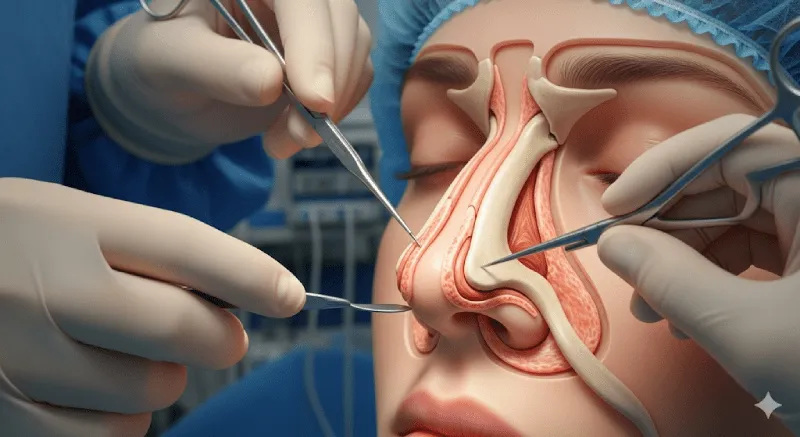
Revision rhinoplasty is a corrective surgery performed on individuals who have already undergone one or more nose aesthetic operations but are unsatisfied with the result or have experienced structural deformities. This procedure aims to both improve the external appearance of the nose and stabilize vital functions such as breathing. Being much more complex than the primary surgery, this procedure requires the surgeon to possess a high level of experience and anatomical knowledge.
Why is a second nose surgery necessary?
Following the initial surgery, aesthetic issues such as collapse, asymmetry, excessive drooping of the nasal tip, or “pinched nose” deformity may arise. Additionally, severe breathing difficulties can occur due to post-surgical scar tissue or the failure to fully correct a deviated septum. Patients seek this second chance to rid themselves of a nasal structure that is incompatible with their facial features, looks artificial, or has lost its functionality.
How long after the first surgery should revision be performed?
The most critical rule for revision surgery is patience; it takes at least one year for nasal tissues to heal completely and for swelling to subside. Interventions performed during the early period can cause further damage to tissues that have not yet settled and increase the risk of failure. Surgeons generally strongly recommend waiting 12 to 18 months for scar tissue to soften and for the nasal framework to take its final shape.

Is revision rhinoplasty more difficult?
Absolutely yes, revision surgery is a discipline that requires much higher technical skill than primary surgery. Scar tissue remaining from previous operations, cartilage deficiencies, and a distorted anatomical structure make the surgeon’s job more difficult. However, an experienced surgeon can overcome these challenges by taking cartilage grafts from other parts of the body to virtually rebuild the nose and achieve successful results.
Why is a second chance so important?
For many patients, a failed aesthetic operation is not just a physical problem but also a source of significant loss of self-confidence and psychological trauma. Revision rhinoplasty does not just give the patient a new appearance; it also allows them to make peace with the mirror and continue their social life much more happily. Therefore, a well-planned revision has the power to open a new and positive chapter in a patient’s life.
Which aesthetic problems can be corrected with revision?
Revision surgery can successfully correct issues such as a persistent hump on the nasal bridge, a nasal tip that is too upturned or too droopy, disproportionate nostrils, and general asymmetry. Structural errors, such as deviations in the nasal axis or a nose that remains too large or too small for the face, are also optimized during this surgery. Modern techniques allow for the correction of all types of visual defects in line with facial analysis.
Can breathing problems be solved with revision?
Yes, one of the most fundamental goals of revision rhinoplasty is functional improvement. Issues such as a deviated septum that was unnoticed in the first surgery or developed later, nasal valve collapse, or turbinate hypertrophy are addressed in detail during this operation. The surgeon restores the internal structure of the nose, widening the air passages and significantly improving the patient’s quality of life by ensuring much more comfortable breathing.
What is the pre-operative preparation process like?
The preparation process begins with a detailed review of the patient’s medical history and previous surgical reports. The surgeon examines the internal and external structures of the nose using endoscopic methods and usually requests a CT scan to evaluate the amount of remaining cartilage. It is vital for success that the patient stops smoking at least two weeks before surgery, avoids blood-thinning medications, and enters the operating room with realistic expectations.
Is cartilage support required in revision surgery?
In most revision cases, it is observed that the cartilage structures supporting the nose were excessively removed or weakened during the first surgery. In this case, additional cartilage support is absolutely necessary to prevent the nose from collapsing and to create the new form. If the patient does not have enough cartilage (septum) left in their nose, it is inevitable to harvest grafts from other parts of the body. These supports are the fundamental building blocks that guarantee the long-term stability and aesthetic posture of the nose.
When is rib cartilage used?
If there is significant structural collapse in the nose and ear cartilage will be insufficient to provide structural support, rib cartilage is used. Rib cartilage is available in abundance and is structurally very strong, making it ideal for raising the nasal bridge or lifting a collapsed tip. This cartilage, harvested through a small incision, is an excellent source for rebuilding the nasal anatomy from scratch in experienced hands.
In which cases is ear cartilage preferred?
Ear cartilage, due to its softer and more curved structure, is generally preferred for shaping the nasal tip or repairing minor collapses in the nasal wings. Used more for correcting aesthetic details and providing soft transitions rather than as a primary structural support, this tissue can be harvested without causing any deformity in the patient’s ear. The small intervention behind the ear leaves almost no visible scar after healing and offers a comfortable solution for the patient.
Is the open or closed technique better?
The “open technique” is usually preferred in revision surgeries because this method allows the surgeon to directly see the nasal anatomy and correct damaged tissues with millimeter precision. Although the closed technique can be used for limited interventions, the open approach provides much safer results for placing cartilage grafts and applying suturing techniques in complex revisions. The surgeon’s expertise in a technique, as well as the current damage to the nose, determines this choice.
How long does the surgery take?
Revision rhinoplasty takes much longer than a standard nose surgery and generally varies between 3 to 6 hours. The reason for such a long duration is the meticulous cleaning of scar tissue, harvesting cartilage from the rib or ear if necessary, and reshaping and placing these cartilages into the nose. It is essential for the surgeon to work patiently and process every detail meticulously to achieve a successful and permanent result.
Is the recovery process different from the first surgery?
The recovery process after revision surgery generally requires a bit more patience, as the tissues may have been previously processed and their circulation weakened. The resolution of swelling (edema), especially at the nasal tip, can be spread over a longer period compared to the first surgery. However, most patients approach the process more consciously thanks to their experience from the first operation. Although the first few weeks may seem challenging, the permanence of the results once tissue healing is complete will more than satisfy the patient.
When do bruising and swelling disappear?
Most of the bruising and swelling that occur after surgery typically disappear rapidly within the first 10-14 days. However, because tissue trauma can be greater in revisions, the complete dissipation of microscopic edema can start from 6 months and extend up to a year. During this process, regularly applying cold compresses, sleeping with the head elevated, and limiting salt consumption are important factors that increase the healing speed and comfort the patient.
What are the risks of revision surgery?
Like any surgical procedure, revision rhinoplasty carries risks such as infection, bleeding, or anesthesia complications; however, the most specific risk is the possibility of “insufficient correction” or the “formation of new asymmetries.” Rare situations such as circulatory disorders in previously damaged skin tissue or displacement of cartilage grafts over time may occur. However, with an expert surgeon and correct techniques, these risks are minimized, and patient safety is prioritized.
How long does it take to reach the desired results?
It may take a full year, and in some cases even two years, to see the final result of revision surgery. The integration of the new nasal structure with the face, the fusion of cartilage grafts with the tissue, and the adaptation of the skin to the new skeleton are biological processes that take time. It is normal to see the nose changing shape during monthly check-ups; therefore, it is very important for patients not to panic in the early period and to allow the healing process to unfold over time.

What should be considered when choosing a revision surgeon?
Choosing a surgeon is the most critical step in the success of revision surgery. The doctor you choose must specialize in revision nose aesthetics and have a wide portfolio of cases (before-after photos) in this field. The communication the surgeon establishes with you, their honest sharing of risks, and their detailed explanation of the surgical plan should be reassuring. Remember, this surgery is a “mastery” task with the lowest margin of error.
What are the psychological effects of a failed surgery?
A failed nose surgery can open deep psychological wounds in an individual, such as social isolation, avoiding mirrors, and even depression. Because the person constantly focuses on their nose, they may experience distraction and a lack of self-confidence, regressing in their work and social life. Revision surgery does not just correct bone and cartilage; it also removes this psychological burden from the patient and offers them a more peaceful life.
Is revision surgery painful?
Thanks to modern anesthesia methods and long-acting painkillers applied during surgery, patients generally do not feel significant pain. It is normal to have a feeling of fullness and slight aching in the nose for the first few days after surgery, but this can be easily controlled with simple painkillers. In cases where rib cartilage is harvested, there may be sensitivity in that area for a few days, but this is not at a level that prevents the patient’s daily activities.
How is a drooping nasal tip corrected with revision?
A drooping nasal tip usually occurs when the nose’s support mechanisms are insufficient and is treated with strong cartilage supports (strut grafts) in revision surgery. Using solid cartilage obtained from the septum or rib like a pillar to keep the nasal tip elevated, the surgeon brings the tip to its ideal angle. This method not only provides an aesthetic lift but also prevents the nostrils from collapsing during breathing.
How are irregularities on the nasal bridge resolved?
Collapses, bumps, or what we call “saddle nose” deformities on the nasal bridge are resolved with grafting and rasping techniques. The surgeon uses cartilage membranes (fascia) or crushed cartilage tissues as a filler to correct irregular areas and create a smooth nasal bridge. This process stabilizes the profile view of the nose while ensuring that light reflections on the nose appear more aesthetic and natural.
How does thick skin affect revision surgery?
Thick skin is a factor that makes it difficult for the fine details created by the surgeon to be visible and requires extra attention in revisions. In thick-skinned patients, edema stays longer, and the risk of scar tissue formation under the skin is higher. Instead of thinning the skin, the surgeon tries to make the underlying cartilage skeleton more prominent and strong to ensure the skin fits perfectly over this structure. Patience is the most important key for thick-skinned revision patients.
How does thin skin affect revision surgery?
Thin skin is sensitive enough to show even the smallest irregularity or cartilage edge underneath. During revision, the surgeon covers the sharp edges of the cartilages with fascia (muscle membrane) to apply “camouflage” techniques and aims for a softer appearance. The advantage of thin skin is that edema subsides very quickly, but since it requires flawless craftsmanship, the surgeon’s meticulousness is of vital importance in this group of cases.
Is the use of tampons necessary in revision surgery?
Nowadays, breathable silicone splints are used instead of classic gauze tampons, and these splints are very beneficial for stabilizing the internal structure in revisions. Silicone splints ensure that the septum inside the nose heals properly after surgery and minimize the risk of adhesions. These modern devices, which are extremely painless to remove, increase comfort by helping the patient breathe partially even in the first days after surgery.
How long should the cast and splint remain?
The thermoplastic splint and protective tapes placed on the nasal bridge at the end of the surgery generally remain for 7 to 10 days. At the end of this period, the splint is removed, and thin tapes are applied over the nose for edema control. The splinting process is a critical stage for protecting the new skeleton structure of the nose against external impacts and limiting swelling; the surgeon’s instructions must be followed strictly.
When can glasses be used?
It is recommended to take a break from using glasses for at least 2-3 months so that the nasal bones and cartilages can fully fuse after revision surgery. Heavy eyeglass frames can put pressure on the nasal bridge, distorting the shape of the healing tissues or causing indentations. Alternatives such as using contact lenses or taping the glasses to the forehead to prevent contact with the nasal bridge are the safest solutions for patients during this process.
When is exercise permitted?
Light walks can be started one week after surgery, but at least 4-6 weeks should be allowed for heavy exercises, fitness, and activities that increase blood pressure. Sports such as basketball, football, or combat sports that carry a risk of impact to the nose are strictly prohibited for at least 6 months. Exercise performed in the early period can increase the risk of bleeding in the nose and cause edema to become permanent; therefore, a gradual transition is vital.
Why are revision surgery prices higher?
Revision surgeries are naturally more expensive as they require much more time, materials (additional grafts), and expertise compared to the first surgery. Factors affecting the price include the intense effort spent by the surgeon, the length of the operating room time, and the advanced technological equipment used. However, when nasal health and aesthetics are concerned, choosing the most experienced and reliable surgeon rather than the cheapest option is more economical and healthier in the long run.
Is massage necessary after surgery?
Post-operative massage is not a standard application for every patient and should only be performed in cases deemed necessary by the surgeon, in the manner they demonstrate. Correctly applied massages can accelerate lymphatic drainage and help edema subside faster; however, pressure applied with wrong techniques can cause cartilages to displace. If your surgeon has not recommended massage, it is best to avoid interfering with your nose on your own.

How does smoking affect healing?
Smoking significantly delays wound healing by reducing oxygenation in the tissues and increases the risk of infection in sensitive operations like revision. Nicotine causes blood vessels to constrict, impairing the nutrition of the nasal skin and leading to serious irreversible complications such as skin loss (necrosis). To guarantee surgical success, it is a vital necessity to stop smoking at least one month before the operation and never to smoke during the recovery process.
How many times can revision surgery be performed?
Theoretically, a nose can be operated on multiple times, but each operation degrades tissue quality, increases scar tissue, and lowers the chance of success. For this reason, it is aimed to have the revision surgery performed as a final solution and in a single session, preferably by the most competent expert in this field. Fourth or fifth revisions are technically much riskier; therefore, patients must make the “correct surgeon” decision very carefully.
How is nostril asymmetry corrected?
Nostril asymmetry usually results from an imbalance in the cartilages supporting the nasal wings and is corrected with “alar rim grafts” in revision surgery. The surgeon places support on the side with the cartilage deficiency to equalize the form of the nostrils and ensure the nasal tip is centered. Although perfect symmetry is biologically impossible, a visible balance is achieved with revision, making the appearance of the nose much more aesthetic.
What is the success rate in revision rhinoplasty?
When performed by an expert surgeon, the success rate in revision rhinoplasty is quite high, and the vast majority of patients are satisfied with the result. Success is measured not only by visual appearance but also by the patient’s ability to breathe comfortably and have a nose that is at peace with their face. For patients who have realistic expectations and follow the rules during the recovery process, this rate can exceed 90%.
How should realistic expectations be formed?
A patient undergoing revision surgery should understand that the nose might not be completely perfect, but it will become much better and healthier than its current state. The surgeon should clearly explain the limits of the surgery through simulations and promise an improvement to the extent that the tissues allow. When “significant improvement and naturalness” are targeted instead of “perfection,” the level of satisfaction after surgery is much higher.
How is motivation maintained for a second chance?
It can be frightening to lie on the operating table again after a failed experience, but the confidence given by working with the right surgeon will overcome this fear. Keeping track of every small development during the healing process, being patient, and knowing that results will improve over time keeps motivation high. Remember that achieving the appearance and healthy breathing you dreamed of with revision rhinoplasty is entirely possible; it is just a matter of time and making the right decision.
Free Consultation
Fill out the form below to get your free medical travel plan and price quote.
Sources and how to verify this yourself
- Ministry of Health, Regulation on International Health Tourism and Tourist Health, Official Gazette 26 April 2025, No. 32882 — authorisation requirement for facilities and intermediaries, TÜSKA accreditation, compulsory complication insurance (deadline 31 December 2025 for insurance, 31 December 2026 for accreditation). source
- Ministry of Health, Regulation on Promotion and Information Activities in Health Services, Official Gazette 12 November 2025, No. 33075 — treatment promises and guarantees are prohibited; price and campaign announcements are permitted only within international health tourism. source