Today, the struggle against excess weight and obesity is not just an aesthetic concern but also a serious public health issue. For many individuals who are wary of the risks associated with surgical methods, “Gastric Botox” has become one of the most effective minimal invasive solutions offered by modern medicine. In this comprehensive guide, we will examine the biochemical effect of botulinum toxin on the stomach muscles, how it manipulates the speed of digestion, and how this process transforms into weight loss in the light of scientific data.
What Is Gastric Botox And How Does It Work?
Gastric Botox is the procedure of injecting botulinum toxin, obtained from the bacterium Clostridium botulinum, into the stomach muscle layer using an endoscopic method. This toxin, generally known in the cosmetic field for removing wrinkles, serves a very different function when applied to the stomach. Its basic working principle is to temporarily block the neural transmission of the stomach’s smooth muscles, thereby reducing their contractile power. This blockage slows down the stomach’s ability to mechanically break down food and push it forward. As a result, consumed foods remain in the stomach for a much longer time than normal, ensuring that a constant “satiety” signal is sent to the brain.
What Are The Scientific Foundations Of Gastric Botox Application?
The science behind gastric botox application is based on the control of neurotransmitters. Botulinum toxin type A is a neuromodulator that prevents the release of acetylcholine from nerve endings. When injected into the stomach wall, it targets the motor nerves that enable the stomach muscles to contract. This situation weakens the undulating movements of the stomach, known as “peristaltic movements.” Scientific studies show that this weakening can prolong the gastric emptying time by up to 50%. When this period is extended, the body feels full for a longer time with fewer calories, which triggers weight loss by creating a negative energy balance.
How Does Botulinum Toxin Affect Stomach Muscles?
When botulinum toxin enters the stomach tissue, it binds to presynaptic nerve endings and prevents synaptic vesicles from merging with the cell membrane. This means that the chemical signal (acetylcholine) required for muscle contraction cannot reach the muscle fibers. The smooth muscles, especially in the antrum and fundus regions of the stomach, relax with this effect and enter a resting mode. When the strength of the muscles decreases, the rate at which the stomach grinds food drops. This effect is not just a physical slowing down; it also changes the reactions to the volumetric expansion of the stomach, providing a biological basis that makes it easier for the person to practice portion control.
Why Does Gastric Emptying Slow Down?
Under normal conditions, the stomach makes strong rhythmic contractions to grind the food inside and transfer it to the small intestine. After the gastric botox injection, the intensity and frequency of these rhythmic contractions decrease. Because the muscles in the stomach wall cannot contract with sufficient force, the time required for solid foods to leave the stomach is significantly prolonged. While the emptying of liquids is generally not affected, the increased residence time of fibrous and protein-heavy foods in the stomach causes the feeling of fullness to last for hours. This slowing down also ensures that blood sugar rises and falls more steadily, preventing sudden hunger crises.
How Does Blocking Acetylcholine Release Change Digestion?
Acetylcholine is one of the most important excitatory neurotransmitters in the digestive system. When Gastric Botox blocks this substance, stomach motility transitions into a controlled and temporary state similar to “gastroparesis.” When mechanical breakdown, the first stage of the digestive process, slows down, the interaction time of stomach acid and enzymes with food increases; however, since the pushing power toward the stomach exit valve (pylorus) decreases, the transfer of food is delayed. This situation is the main mechanism that ensures the individual does not feel hungry until the next meal.
How Does Gastric Botox Suppress Appetite?
Appetite suppression is one of the most remarkable features of gastric botox, and this effect is two-fold. First is the physical fullness of the stomach; stretch receptors continue to send “stomach full” signals to the brain. Second is the hormonal effect. Ghrelin, known as the “hunger hormone” and secreted from the fundus region of the stomach, can be suppressed with botox injection. The blockage in the nerve endings indirectly affects the activity of ghrelin-producing cells, ensuring that the person does not feel hungry mentally either. This offers a great advantage, especially for individuals with emotional eating disorders.
What Are The Effects On The Ghrelin Hormone?
Ghrelin is a hormone secreted from the upper part of the stomach (fundus) that gives the “eat food” command to the hypothalamus. When botulinum toxin is strategically applied to the fundus region, neural stimulation in this area decreases. Clinical observations show that patients who have gastric botox experience a drop in ghrelin levels from the first week after the procedure, resulting in the disappearance of the “gnawing” feeling. The weakening of hunger signals increases diet compliance to over 90%, creating a sustainable weight loss process.
Which Regions Are Targeted During The Procedure?
During the gastric botox procedure, the stomach is not injected from a single point but from numerous (usually between 20-30) strategic points. The main target areas are the “antrum” region near the exit of the stomach and the “fundus” region at the upper part. The antrum is responsible for the contraction and emptying power of the stomach, while the fundus is the center of appetite hormones. An expert doctor optimizes the distribution of these points according to the patient’s body mass index and eating habits. These goal-oriented injections are the most critical factor determining the success of the method.
What Is The Importance Of Injections Made Into The Fundus Region?
The fundus region of the stomach is the heart of appetite management. This area is also called the stomach dome and is where approximately 80% of the ghrelin hormone is synthesized. When botox is applied here, hormonal suppression reaches its maximum level. The stretching ability of the fundus region is also restricted with botox, ensuring that the stomach becomes tense even with small portions and the satiety signal is formed early. Correctly targeting this area is the “gold standard” of the procedure, especially for patients who cannot control their appetite.
Why Does The Antrum Region Play A Critical Role?
The antrum, the lower part of the stomach, acts as a “pump” that ensures the passage of food from the stomach to the duodenum. Slowing down the muscles here with botox directly affects the rate of gastric emptying. If the antrum region is not sufficiently targeted, food cannot stay in the stomach for a long time and the feeling of fullness lasts short. Scientifically, antrum injections significantly delay the rate at which solid foods leave the stomach (gastric emptying time). Thanks to this slowing down, the patient does not feel the need to snack between meals.
What Are The Effects On The Pyloric Canal?
The pylorus is a muscular ring located at the exit of the stomach that works like a valve. Even if botox is not applied directly to the pyloric muscle, the slowing down of the antrum changes the coordination of the pylorus. Since the stomach’s pushing power is weakened, the passage of food through the pyloric canal occurs more controlled and slowly. This mechanism also prevents food from passing quickly to the small intestine and causing rapid insulin release. Thus, blood sugar fluctuations decrease and the person feels more energetic while continuing to lose weight.
How Does Interaction With The Vagus Nerve Occur?
The vagus nerve is the main line providing communication between the brain and the stomach. Gastric botox interacts with the terminal branches of the vagus nerve in the stomach wall to cut off acetylcholine transmission. This reduces the parasympathetic stimulation of the stomach. Although the brain perceives the stomach as “less active,” the stretch signals in the stomach wall continue to be transmitted to the brain as fullness. This complex neural interaction proves that botox is not just a “muscle relaxant” but also has an appetite-regulating effect on the central nervous system.
How Long Does It Take For The Feeling Of Fullness To Form?
A dramatic change may not be felt immediately after the procedure; it usually takes 3 to 7 days for the botulinum toxin to fully penetrate the tissue and block the nerve endings. By the end of the first week, patients begin to notice that they are full with half of what they normally eat and that their hunger periods are prolonged. From the second week onwards, appetite suppression reaches its maximum level. During this process, although the stomach capacity does not physically shrink, it begins to behave like a functionally smaller stomach.

How Does Stomach Motility Decrease?
Stomach motility is the ability of the digestive system to mix and push food. After the botox injection, the electrical coordination between the smooth muscles in the stomach wall changes. Muscles begin to contract less frequently and more weakly. This reduces the rate of liquefying the content inside the stomach. This decrease in motility does not help the patient feel “a weight in the stomach” but rather a “long-term satiety and satisfaction.” This physiological change makes it much easier to tolerate diet restrictions.
How Long Does The Residence Time Of Food In The Stomach Increase?
While a light meal leaves the stomach within about 2-4 hours in a normal individual, this period can go up to 6-10 hours in a person who has received gastric botox. Especially protein foods and complex carbohydrates are kept in the stomach for much longer. This extension ensures that fewer calories are consumed in total throughout the day. Scientific articles confirm that this significant increase in gastric emptying time directly correlates with the success of patients’ weight loss.
What Is Its Contribution To Blood Sugar Regulation?
The slowing of gastric emptying can create a miraculous effect on glycemic control. Since food passes into the small intestine more slowly, the rate at which glucose enters the blood also slows down. This situation prevents sudden blood sugar spikes after meals and subsequent insulin bursts. Balanced blood sugar not only helps with weight loss but also eliminates sweet cravings and the state of sleepiness experienced after meals. Therefore, gastric botox can also be a supportive option for prediabetic patients.
Are There Positive Effects On Insulin Resistance?
When combined with weight loss and balanced nutrition, gastric botox is an excellent tool for breaking insulin resistance. As fatty tissue in the body decreases and blood sugar becomes stable, the sensitivity of cells to insulin increases. Thanks to botox, patients who reduce their portions tire their pancreas less. Over time, this contributes to the alleviation of metabolic syndrome symptoms and a reduction in the risk of type 2 diabetes. As the weight loss process accelerates, that vicious cycle between insulin resistance and weight is broken.
Who Is This Method Suitable For?
Gastric botox is ideal for individuals with a body mass index (BMI) between 25 and 35, i.e., those in the “overweight” or “early-stage obesity” phase. People who are not heavy enough to undergo surgery but cannot lose weight with a diet are the best candidates. Additionally, individuals between the ages of 18-65 who are wary of stomach surgeries, have no chronic obstacles, and want to accelerate the weight loss process can prefer this method. What matters is that the person sees this method not as a “magic wand” but as a “springboard” for transitioning to a healthy lifestyle.
How Does The Endoscopic Application Process Proceed?
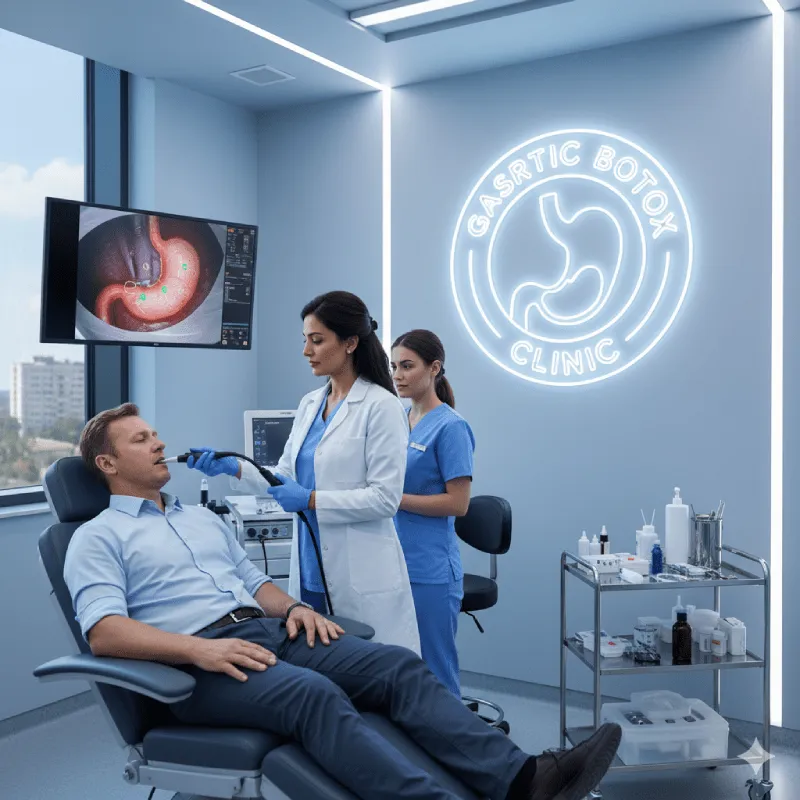
The procedure is performed under a light sleep state called “sedation,” usually without requiring general anesthesia. The stomach is examined in detail with an endoscopic camera entered through the mouth; if there are no obstacles such as gastritis or ulcers, the procedure begins. Botox is injected into the stomach wall at predetermined points with the help of a thin needle. The whole process takes about 15-20 minutes. Patients wake up without any surgical incisions or stitches after the procedure and can usually return to their normal lives on the same day after about 1-2 hours of observation.
How Long Does The Post-Procedure Recovery Process Take?
Since gastric botox is not a surgical procedure, the recovery process is extremely fast. There may be a slight lightheadedness for the first few hours after the procedure until the effect of sedation wears off. Some patients may rarely feel a slight bloating or nausea within the first 24 hours, but this is temporary. It is possible to return to work the next day. Real recovery is felt when the appetite is taken under control. Consuming liquid and soft foods for the first few days makes it easier for the stomach to adapt to botox and increases comfort.
What Is The Risk Of Side Effects?
Gastric botox is an extremely safe method when applied in the correct dose and by expert hands. There are no known serious systemic side effects because botox acts locally only in the muscle layer where it is injected and does not enter the bloodstream. Rare side effects may include temporary gas pain, constipation, or mild nausea after the procedure. Except for individuals with a botox allergy (which is very rare), the risk of complications is much lower compared to gastric balloons or obesity surgery.
Why Is The Duration Of Botox Limited?
Botulinum toxin does not permanently destroy nerve endings; it only temporarily deactivates the proteins that provide acetylcholine release. The body eventually re-synthesizes these proteins and re-establishes nerve-muscle transmission. Due to this natural process, the effect of gastric botox usually lasts 4 to 6 months. This period is a sufficient window for the patient to learn to manage stomach capacity and establish healthy eating habits. After the effect passes, the stomach returns completely to its former motility.
Are Repeated Doses Safe?
If the patient is satisfied with the first application and needs to lose more weight, a second dose of gastric botox can be applied 6 months later. Scientific studies show that repeated doses do not damage the stomach tissue and are safe. In some cases, it has even been observed that the second dose reinforces weight loss and helps maintain the weight lost. However, experts recommend an endoscopic evaluation before each application and a check of the patient’s metabolic status.
Should It Be Combined With Diet And Exercise?
The success of gastric botox is directly related to how well the patient adapts to lifestyle changes. Botox shuts off the appetite and gives satiety, but it does not interfere with what you eat. High-calorie liquid nutrition or excessive consumption of sugary foods can overshadow the effect of botox. Therefore, a protein-oriented, fibrous diet program and regular walks are recommended after the procedure. Botox gives you that “willpower”; diet and exercise maximize fat burning.
What Are The Differences Between Gastric Balloon And Botox?
A gastric balloon is a device placed inside the stomach that occupies volume; gastric botox is an injection method. While the balloon physically narrows the stomach volume, botox slows down the working speed of the stomach. While a second procedure is required to remove the balloon, botox is absorbed on its own. Many patients see gastric botox as a more comfortable option because it does not create a feeling of a foreign body in the stomach and the risk of nausea is much lower. Both methods cater to different needs, but botox offers a more “natural feeling of fullness.”

What Are The Advantages Over Stomach Surgeries?
The biggest advantage of gastric botox is that it is “reversible” and “minimally invasive.” Gastric sleeve surgeries require the permanent removal of a large part of the stomach and carry serious surgical risks. Botox, on the other hand, does not change the stomach structure, does not involve incisions or stitches, and has a very low complication rate. Also, it does not require hospitalization. For those with mild to moderate weight problems, it is the most logical way to get results without going under the heavy burden of surgery.
Is It Effective On Psychological Hunger?
Psychological hunger or “emotional eating” is different from real physical hunger. However, the constant feeling of satiety that comes with gastric botox helps the brain suppress the urge to eat. Because the gastric emptying time is prolonged, blood sugar levels remain stable; this reduces sudden sweet cravings made in search of dopamine. When the patient feels full, it becomes much easier for them to control their emotional connection with food. The control gained during this process is the key to long-term success after the procedure.
How Is Permanent Weight Loss Achieved?
The gastric botox process is completed in 6 months, but the goal is for the weight lost during this time to be permanent. Permanence is achieved by maintaining the “small portion” habit acquired while under the effect of botox. When botox loses its effect, even if the slowing in the stomach stops, the patient’s stomach capacity (on a habit level) has shrunk and the satiety threshold has dropped. If this 6-month “training process” is completed successfully, the person can maintain their weight in the post-botox period and continue their healthy life.
Does It Affect Metabolism Speed?
Gastric botox is not a direct thermogenic that increases metabolic rate; however, it indirectly improves metabolic health. As weight loss occurs, chronic inflammation in the body decreases and hormonal balance is established. Less calorie intake and reduced fatty tissue allow the body to use energy more efficiently. Additionally, when supported by a diet that preserves muscle mass, healthy slimming occurs without a drop in basal metabolic rate.
What Are The Age Limits And Health Criteria?
Generally, individuals who have turned 18 and have not passed 65 are suitable for gastric botox. People who do not have a botox allergy, do not carry a risk of stomach cancer, and do not have a severe psychiatric disorder can have this procedure. It is not recommended during breastfeeding or pregnancy. Chronic conditions such as diabetes, blood pressure, or heart disease are generally not an obstacle as long as they are under control; on the contrary, weight loss can improve the course of these diseases.
Can Those With Gastritis Or Ulcers Have It?
If an active ulcer or severe gastritis is detected inside the stomach during endoscopy, it is recommended to treat these problems first. When botox injection is made into an irritated tissue, it may delay the healing process or not show the expected effect. However, the procedure can be performed with doctor approval in mild gastritis cases. A comprehensive endoscopic examination before having gastric botox is therefore very critical; thus, the general health of the stomach is also checked.
What Should Be The Preparation Process Before The Procedure?
Before gastric botox, the patient must enter a fasting period of at least 8-12 hours. It is essential for the stomach to be completely empty, both for the clarity of the endoscopic image and the safety of the injection. Blood-thinning medications may need to be stopped under doctor control a few days before the procedure. Additionally, restricting smoking and alcohol consumption increases anesthesia comfort. Although the preparation process is simple, it is important to strictly follow the doctor’s instructions for a successful result.
Why Should You Be Treated With Cure Holiday?
In your weight loss journey, trust and expertise are everything. Cure Holiday is a health platform that provides services at international standards in the field of gastric botox, using the latest endoscopic technologies. Our expert staff plans the effects of botulinum toxin on the stomach down to the smallest detail, making specific dose and point determinations for each patient. When you choose Cure Holiday, you not only get a procedure but also secure your health with our high success rates and patient-oriented approach. Every detail has been thought of for your comfort in our modern facilities.
How Is Personalized Planning Made With Cure Holiday?
Every metabolism and every stomach structure is different. As Cure Holiday, we apply completely personalized protocols instead of a standard approach in our gastric botox applications. In your first consultation, your eating habits, weight loss history, and body analysis are examined in detail. Which areas (antrum or fundus) will be targeted more intensely is determined according to this data. In the post-procedure process, we help you transform the feeling of fullness provided by botox into maximum weight loss by preparing special nutrition programs with our expert dieticians.
Why Is Cure Holiday A Leader In Health Tourism?
Health tourism is not just about treatment but also about perfect process management. Cure Holiday offers a seamless end-to-end experience to its patients from all over the world. From airport transfers to luxury accommodation options, from language translation support to 24/7 post-procedure follow-up, we are with you at every stage. With our experienced gastroenterologists and modern clinical infrastructure, we bring world standards in gastric botox operations to Turkey. Our reliable, transparent, and results-oriented service approach has placed us in a leading position in health tourism.
How To Start The Weight Loss Journey With Cure Holiday?
You don’t need to wait any longer to get rid of your excess weight and start a new chapter in your life. As the Cure Holiday family, we are ready to guide you on the path to the look of your dreams and a healthy life. All you need to do is contact us for a free preliminary consultation. Our expert consultants will answer all the questions you have about the gastric botox process and create the most suitable calendar for you. For a safe, fast, and non-surgical change, choose the professionalism of Cure Holiday and invest in your health.
Free Consultation
Fill out the form below to get your free medical travel plan and price quote.
Sources and how to verify this yourself
- Eisenberg D, et al. 2022 ASMBS and IFSO Indications for Metabolic and Bariatric Surgery. — surgery is recommended at BMI ≥35 regardless of co-morbidity, and considered at BMI 30–34.9 with metabolic disease (lower thresholds for Asian populations). source
- Ministry of Health, Regulation on International Health Tourism and Tourist Health, Official Gazette 26 April 2025, No. 32882 — authorisation requirement for facilities and intermediaries, TÜSKA accreditation, compulsory complication insurance (deadline 31 December 2025 for insurance, 31 December 2026 for accreditation). source
- Ministry of Health, Regulation on Promotion and Information Activities in Health Services, Official Gazette 12 November 2025, No. 33075 — treatment promises and guarantees are prohibited; price and campaign announcements are permitted only within international health tourism. source